
BUYING GUIDE
Sew-In Hair Extensions: Methods, Weft Types and Buying Guide
Compare sew-in hair extensions, braided and beaded methods, weft types, costs and care. Check product specs before salon buying.
Introduction
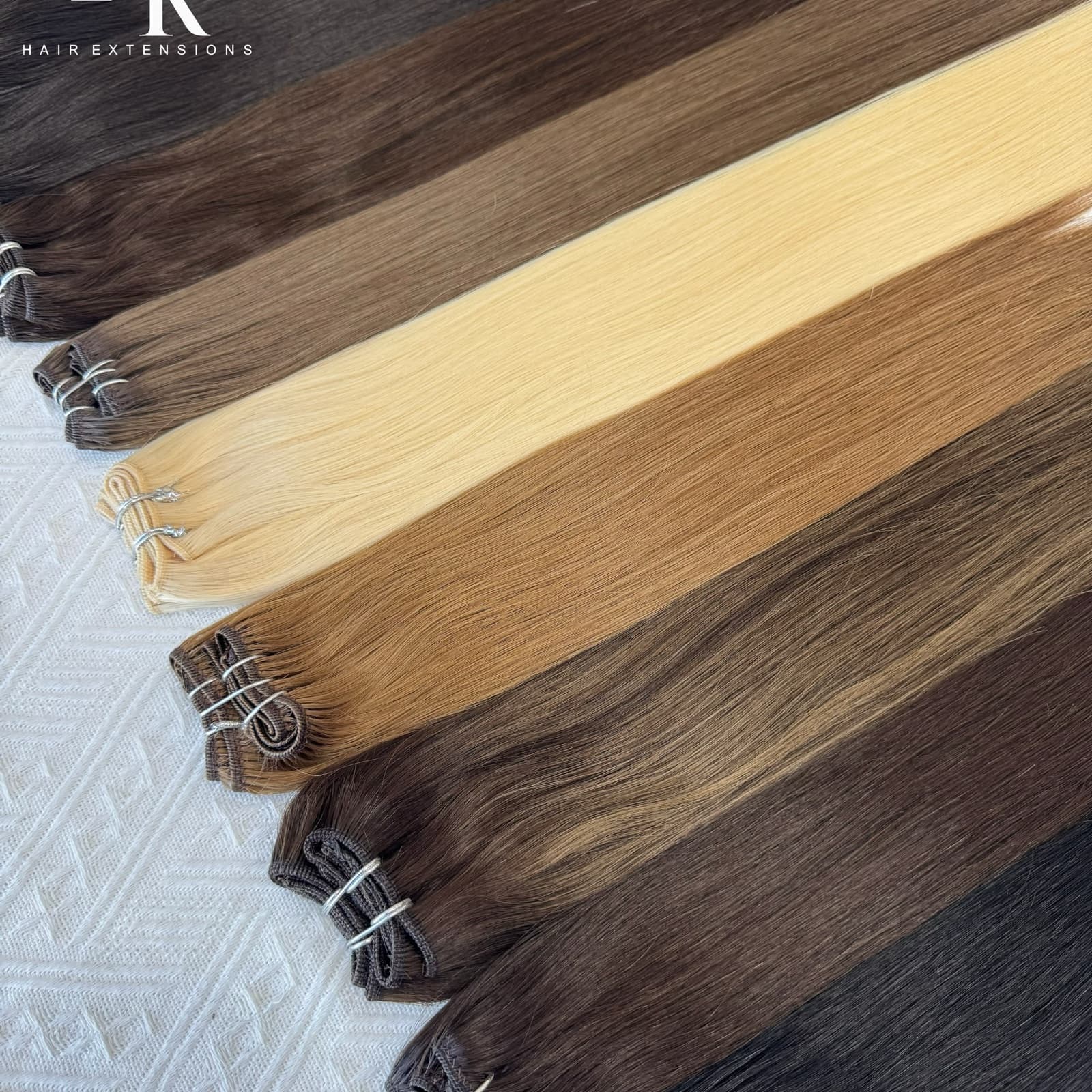
Sew-in hair extensions are wefts attached with stitching to a foundation prepared in the natural hair. Depending on the professional system, that foundation may be braided or supported by beads. Choosing the service means choosing both a fitting method and a suitable weft: the word “sew-in” does not identify the seam, pack weight or amount appropriate for one client.
Start with your intended result, available natural-hair coverage and ability to attend maintenance appointments. Then compare the construction, shade, texture and complete cost. Buying a large bundle before agreeing on those details can leave you with hair your stylist cannot use as planned.
This guide explains the selection decisions using DR Hair Extension's current products. DR is a manufacturer and wholesale supplier; installation and removal are professional salon services. For an overview across all attachment methods, see our installation preparation guide.
What are sew-in hair extensions?
Three terms answer different questions. Weft describes hair joined along a continuous top edge. Machine Weft, Hand-Tied or Genius Weft identifies a construction in the supplier's range. Sew-in describes an attachment involving stitching. A similar product name does not establish an identical installation protocol across suppliers.
Braided sew-in and beaded sew-in
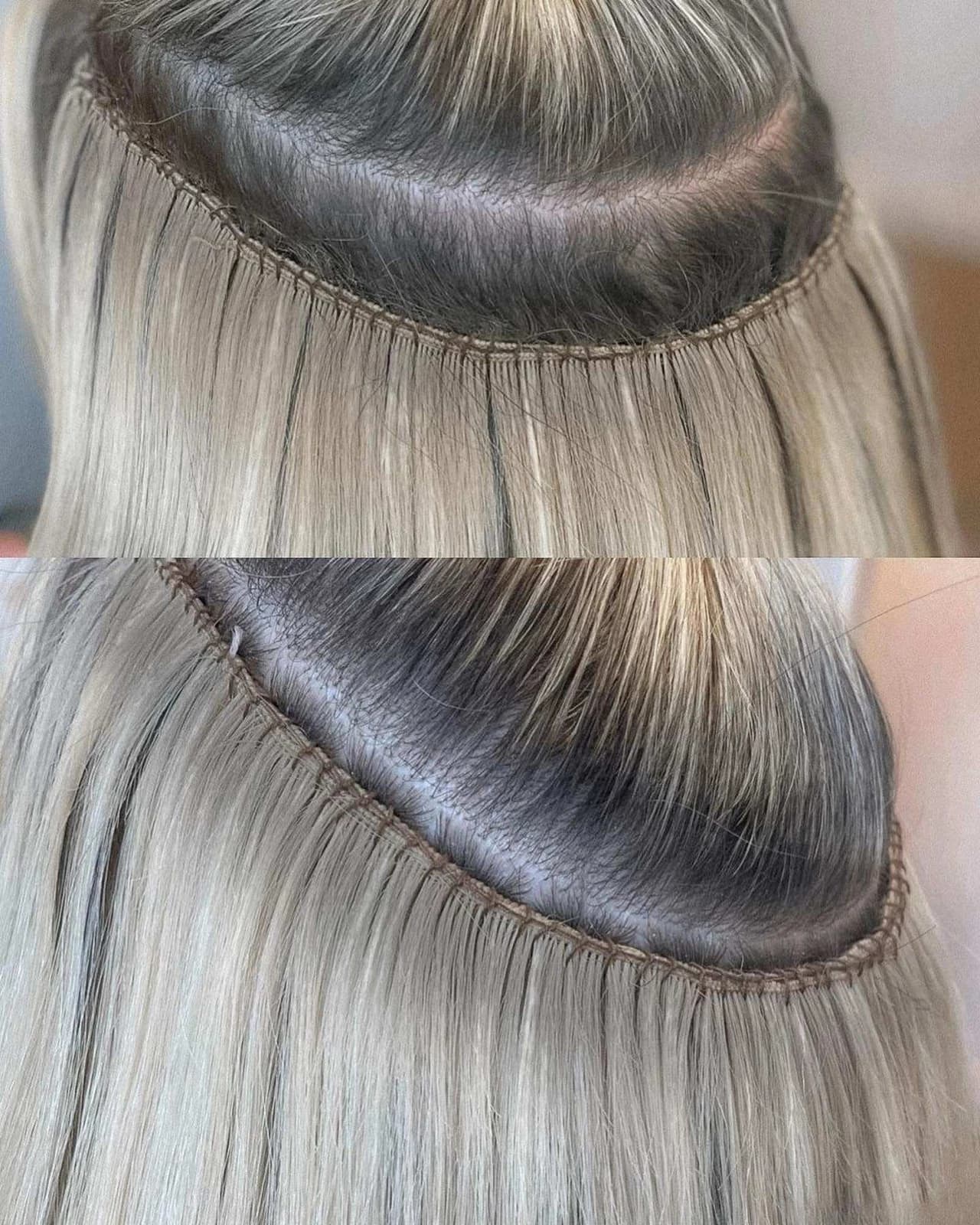
In a braided sew-in, the stylist creates a braid foundation and stitches the weft to that foundation. The braid pattern, hair left out for blending and access for cleaning form part of the service discussion. Ask what will remain visible and how the style works with your normal parting.
A beaded sew-in uses a prepared beaded foundation to support the stitched weft. For example, BELLAMI's professional weft explanation describes sewing its wefts onto its beaded foundation. That establishes how its system works; its bead layout, fitting times and maintenance claims should not be transferred to DR products.
The phrase “beaded extensions” alone does not confirm that sewing is involved. Ask the stylist to identify the complete attachment, compatible weft and removal process. DR Butterfly Weft uses a perforated band for specified bead or micro-ring fastening and is not an interchangeable traditional sew-in weft.
Which weft should you choose for a sew-in service?
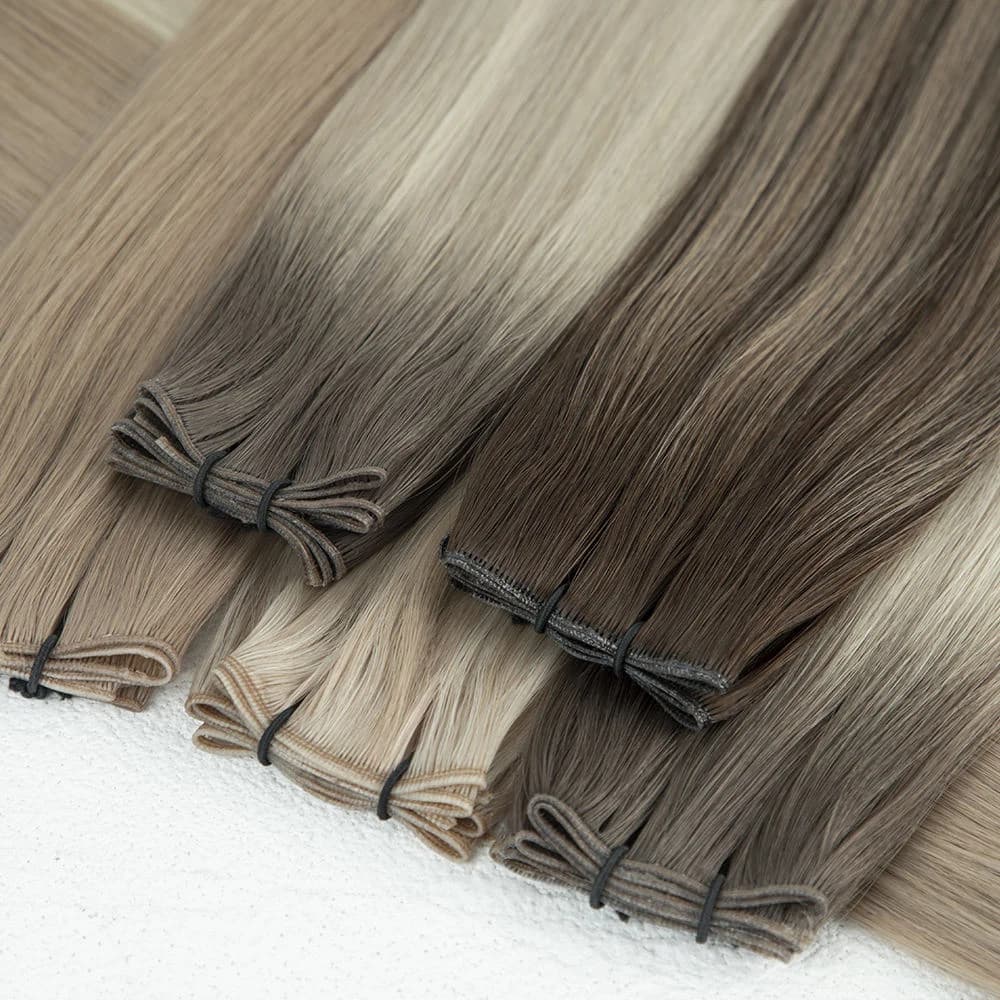
Choose the construction with the professional who will fit it. Compare the actual seam, piece layout and permitted alterations rather than assuming every weft can be folded, stacked or cut in the same way. Our Weft hair extensions collection brings the current specifications together.
| DR construction | Standard purchasing format | Selection point |
|---|---|---|
| Machine Weft | 100g in 1 weft; 14–30 inches | Machine-sewn seam; can be cut to size without extra edge reinforcement |
| Genius Weft | 100g split into 2, 4 or 5 wefts | Thin, flexible construction; agree the piece layout for the intended service |
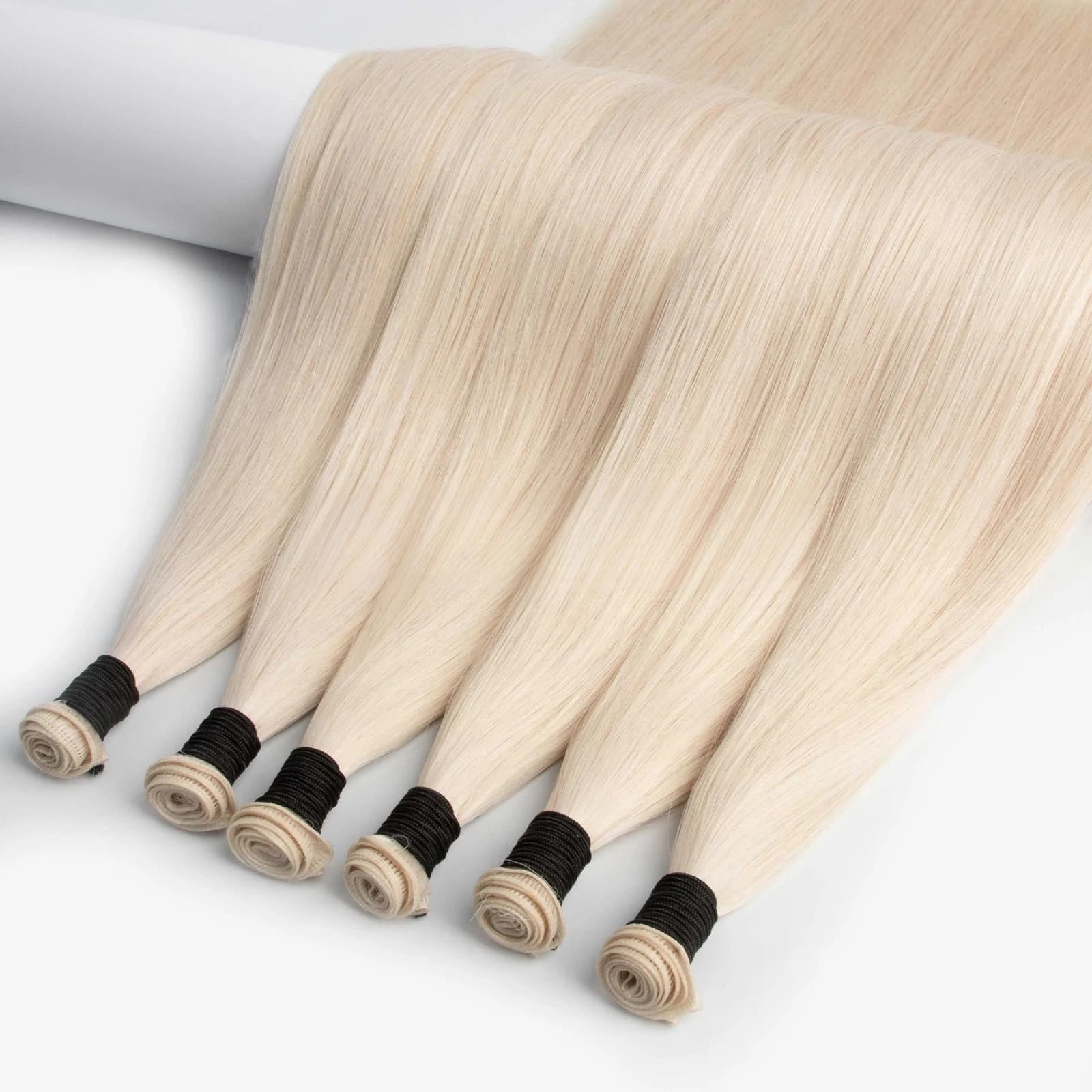
| Hand-Tied Weft | 100g normally split into 5 or 6 wefts; 14–28 inches | Short return hair; keep the supplied seam intact because cutting can cause shedding |
| Flat Weft | Standard 100g pack with 2 wefts; 14–30 inches | Flat construction; can be cut to size without extra edge reinforcement |
| Volume Weft | Standard 100g pack with 1 weft; 14–30 inches | Three-layer construction; assess the complete profile and installed amount |
Compare the seam and piece layout
DR Machine Weft provides a machine-sewn format, approximately 80–100cm wide per standard weft when fully unfolded. It is made to order, with a 100g minimum. Confirm a custom configuration instead of assuming its dimensions remain unchanged when weight changes.
DR Genius Weft offers alternative piece counts within a 100g pack. Two pieces average 50g each; four average 25g; five average 20g. These calculations describe purchased pieces, not the load carried by an individual attachment.
Traditional Hand-Tied Weft is also made to order. The default five- or six-piece arrangement can be adjusted to customer requirements. Order the required layout before production; customers normally fit the supplied pieces without cutting the top seam.
Flat Weft and Volume Weft offer other profiles. A three-layer construction can create a different seam profile even at the same total hair weight. Ask to inspect samples together; a flat product photograph cannot establish the feel of a finished row.
Match the service to the wearer before buying hair
The consultation should translate the desired look into a workable fitting and care plan. Discuss existing length, density, strand thickness, color processing, usual hairstyles and time available for maintenance. Fine strands and low overall density are different observations; neither selects a method by itself.
Fullness, length and coverage
For fullness at the existing length, ask the stylist to compare a focused volume plan with a longer transformation. Adding length changes the blend and may require a different product quantity. Check how the proposed rows will be covered when the wearer parts the hair, ties it back or moves normally.
A 100g pack is a purchasing unit, not a universal fitting recommendation. Avoid turning a supplier's MOQ into a prescribed installation quantity. Use our grams and pack-planning guide to understand the units, then have a trained stylist determine placement and installed weight.
The American Academy of Dermatology recommends professional fitting and addressing pain or excessive tightness. If the hairstyle hurts, ask the stylist to loosen the affected area. Unexplained hair loss or scalp concerns need appropriate assessment; extensions do not treat the cause of hair loss.
For additional selection questions, read our fine- and thin-hair guide. A narrow seam alone does not establish suitability for a particular client.
Shade, texture and preparation
Match physical samples to the visible lengths and ends, while checking the root and seam against the intended attachment area. Use the color chart to shortlist references, then confirm important shades on actual hair. Screens can change the apparent tone.
For waves or curls, compare the intended washed and dried appearance rather than only the supplied styling. DR's curly and wavy configurations are made to order using low-temperature setting; submit a reference photograph for confirmation. Agree how the sample will be assessed instead of assuming a texture name specifies an identical curl across suppliers.
For length, distinguish the measured hair from where a finished curl will fall. DR measures root to tip with textured hair straightened. The extension length chart explains that distinction. Follow the selected system's installation preparation instructions for washing, drying and product use before the appointment.
Sew-in vs tape-in and K-tip extensions
Compare the complete service rather than calling one method universally better. Attachment design, natural-hair coverage, professional competence and the wearer's care routine all influence the choice.
| Method | Attachment to discuss | Purchasing and service questions |
|---|---|---|
| Sew-in weft | Weft stitched to the selected foundation | Which seam and piece layout, what installed amount, and how is the foundation maintained? |
| Tape-in | Adhesive-backed tabs fitted in sections | Which tab dimensions, replacement tape and removal process are required? |
| K-tip | Individual keratin-bonded strands fitted with professional heat fusion | Which strand weight, bond and professional removal plan are specified? |
DR's standard Tape-in Hair pack contains 40 individual tabs totaling 100g. Its K-tip / Flat Tip Hair pack contains 100 strands at 1g each, totaling 100g. Equal pack weight does not make these units interchangeable with a 100g weft.
Ask the stylist to explain why the proposed system suits the intended result and what limitations remain. A method that avoids adhesive still requires an appropriate attachment and maintenance plan.
Compare the complete sew-in cost
Ask for an itemized salon quotation covering hair, preparation, fitting, blending, maintenance, removal and replacement attachments or hair. Confirm which items are included in a starting price, plus consultation, deposit and cancellation terms. Compare proposals for the same intended result and included work.
For continuing wear, ask what each maintenance appointment involves. A review, foundation adjustment and complete removal and reinstallation are different services. Confirm whether the salon accepts hair bought elsewhere before ordering it yourself. Supplier product terms and the salon's service responsibilities may differ.
There is no single price that represents every country, stylist, hair quantity and method. Our professional extension cost guide provides a budgeting framework. For salon purchasing, compare hair cost, packaging, freight and sample charges separately from installation labor.
How salons can evaluate hair before a larger order
Turn customer requirements into a written specification: construction, hair option, texture, shade, length, pack weight, piece count and quantity by color and length. Confirm applicable dimensions and cutting rules. Keep the stylist's service plan alongside that specification, without assuming the supplier's pack count determines the installation.
Approve a representative sample
Inspect the actual seam and ends, compare shade and texture, and check that the supplied pack matches the quotation. Agree washing and handling checks relevant to the chosen product application. Record the procedure and observations so a reorder can be assessed against the same reference.
This is a proposed evaluation workflow, not a claim that every sample has completed a wear trial. DR's documented salon sourcing story describes one US stylist who began with a color ring and 300g across Genius Weft, tape-in and flat-tip samples before developing repeat orders. It illustrates sample-led purchasing; it is not a result forecast for every sew-in collection.
Ask what factory testing and shipment inspection cover
DR's confirmed quality-control process includes weighing every hair pack against the agreed weight. Final shipment inspection uses sampling to check weight, measured length, color, shedding and smoothness. If sampling identifies a nonconformity, the affected shipment is fully re-inspected.
These production checks support specification control; they are not a guarantee of an individual fitting result. Agree any required records and acceptance criteria before production. On delivery, check packs and labels against the approved order before preparing client appointments, and retain photographs and packaging when reporting a concern.
Separate stock, production and delivery
Genius Weft has selected stock colors and lengths, subject to confirmation. Hand-Tied, Machine, Flat and Volume Weft are made to order. Custom production normally takes 5–10 working days, with the actual schedule confirmed for the specification and quantity; transit is additional.
Discuss paid samples and current availability for the exact selection. Labels and branded packaging have separately confirmed quantities and timelines. Use our wholesale weft buying guide for detailed assortment and quotation planning.
Agree maintenance and removal before fitting
Separate the interval between professional appointments from the usable condition of the hair lengths. Natural-hair growth, the foundation, attachment condition and home care affect review and removal decisions. DR does not promise one universal wear period or number of reuses for every sew-in installation.
Request written instructions for cleaning, drying around the foundation, detangling, sleeping and heat styling. Know whom to contact if the row shifts, attachments become exposed or discomfort develops. Reuse requires professional inspection of the hair and seam plus an appropriate new fitting plan.
Before booking, use the salon-selection checklist to confirm relevant experience, comparable work, a complete quotation and access to maintenance and removal.
Frequently asked questions
Are sew-in hair extensions the same as weft extensions?
Weft describes hair joined along an edge; sew-in describes stitching it to a prepared foundation. A weft's construction and fitting method should be specified separately. Not every weft product uses stitching, so confirm the selected system.
Do all sew-in extensions require braids?
No. Some services use a braid foundation, while others sew a compatible weft to a beaded foundation. Ask the stylist which system is proposed, what preparation it requires and how maintenance and removal work.
Which DR wefts support professional sew-in fitting?
DR lists sew-in or beaded application for Genius, Hand-Tied, Flat, Machine and Volume Weft. Choose the exact construction and instructions with your stylist. Butterfly Weft has a perforated band for specified bead or micro-ring fastening and should be assessed as its own system.
Can I cut hand-tied wefts to fit a row?
Keep DR's traditional Hand-Tied seam intact because cutting it can release hair and cause shedding. Discuss the piece layout before ordering. Cutting permissions for Machine, Flat or Volume Weft do not transfer automatically to a hand-tied seam.
How many grams do I need for sew-in extensions?
There is no universal amount. The stylist should assess existing length, density, coverage, desired result and the complete attachment. A standard 100g pack describes purchased hair, not the quantity suitable for every installation.
How long do sew-in hair extensions last?
Discuss professional review, removal and possible reuse separately. Timing depends on the selected system, natural-hair growth, attachment condition and care. DR does not guarantee a fixed wear period; agree an individual plan before fitting.
Does DR offer sew-in installation appointments?
DR supplies extension hair to salons, stylists, brands and wholesale buyers. This website's inquiries concern products, paid samples and sourcing quotations. Arrange consultation, installation, maintenance and removal directly with your chosen salon.
Conclusion
Choose sew-in hair extensions by agreeing on the foundation first, then matching the weft construction, shade, texture and pack configuration to the planned service. Keep purchasing quantities separate from installed weight, follow the selected cutting rules and understand maintenance and removal before committing.
For salon buyers, a representative sample, documented specification and clear delivery arrangement create a stronger basis for repeat orders than a familiar product name alone.
HAIR EXTENSION SOURCING
Request a hair extension specification or quote.
Share your shade references, lengths, texture, quantities and preferred pack format. Fields marked with * are required.