
BUYING GUIDE
Tape Weft Hair Extensions: Construction, Sizing and Salon Use
Compare long Tape Weft with individual tape-ins. Check width, weight, cutting, samples and ordering before salon use.
Introduction
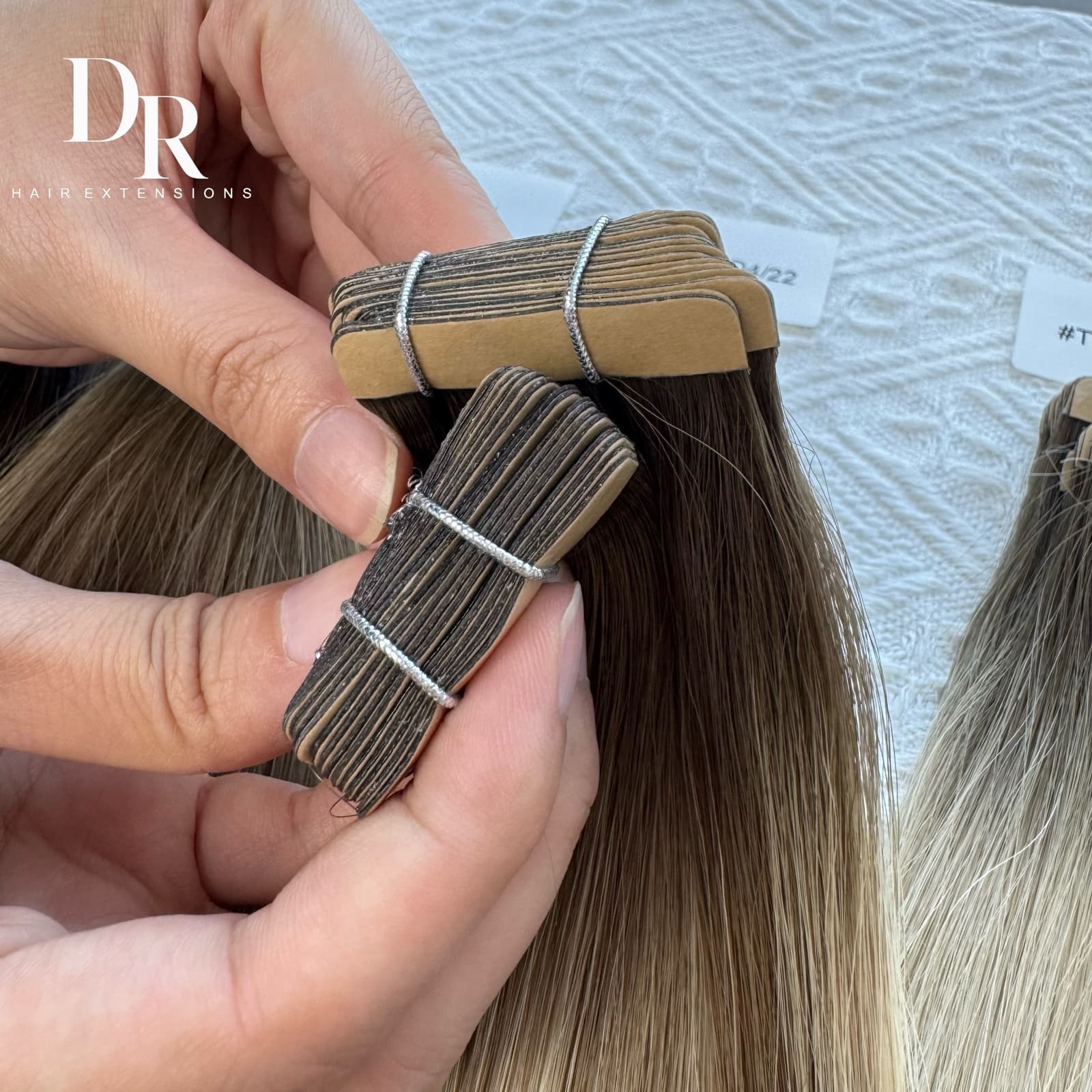
Tape weft hair extensions combine hair with an adhesive-backed strip supplied in a long weft format. DR's standard Tape Weft pack contains 100g across two 50g wefts, each approximately 80cm wide when fully unfolded. A stylist can cut the weft to the required width; the cut edges do not need extra reinforcement.
That format differs from buying individual, pre-cut tape-in tabs. The buying decision concerns the supplied width, hair weight, intended cut sections and professional fitting plan, rather than a product name alone. The 0.8cm tape-strip width is also a separate measurement from both the unfolded weft width and the hanging hair length.
This guide explains those distinctions, useful calculations and sample checks. DR Hair Extension publishes it as a manufacturer and wholesale supplier, using our current catalog. Confirm the selected sample and installation guidance before planning a service or ordering a collection.
What is Tape Weft, and how is it different from tape-in hair?
DR Tape Weft is a long tape-backed weft for adhesive attachment to the client's hair. The standard supplied piece is approximately 80cm across its unfolded width. The stylist determines the required cut widths for an appropriate application.
Regular Tape-in Hair, by comparison, comes in individual tabs: 40 pieces per standard 100g pack, each with a 4 × 0.8cm attachment. Both involve adhesive attachment, but the supplied piece format and quantity terminology differ.
Names vary across the professional market. For example, easihair pro's education overview distinguishes individual Tape In panels from its longer Tape Row format. Its dimensions and application methods belong to that range; they are not specifications for DR Tape Weft.
Compare the actual supplied format
| Specification | DR Tape Weft | Regular DR Tape-in | DR Invisible Tape |
|---|---|---|---|
| Standard pack | 100g / 2 wefts | 100g / 40 individual tabs | 100g / 40 individual tabs |
| Hair per supplied piece | 50g per full weft | Approximately 2.5g per tab | Approximately 2.5g per tab |
| Supplied attachment format | Long tape-backed weft | Pre-cut tabs | Pre-cut tabs with specialized root construction |
| Key dimensions | Approximately 80cm unfolded width; 0.8cm strip width | 4 × 0.8cm per standard tab | 4 × 0.8cm per standard tab |
| Selection emphasis | Full width, cut plan and resulting pieces | Tab count and placement plan | Root finish, tab count and placement plan |
These figures describe purchasing formats. They do not prescribe the number or weight of pieces to install on a client. A professional should assess the natural hair, coverage and intended result before determining the fitted arrangement.
Keep weft width, strip width and hair length separate
A complete Tape Weft specification needs all three dimensions. Recording only “0.8cm tape” leaves most of the product undefined.
| Measurement | What it means for the standard DR product |
|---|---|
| Unfolded weft width | Approximately 80cm across one full 50g weft |
| Tape-strip width | 0.8cm across the narrow side of the adhesive strip |
| Hair length | The hanging hair length; listed options are 14–30 inches |
Ask for the long weft to be fully unfolded when comparing its width. A folded bundle photograph cannot establish that measurement. Keep the units in the quotation: a 20-inch hair length is different from a 20cm cut width along the top edge.
For the standard two-weft pack, the two approximately 80cm pieces represent about 160cm of supplied weft material in total. That is a stock-planning figure, not a recommendation for a 160cm installed row. Cutting and placement determine how much material is actually used.
Define custom dimensions together
If requesting a different width, piece count or pack weight, ask the supplier to confirm the complete format. Changing one dimension does not establish that all the others stay identical. Record the agreed measurement method and any tolerance instead of treating an approximate catalog width as a precise acceptance limit.
Use weight-per-width calculations for planning
Dividing a standard 50g weft by approximately 80cm gives an average of about 0.625g of hair per centimeter. That can help estimate material consumption when discussing cut widths with a stylist.
The following examples assume an even distribution along the full weft. They are arithmetic planning references, not measured weights of individual pieces or recommended installation sizes.
| Example cut width | Nominal hair weight at the average above |
|---|---|
| 4cm | Approximately 2.5g |
| 8cm | Approximately 5g |
| 12cm | Approximately 7.5g |
| 16cm | Approximately 10g |
Measure and weigh actual cut pieces when the specification requires it. Natural distribution, the approximate full width and handling can affect the result. Average grams per centimeter also do not describe the load on an individual natural-hair section.
A nominal 4cm Tape Weft section and a standard 2.5g Tape-in tab may produce similar arithmetic, but that does not establish identical bases, adhesive performance or fitting instructions. Compare the finished products rather than using the calculation as a compatibility test.
Cutting permissions belong to the selected construction
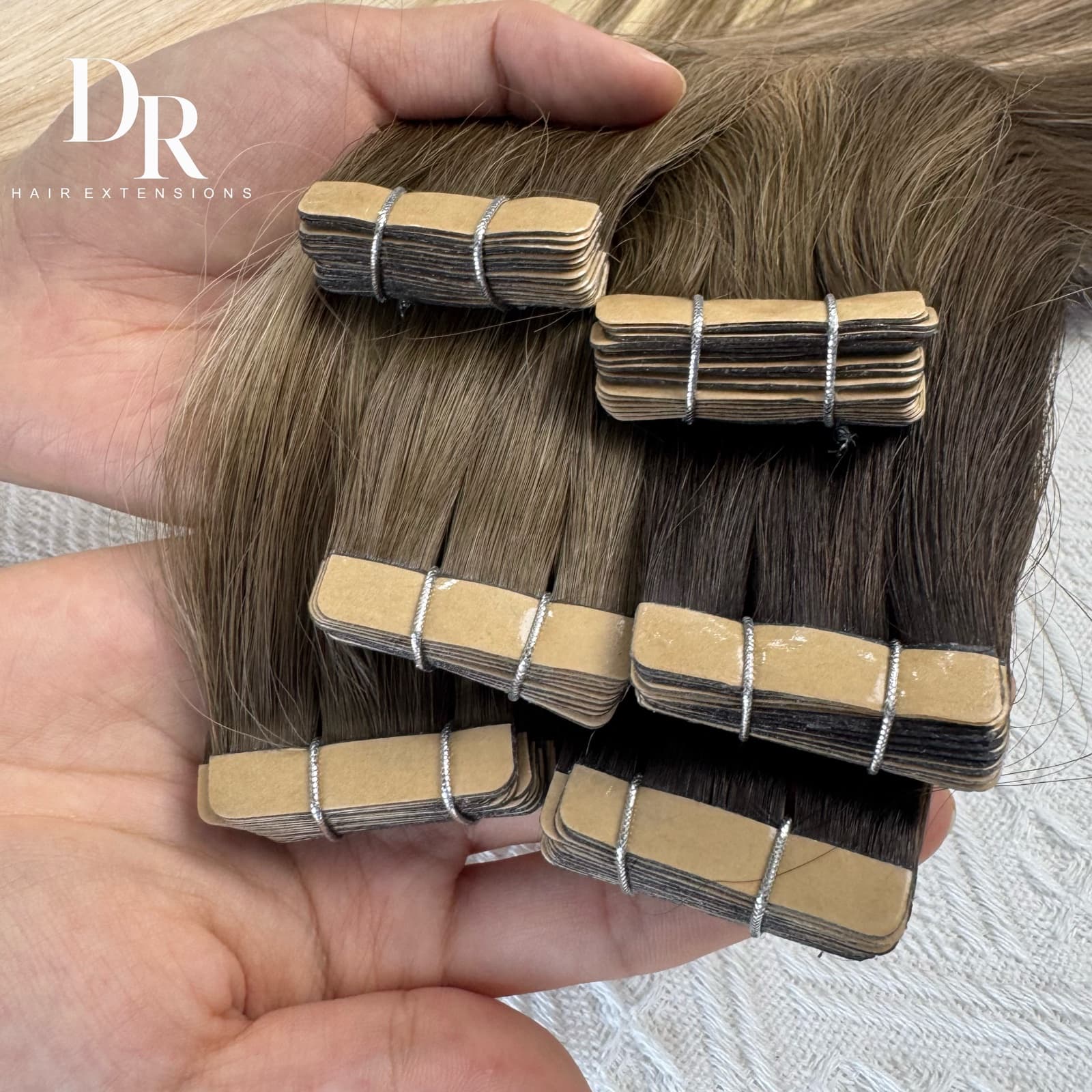
DR's confirmed Tape Weft description permits cutting to the required width without extra reinforcement at the cut edges. This is useful when a professional wants to plan section widths around the intended application rather than rely only on a supplied tab size.
Have the stylist agree the cut layout and handling before altering the sample. Keep the planned widths, number of resulting sections and remaining material identifiable. Cutting to size does not mean every small offcut is practical for installation.
Do not transfer this permission to every weft or tab
The cutting rule applies to the selected DR Tape Weft construction. It should not automatically be assigned to regular Tape-in, Invisible Tape, hand-tied wefts or another manufacturer's tape row. Check the actual product instructions when moving between formats.
For sample approval, inspect the original product and confirm the quotation before cutting. Photograph and record the starting specification so the supplier and stylist can distinguish a supplied-product concern from a question about the altered layout.
Choose the format around the intended salon application
A long weft format may be worth evaluating when the stylist wants control over cut widths for planned coverage. Individual tape-in tabs offer a different starting unit for selecting and counting placements. Neither format establishes suitability simply by looking flat on a table.
For a fuller outline across an intended section, ask how the professional will divide the long material, preserve coverage and manage the resulting attachment. For a small localized addition, compare whether the selected cut format or an individual-tab product better fits the available hair and service plan.
These are selection scenarios, not reports of completed comparative installations. The decision should include comfort, concealment during normal movement, removal and the client's ability to maintain the style. Do not promise a faster or less expensive service without evaluating the complete process.
Fine hair still requires a support and coverage assessment
Fine strand diameter and low density are different observations. A continuous-looking attachment does not establish the amount of hair a client can support or conceal. Our fine-hair methods comparison provides broader consultation questions.
The American Academy of Dermatology recommends professional extension installation and addressing pain or an overly tight style. Have the stylist reassess discomfort rather than assuming it proves a strong attachment. Seek a dermatologist's advice for unexplained hair loss or scalp concerns.
Understand what Invisible Tape changes
DR Invisible Tape Hair uses specialized equipment to create a scalp-like root appearance. Its standard product remains a 40-tab, 100g pack with 4 × 0.8cm attachments. That is a different selection question from choosing the long Tape Weft format.
Compare the root finish and visible hair-to-base transition with the actual sample. Do not treat “invisible” as a synonym for a long weft, reduced installed weight or a guaranteed wear interval. Protective backing and the final installed appearance are also different things.
For a detailed root-finish comparison, read our Invisible Tape versus regular Tape-in guide. Keep the product names on samples and quotations consistent so the photographed reference, ordered construction and supplied format agree.
Installation preparation includes the adhesive and removal plan
Before product application, request the fitting, removal and care guidance for the selected Tape Weft. Confirm the supplied adhesive, compatible replacement materials, preparation products and any restrictions around washing or styling after fitting.
Do not infer a fitting sequence from a photograph of backed bundles. Ask the professional to explain how the selected sections will attach, remain covered and be removed. Record any permitted layering or pairing arrangement rather than importing a technique from a different tape system.
Agree on follow-up access and what to do if an attachment becomes uncomfortable, visible or loose. A cutting permission does not authorize improvised adhesive combinations, an assumed heat-activation step or a fixed installation quantity. Those details belong to the selected product and professional plan.
Refitting and replacement tape are separate decisions
For refitting soon after installation, DR's catalog allows the existing Tape Weft tape to be considered for reuse if the stylist confirms that the attachment remains suitable. Fresh replacement tape is also available. This is conditional assessment, not permission to reuse every adhesive indefinitely.
Set maintenance timing according to the hair and attachment condition. The tape-in maintenance guide explains the distinction between installed wear and hair reuse, but another product's calendar interval should not automatically become a Tape Weft instruction.
Approve a physical sample before expanding the order
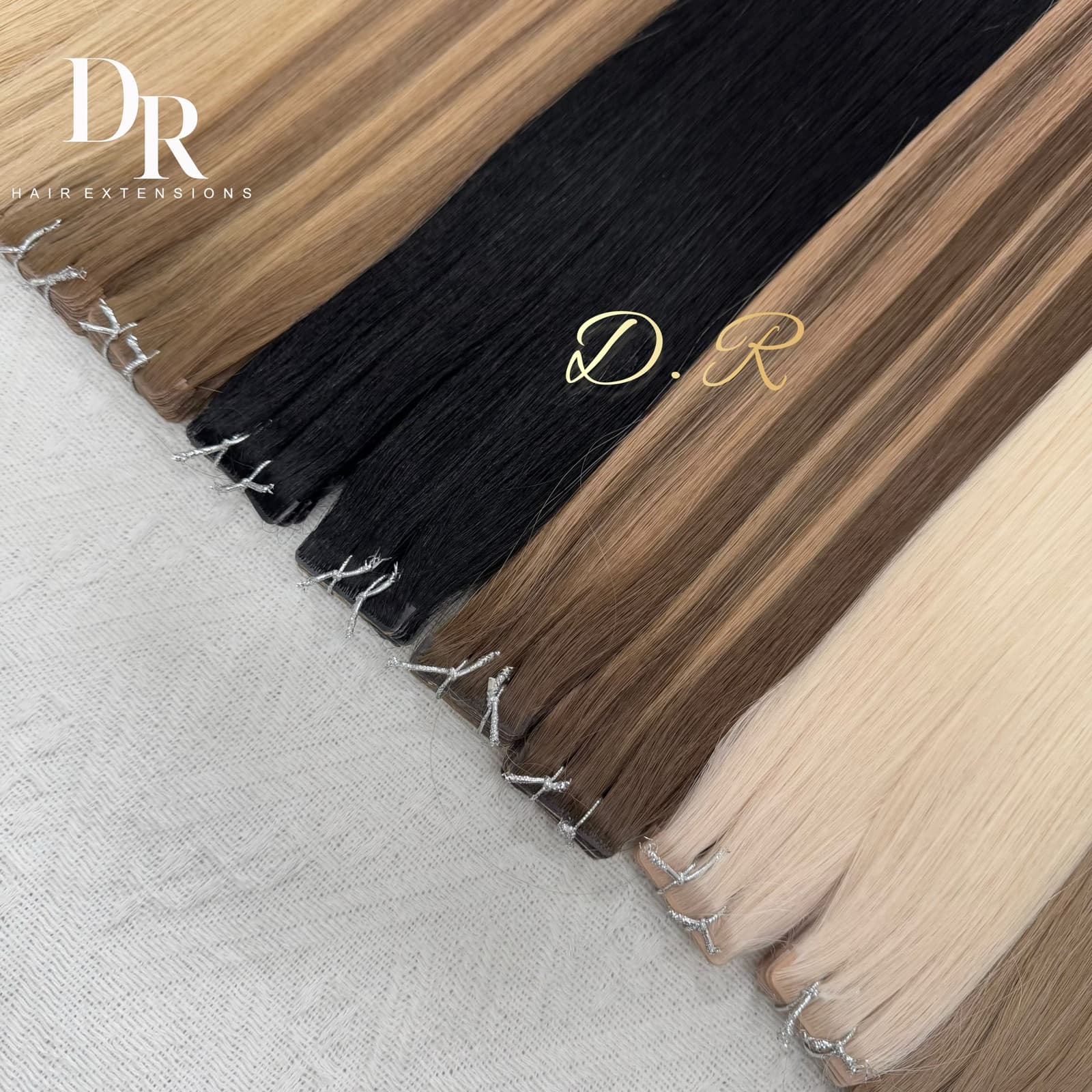
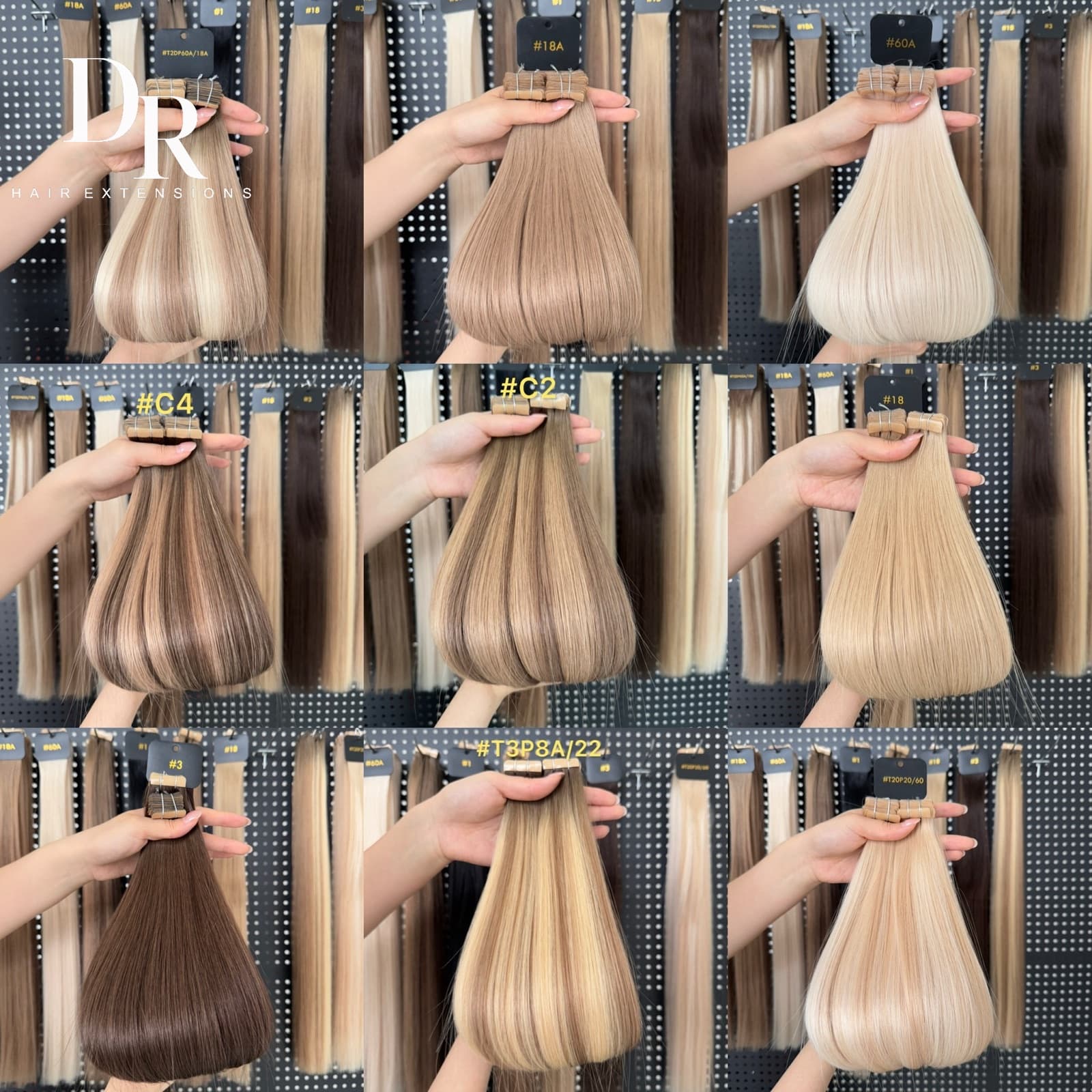
Check a full supplied weft before judging the format from cut pieces alone. Record the hair option, shade, hanging length, pack weight, number of wefts, weight per weft, fully unfolded width and narrow tape-strip width. Review the hair, edge profile and adhesive presentation alongside the quotation.
If the stylist evaluates cutting, keep the original measurements and resulting piece records together. Where washing, styling or professional application forms part of approval, agree the conditions and review points first. An attractive first presentation is only one part of sample assessment.
DR's documented US salon sampling experience began with a physical color ring and 300g across Genius Weft, tape-in and flat-tip products. The stylist evaluated the hair through salon use before repeat ordering. That experience supports a sampling process; it is not a completed Tape Weft wear trial.
What factory testing and shipment inspection cover
DR's confirmed quality-control process includes production-stage checks and individual pack weighing. Final shipment inspection samples weight, ruler-measured length, color under dedicated lighting, shedding and smoothness. A sampled nonconformity triggers full reinspection of the affected shipment.
If customer requirements include a particular unfolded-width check, cut-section review or adhesive test, agree the method and acceptance criteria before production. The published QC process does not establish one numeric adhesive threshold or a universal safe attachment weight. Preserve the approved sample reference for replenishment.
Compare quotes by usable material and the complete service
DR Tape Weft is made to order, with no ready stock. Listed hair lengths are 14–30 inches, and the minimum order is 100g. Custom production normally takes 5–10 working days; confirm the schedule for the chosen specification and quantity. Shipping time and cost are separate.
Compare quotes for the same shade, hair option, length, pack weight, weft count and dimensions. Ask for paid sample details and the approved fitting and replacement-tape information. A quote for individual Tape-in tabs is not directly comparable merely because both packs weigh 100g.
For salon costing, record the material actually used, practical remaining pieces, fitting time, blending, removal and refitting supplies. A flexible cut plan may help organize material, but it does not prove zero waste or a lower cost for every service. Check the plan against real consultations before expanding inventory.
Frequently asked questions
Is Tape Weft the same as regular tape-in extensions?
Not in the DR catalog. Tape Weft is supplied as two long 50g wefts per standard 100g pack, each approximately 80cm wide unfolded. Regular Tape-in is supplied as 40 individual tabs per 100g. Both involve adhesive attachment, but the supplied format differs.
Does 0.8cm mean the Tape Weft is only 0.8cm long?
No. It describes the narrow side of the adhesive strip. The full standard weft is approximately 80cm wide when unfolded. Hanging hair length is a third dimension, with listed options from 14–30 inches.
Can DR Tape Weft be cut to size?
Yes. The confirmed construction can be cut to the required width without extra reinforcement at the cut edges. Have the stylist agree the layout and handling for the selected product. Do not transfer that permission to other tab or weft constructions.
How much does a cut section weigh?
The standard 50g / approximately 80cm format averages about 0.625g per centimeter. That provides a planning estimate assuming even distribution. Weigh actual sections where required; the arithmetic is not a safe installation prescription or a guarantee of identical pieces.
Can the existing tape be reused for a quick refit?
It may be considered if the stylist confirms that the attachment remains suitable soon after installation. Fresh replacement tape is also available. Hair condition, adhesive condition and the professional assessment determine the refitting decision.
Is Tape Weft automatically suitable for fine hair?
No. The stylist needs to assess support, coverage, condition and the total proposed attachment arrangement. A cut-to-size format does not establish a suitable weight or width for every client. Revise the service if the available natural hair cannot support the intended result.
What should I send for a Tape Weft quotation?
Send the hair length, shade reference, hair option, pack weight, weft count, required dimensions, quantity and destination. State whether the standard 100g / two-weft format meets your needs. Ask the supplier to confirm custom specifications and sample arrangements before production.
Conclusion
Choose Tape Weft hair extensions by understanding the full supplied weft, the narrow adhesive strip and the resulting cut sections. Keep the purchasing format separate from the professional fitting plan. Clear dimensions, sample approval and a documented removal and maintenance approach make the product easier to compare, order and replenish.
TAPE WEFT SOURCING
Request a Tape Weft specification or quote.
Share your shade references, lengths, texture, quantities and preferred pack format. Fields marked with * are required.