
BUYING GUIDE
How Long Do Tape-In Extensions Last? Refitting, Reuse and Maintenance
Learn how tape-in refitting differs from hair lifespan, when reuse is appropriate, and how to plan care, reviews and replacement.
Introduction
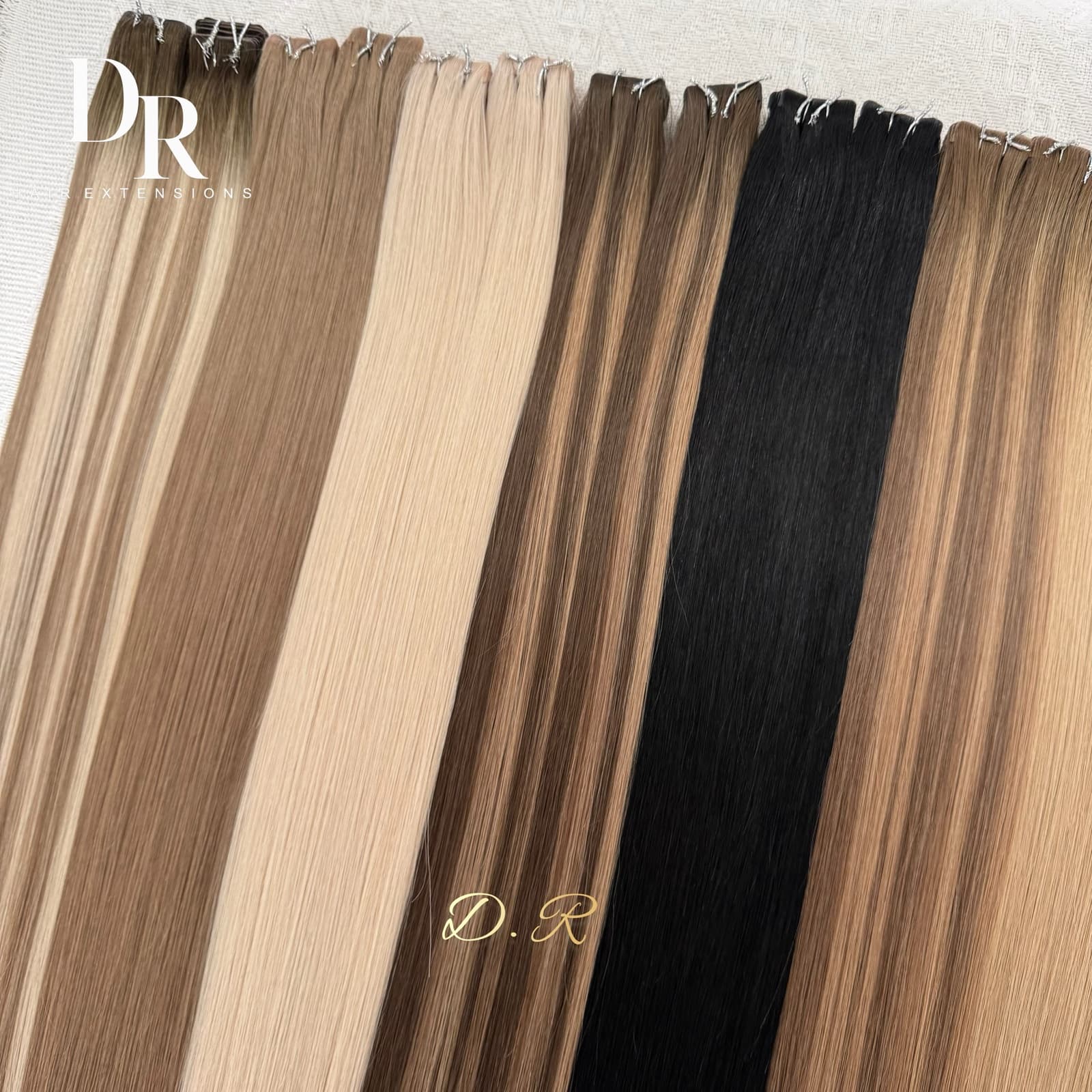
Tape-in extensions have two different timelines: the interval before professional removal and refitting, and the useful life of the extension hair across suitable applications. A maintenance appointment does not automatically mean the hair needs replacing, while hair that still looks good does not justify leaving an installation overdue.
For a reference point, Great Lengths recommends approximately 6–8 weeks before reapplying its GL Tapes. That is guidance for its system, rather than a universal adhesive lifespan or a DR guarantee. Your stylist should set the schedule for the selected product, growth, placement and care.
For DR Tape-in and Invisible Tape Hair, reuse requires replacement tape and professional assessment of hair condition. We do not publish one guaranteed number of months or refits for every configuration. This guide explains how to plan appointments, assess reusable hair, manage everyday care and make better purchasing decisions without confusing those timelines.
Separate the four meanings of “how long”
Before comparing answers, identify what the supplier or salon is measuring. An adhesive's hold, an appointment interval and the total life of the hair are different claims.
| Timeline | What it describes | What to establish |
|---|---|---|
| First-wash waiting period | Time after fitting before washing or specified exposures | Instructions for the selected adhesive system |
| Installed wear interval | Time until professional review, removal or refitting | The stylist's schedule and reasons to return sooner |
| Reuse of the hair | Whether removed pieces remain suitable for another application | Hair condition, attachment integrity and compatible replacement tape |
| Total service life | Useful wear across accepted applications | Actual care history and assessment, rather than a promised calendar total |
Ask whether an advertised lifespan assumes continuous wear, several applications or storage between uses. Also ask whether it covers the hair only or includes adhesive performance. Without those definitions, two attractive longevity figures may describe entirely different things.
For a salon, record the installation date, scheduled review and removal history separately from the purchase date. That makes replenishment decisions more useful than a single note saying that a set is “three months old.”
How often should tape-ins be moved up?
Hair growth changes the position of the attachment relative to the scalp. The stylist needs to reassess that position, natural-hair condition, coverage and any developing tangles. A tab remaining attached does not, by itself, establish that the installation should remain in place.
Use the 6–8-week manufacturer example as context when asking about the service, not as permission to schedule every DR client identically. Set the first review at consultation and explain what may bring it forward. Fine or sparse hair, difficult placement areas, care problems or a changed hairstyle can require a different plan.
Signs to contact the stylist before the scheduled visit
| Observation | Useful next step |
|---|---|
| A tab is slipping, lifting or twisting | Request assessment; avoid adding household adhesive or repeatedly pressing it back |
| Neighboring attachments feel joined by tangled hair | Arrange a detangling and placement review before the problem becomes harder to manage |
| Pulling, pain or a persistent headache | Contact the stylist promptly to assess tension and whether adjustment or removal is needed |
| Hair or attachment areas look unexpectedly different | Photograph the concern and keep the product and care details available |
The American Academy of Dermatology's extension guidance recommends professional fitting and addressing painful or overly tight styles. Do not interpret discomfort as evidence that a stronger hold is working well. Seek medical advice for scalp symptoms or concerns about hair loss.
Can the same tape-in hair be reused?
Yes, when the removed hair and its attachment area remain suitable and the selected system permits reapplication. DR's regular Tape-in Hair and Invisible Tape Hair both list reuse with replacement tape and professional assessment. That is a conditional feature, not an unlimited reuse promise.
Ask the professional to review the hair through its lengths and ends, the base and hair-to-tab connection, remaining fullness and any effects of previous coloring or styling. New tape renews the adhesive component; it does not reverse wear already present in the hair or repair an unsuitable base.
What a refitting decision should cover
The appointment should include appropriate removal, inspection and preparation for any accepted reapplication. Confirm the compatible remover, cleaning procedure and replacement tape with the selected system. The professional should also reassess the client's natural hair before repeating the previous layout.
Some pieces may remain usable while others need replacing. Keeping removed pieces identifiable by shade, length and placement can help the stylist rebuild the intended blend. Do not combine unidentified old and new pieces and assume they have the same condition or history.
If storing hair between applications, agree on cleaning, complete drying and protected storage instructions with the stylist. Label the product and its history. Storage time alone is not a substitute for checking it again before use.
Does Invisible Tape last longer than regular Tape-in?
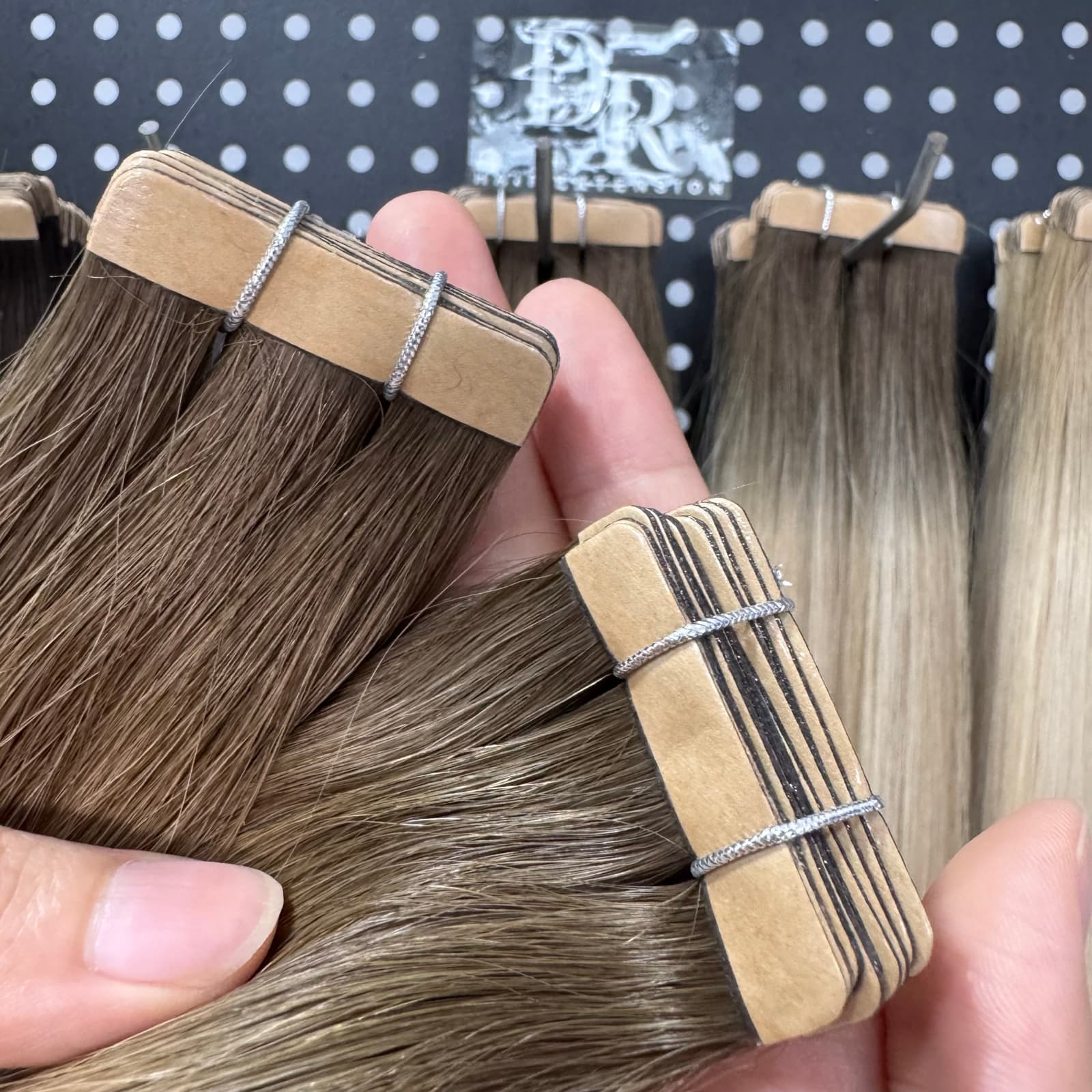
A different root appearance does not establish a longer service life. DR's Invisible Tape Hair uses specialized root construction for a scalp-like appearance. Both standard formats contain 100g across 40 individual tabs measuring 4 × 0.8cm, and both require an appropriate adhesive specification and fitting plan.
Compare the selected hair option, processing, base, adhesive and permitted care rather than treating “invisible” as a durability grade. We have not published a controlled wear trial proving one DR root construction lasts longer than the other.
Our Invisible Tape versus regular Tape-in guide explains the construction and supply differences. If weight, coverage or fine-hair suitability is the main concern, use the tape-in selection guide for fine or thin hair alongside the maintenance plan.
Build washing and styling around the selected system
Installation preparation should include written first-wash and care instructions. Confirm any waiting period before washing, swimming or other exposures with the stylist. A waiting time printed for another brand's adhesive should not automatically become the rule for the supplied DR product.
For routine care, discuss washing frequency, compatible products, conditioner placement and drying. Remi Cachet's aftercare guide recommends gentle washing, conditioner through the mid-lengths and ends away from attachments, and keeping heat tools clear of bonds. Confirm how those principles apply to the selected tape system.
Ask for a manageable product list instead of adding several unapproved oils, masks and treatments when the hair feels different. Record any change in routine so a stylist can investigate a concern with useful information. Avoid choosing care solely because a bottle says “extension friendly.”
Distinguish a hair issue from an attachment issue
Dry-feeling ends and a lifting tab call for different assessments. A mask on the lengths cannot establish why an attachment has loosened, and replacement tape cannot resolve every change in texture. Identify the affected area and timing before trying to correct it.
How to sleep with tape-in extensions
Make bedtime care part of the fitting discussion. BELLAMI's care center advises dry hair before sleep, gentle detangling and a loose braid or soft tie to reduce tangling. It also suggests a silk or satin pillowcase or bonnet to reduce friction.
Choose a loose arrangement that works with the actual attachment positions. Ask the stylist to demonstrate it instead of pulling the roots tightly to imitate a hairstyle online. Accessories should help manage the lengths without creating an uncomfortable attachment position.
If the same area repeatedly tangles overnight, record where it happens and request a review. A bedtime routine cannot compensate for every placement or maintenance problem. Include bedtime drying time when deciding whether an ongoing fitted service suits your daily routine.
Why are tape-in extensions tangling or matting?
First identify whether the problem is at the ends, through the lengths or close to attachments. Record when it began, whether it follows washing or sleep, and whether one area or the whole set is affected. Those observations guide assessment more effectively than assuming all tangling proves defective hair.
Remi Cachet's aftercare guidance explains that shed natural hairs can become caught around attachments and contribute to mats. It recommends gentle detangling with support at the attachments and regular maintenance. Ask the stylist to show you the permitted way to check and manage your particular placements.
For a compacted root-area tangle, contact the professional rather than cutting or pulling through it. Keep photographs and care details available. A recurring issue should prompt a review of the hair, installation and routine together, not repeated experimentation with stronger products.
Can you swim with tape-in extensions?
Discuss swimming before choosing the service, especially if it is frequent. In its tape-extension overview, Remi Cachet notes that pool chemicals can weaken its tape tabs and advises swimmers to consult their stylist. Its warning illustrates why swimming suitability is a system-specific question.
DR does not promise waterproof hold or unchanged color after pool or sea exposure. Ask the stylist and supplier about the selected adhesive, hair processing and approved exposure and aftercare instructions. Do not assume a conditioning product makes an attachment waterproof.
For a holiday, plan access to professional support and consider whether a different service better fits the activities. After an unexpected change in hold, texture or color, record the exposure and request advice before adding replacement adhesive or a chemical correction at home.
Document a problem before changing the hair
For salons, a clear record makes investigation easier. Keep the order reference, product, shade, length, pack format and installation date together. Note the preparation products, selected tape and remover, professional fitting record and care instructions supplied.
If a concern develops, record the first observed date, affected number of tabs or pieces, photographs and recent changes such as swimming, styling or products. Describe the observation plainly: attachment lifting, root-area tangling or a changed shade are more actionable than “it did not last.”
These are recommended record fields, not a claim that a photograph establishes the cause. Where possible, contact the supplier before coloring, cutting or discarding affected product so the original concern can be reviewed. If discomfort or scalp symptoms require prompt professional attention, prioritize that assessment.
Separate failure from planned maintenance
A scheduled refit, replacement of worn pieces and unexpected early slippage are different events. Record them separately. Treating every appointment as product failure exaggerates wear problems; treating every early problem as normal maintenance hides information needed to improve the service.
Evaluate samples before promising longevity to clients
DR's documented US salon sampling experience describes a stylist starting with a color ring and 300g across Genius Weft, tape-in and flat-tip formats. She evaluated construction, color, installations, washing and styling before developing repeat orders. The record supports sample-led purchasing; it does not provide a controlled number of tape-in wear weeks or reuse cycles.
For your own salon assessment, agree on product application, care and review criteria before fitting a suitable client. Keep the starting sample reference and observations from professional removal identifiable. Report the conditions under which the sample was assessed rather than advertising an unsupported universal lifespan.
What factory testing and shipment inspection establish
DR's confirmed QC process includes production-stage checks and individual pack weighing. Final shipment inspection samples weight, ruler-measured length, color under dedicated lighting, shedding and smoothness. A sampled nonconformity triggers full reinspection of the affected shipment.
Those checks do not establish every installed adhesive's duration or a person's safe wear interval. If customer requirements include additional attachment testing, agree on the method and acceptance criteria before production. Keep the sample, approved specification and shipment labels connected when reordering.
Compare the cost across accepted wear cycles
Request the hair price, fitting, blending, planned reviews, removal, replacement tape, refitting and potential replacement pieces separately. A lower opening quote may include fewer services. A longer advertised hair lifespan does not establish a lower total cost without those details.
A useful budgeting calculation is total actual cost divided by accepted wear cycles. Use observed appointments and replacement quantities, not a guaranteed reuse count invented to make the price attractive. Ask what changes if the professional decides some or all pieces should not be reused.
For wholesale replenishment, keep purchase units distinct from fitted quantities. Both standard DR tape formats contain 40 individual tabs per 100g pack, not 40 two-tab pairs. Confirm the current order minimum and supply schedule on the relevant product page before booking services. The wholesale tape-in buying guide covers broader order planning.
Frequently asked questions
How long do tape-in extensions last before a move-up?
Some manufacturers, including Great Lengths for GL Tapes, specify approximately 6–8 weeks before reapplication. For the selected DR product, have the stylist set the review and refitting schedule. Return sooner for discomfort, slipping or developing tangles rather than treating a calendar estimate as permission to wait.
How many times can DR tape-in hair be reused?
There is no published universal DR reuse count. Both regular and Invisible Tape can be considered for reapplication with replacement tape and professional assessment. The hair, base, previous handling and client's current suitability determine whether another application is appropriate.
Can I leave tape-ins in until they start falling out?
No. Continued attachment does not establish appropriate positioning or condition. Follow the scheduled professional review and respond to changes before the next appointment. Holding longer is not automatically a better result.
How should I sleep with tape-in extensions?
Discuss a dry, gently detangled bedtime routine and a loose arrangement with the stylist. Avoid pulling the attachment areas tightly. Repeated overnight tangling needs review rather than increasingly tight tying or forceful brushing.
Can I swim regularly with tape-ins?
Discuss the frequency and selected system before fitting. Pool or sea exposure may affect hair and attachments, and DR does not promise waterproof performance. Ask about approved precautions and whether the service fits a frequent-swimming routine.
Do Invisible Tape extensions last longer?
Not automatically. The DR distinction concerns root construction and appearance. We have not published a controlled comparative wear trial establishing a longer life. Compare the selected hair, adhesive, fitting and care requirements separately.
Can I replace the tape myself when it slips?
Arrange professional assessment and appropriate removal or refitting. Adding adhesive to an unresolved problem can obscure its cause and does not address placement or natural-hair condition. Confirm compatible replacement materials for any accepted reapplication.
Conclusion
Plan tape-in longevity as a sequence of professional assessments, not one promised expiry date. The installed interval, replacement tape and useful life of the hair are separate decisions. Follow the selected system's instructions, document changes early and base reuse and replenishment on the condition of the actual product.
TAPE-IN HAIR SOURCING
Request a Tape-in Hair specification or quote.
Share your shade references, lengths, texture, quantities and preferred pack format. Fields marked with * are required.