
BUYING GUIDE
Tape-In Extensions for Fine or Thin Hair: A Professional Selection Guide
Choose tape-in extensions for fine or thin hair by tab weight, coverage, root finish, sample checks and professional fitting.
Introduction
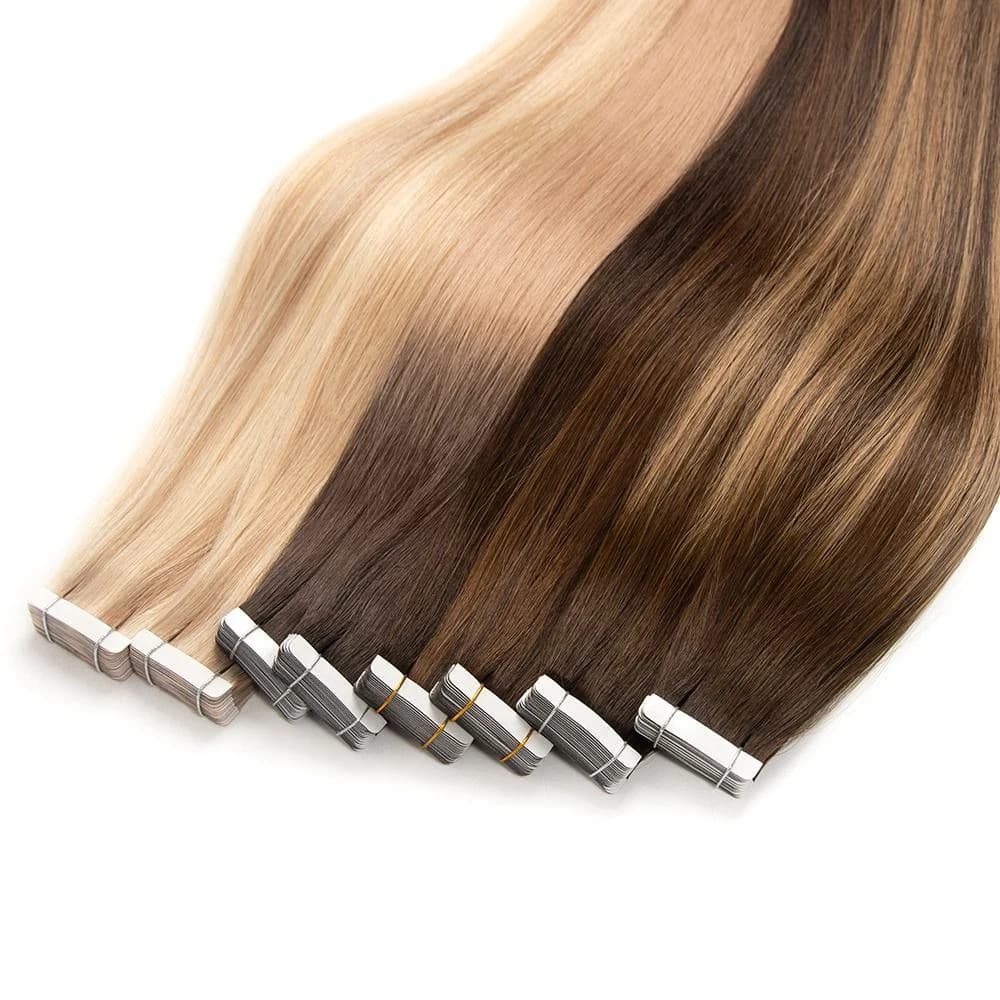
Tape-in extensions can be worth considering for fine hair when a professional confirms that the natural hair can support and cover the selected attachments. The most useful buying questions concern tab weight, dimensions, placement, root appearance and maintenance. A flat attachment or an “invisible” name does not settle those questions on its own.
For a salon client, the goal may be modest fullness rather than dramatic length. For a salon owner or hair brand, the task also involves choosing a repeatable product specification and avoiding stock that does not match actual consultations. Both decisions benefit from examining a physical sample before committing to a full order.
This guide explains how to evaluate tape in extensions for thin hair, distinguish individual tabs from installed pairs and discuss single-sided options responsibly. DR Hair Extension publishes it as a manufacturer and wholesale supplier. Our product examples use the current catalog; your quotation should confirm the exact selection.
First decide whether tape-ins fit the client's hair
Fine describes individual strand thickness, while thin commonly describes lower density. A client can have fine strands with ample coverage, or fine strands and sparse areas together. Those situations need different placement and weight decisions.
Have the stylist assess the actual attachment areas, including the sides and the hair covering each proposed placement. Review breakage, chemical processing, styling habits and the desired result. A dense-looking ponytail does not establish that every area offers equal support or concealment.
Separate cosmetic fullness from a hair-loss concern
Extensions do not treat the cause of thinning. With new or unexplained hair loss, seek a dermatologist's assessment before adding attached hair. The American Academy of Dermatology explains that repeated pulling can cause traction-related hair loss.
The AAD also recommends professional installation and adjustment of painful or overly tight styles. Pain or a headache during fitting should be addressed, rather than accepted as a normal settling period. A lighter-looking tab cannot establish suitability for compromised hair.
If tape-ins are unsuitable, revisit the desired result and the available alternatives. Our fine-hair extension methods comparison covers nano rings, wefts, keratin bonds and temporary options without treating any method as universally best.
Tape-in pros and cons: evaluate the complete service
The flat tab format is a reason to assess tape-ins, but its practical value depends on the product and fitting plan. Consider the benefits and obligations together.
| Selection point | Potential advantage | What still needs checking |
|---|---|---|
| Flat attachment | A relatively low-profile format to evaluate | Complete attachment thickness and natural coverage |
| Placement in separate tabs | Allows a planned distribution of added hair | Weight and supporting hair at each placement |
| Root-finish options | Different visible hair-to-base presentations | Actual concealment in the intended hairstyle |
| Reapplication | Hair may be reused after assessment | Hair condition, replacement tape and professional removal |
| Color selection | Can introduce fullness and dimension | Root match, length match and highlight distribution |
| Ongoing wear | Avoids daily clipping in and removal | Care routine, reviews, removal and refitting costs |
A client seeking subtle fullness may need a different plan from someone seeking long, dense ends. Discuss the smallest realistic change that meets the goal. If the effect requires more attached hair than the stylist considers appropriate, revise the effect rather than simply adding placements.
Understand tab weight before choosing a pack
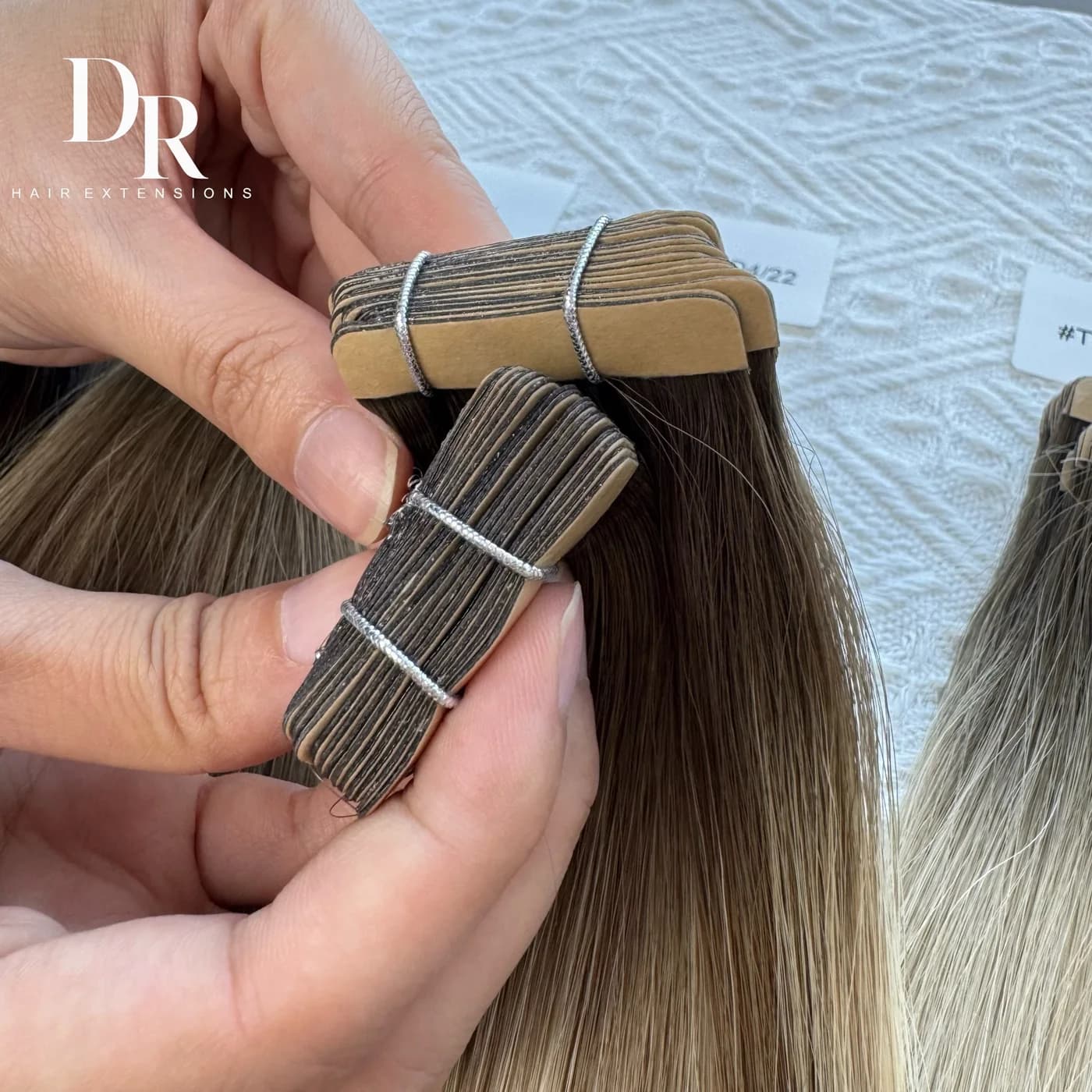
DR's regular Tape-in Hair has a standard 100g pack with 40 individual tabs. Each standard attachment measures 4 × 0.8cm. Dividing pack weight by tab count gives approximately 2.5g of hair per tab.
Two hair-bearing tabs used together represent approximately 5g of hair. This calculation describes hair weight, not a clinical load limit or the full weight of every fitting component. A stylist must still decide whether the supporting natural section and placement are suitable.
Forty tabs do not mean forty sandwich pairs
If every placement uses two hair-bearing tabs, 40 individual tabs make 20 pairs. A supplier quoting 40 pairs is describing a different quantity from 40 tabs. Resolve that distinction before comparing prices or reserving a service.
Keep four figures separate: grams per pack, individual tab count, hair weight per tab and planned installed quantity. A 100g minimum purchase does not mean one fine-haired client should wear all 100g. Unused product can remain salon inventory when appropriately identified and stored.
For a custom format, ask the supplier to confirm weight and count together. Simply increasing the number of tabs does not establish the same dimensions, adhesive or weight distribution. Do not assume a standard tab can be cut into smaller attachments unless the supplier explicitly permits it and provides the relevant instructions.
Concealment depends on more than an invisible root finish
Evaluate the attachment beneath the hair intended to cover it. Ask the stylist to check the client's normal parting, side coverage and preferred ways of tying the hair back. A tab that looks discreet lying flat on a table may show when the surrounding hair moves.
Color matters at the attachment area as well as through the lengths. A pale base against darker roots can create a visible contrast even when the ends match. Rooted or dimensional hair may help achieve the intended blend, but the selected sample should guide the decision.
Regular and Invisible Tape have different root presentations
DR's Invisible Tape Hair uses specialized equipment to create a scalp-like root appearance. It still uses adhesive tape attachment, and its standard pack also contains 100g and 40 individual tabs measuring 4 × 0.8cm.
That means the root finish does not automatically make the hair-bearing tab lighter than regular Tape-in. Compare the visible root, edge, flexibility and supplied hair on physical samples rather than assuming that “invisible” establishes a lower load or guaranteed concealment.
The protective paper visible in product photographs is not the final installed surface. White, blue or brown backing should not be treated as a quality grade or a root-color reference. Our regular versus Invisible Tape comparison covers the construction and supply differences in detail.
What are single sided tape in extensions?
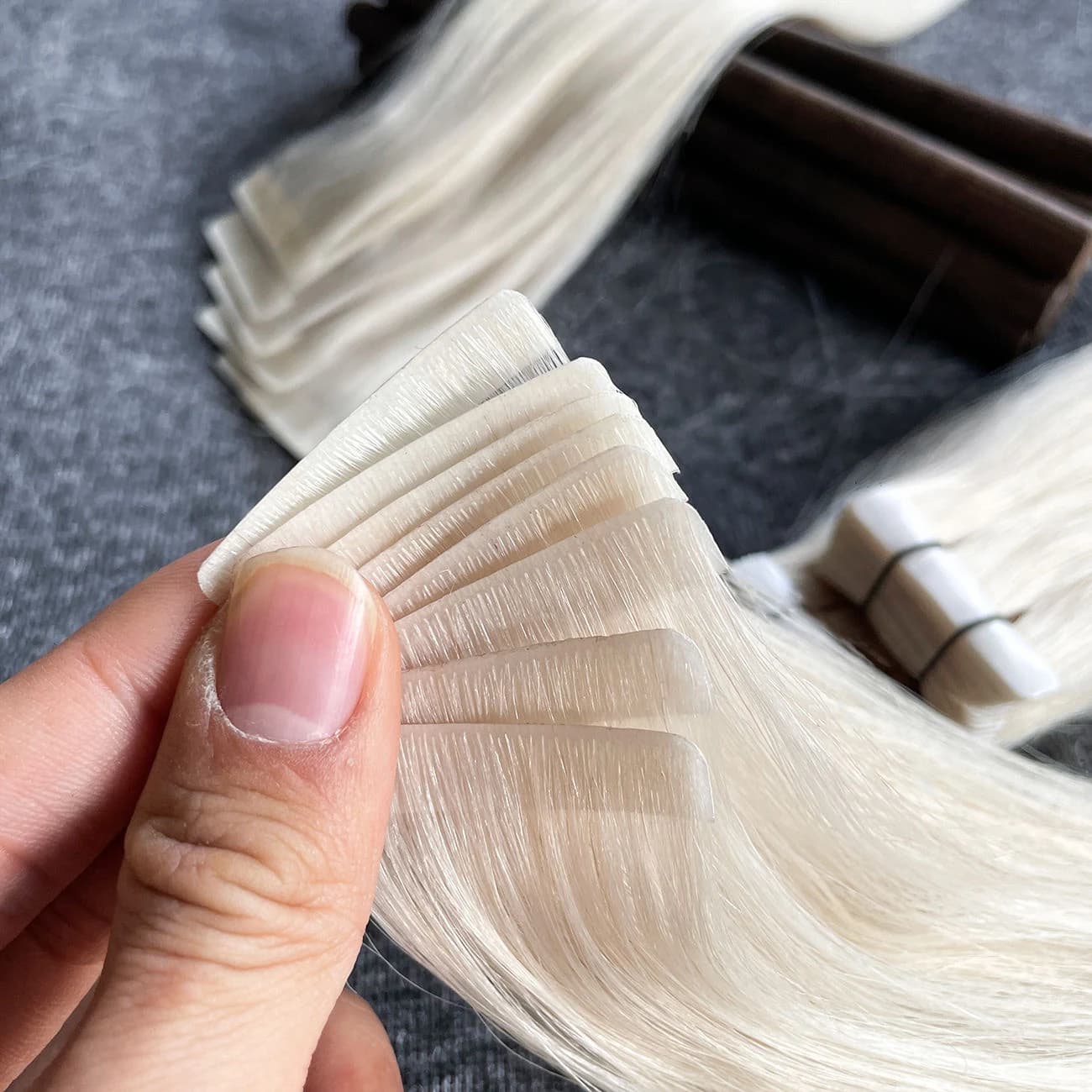
In a compatible single-sided system, one hair-bearing extension tab is paired with the system's designated backing instead of a second hair-bearing tab. The aim is to change the hair quantity and attachment arrangement at that placement. It is not the same as leaving an adhesive surface exposed.
For example, Great Lengths describes a Safety Band replacing a second GL Tapes piece. That is a manufacturer-specific arrangement. It demonstrates why the backing, adhesive and instructions need to be treated as a complete system; it does not establish compatibility with DR tabs.
Lower hair quantity does not remove the fitting assessment
Using one hair-bearing tab instead of two can reduce the hair at that placement, but it does not prove that the resulting attachment is suitable for every sparse area. Coverage, supporting hair, tab dimensions and the approved backing remain relevant.
DR's current catalog does not establish a separately specified single-sided backing accessory or a universal single-sided fitting instruction. Ask us and your stylist to confirm the proposed configuration before purchasing for that use. Do not substitute household tape, generic adhesive strips or another brand's accessory without confirmation.
If a professional recommends a single-sided approach, request the exact compatible components, removal method and reapplication instructions in writing. This is a product-selection question to resolve before installation preparation, not a modification to discover after a pack arrives.
Prepare for professional fitting with a written plan
Bring the intended hairstyle and maintenance expectations into the consultation. Ask which areas the stylist plans to use, how the attachments will remain covered and how the proposed amount relates to the available natural hair. Have the stylist explain any limitations on tied-up styles before agreeing to the service.
Confirm the selected adhesive, preparation products and removal supplies. Follow that system's instructions for clean, dry hair and any restrictions around washing or product use. A preparation routine from another brand should not automatically become the instruction for the supplied DR sample.
Agree on what happens if a tab feels uncomfortable, becomes visible or loses hold. The answer should include access to professional assessment and removal. Avoid repeatedly pressing, pulling or adding adhesive to a problem attachment at home.
Define success before the first appointment
For a fullness service, success might mean a more even outline near the existing length rather than a dramatic increase in density. For added length, the stylist needs to plan a believable transition from the natural ends. These are consultation examples, not reports of completed fine-hair trials.
Record the accepted goal, chosen specification and follow-up arrangements. That makes it easier to distinguish a shade mismatch, an unsuitable placement and a maintenance concern instead of treating every problem as “the hair quality.”
Match shade, texture and ends on the actual sample
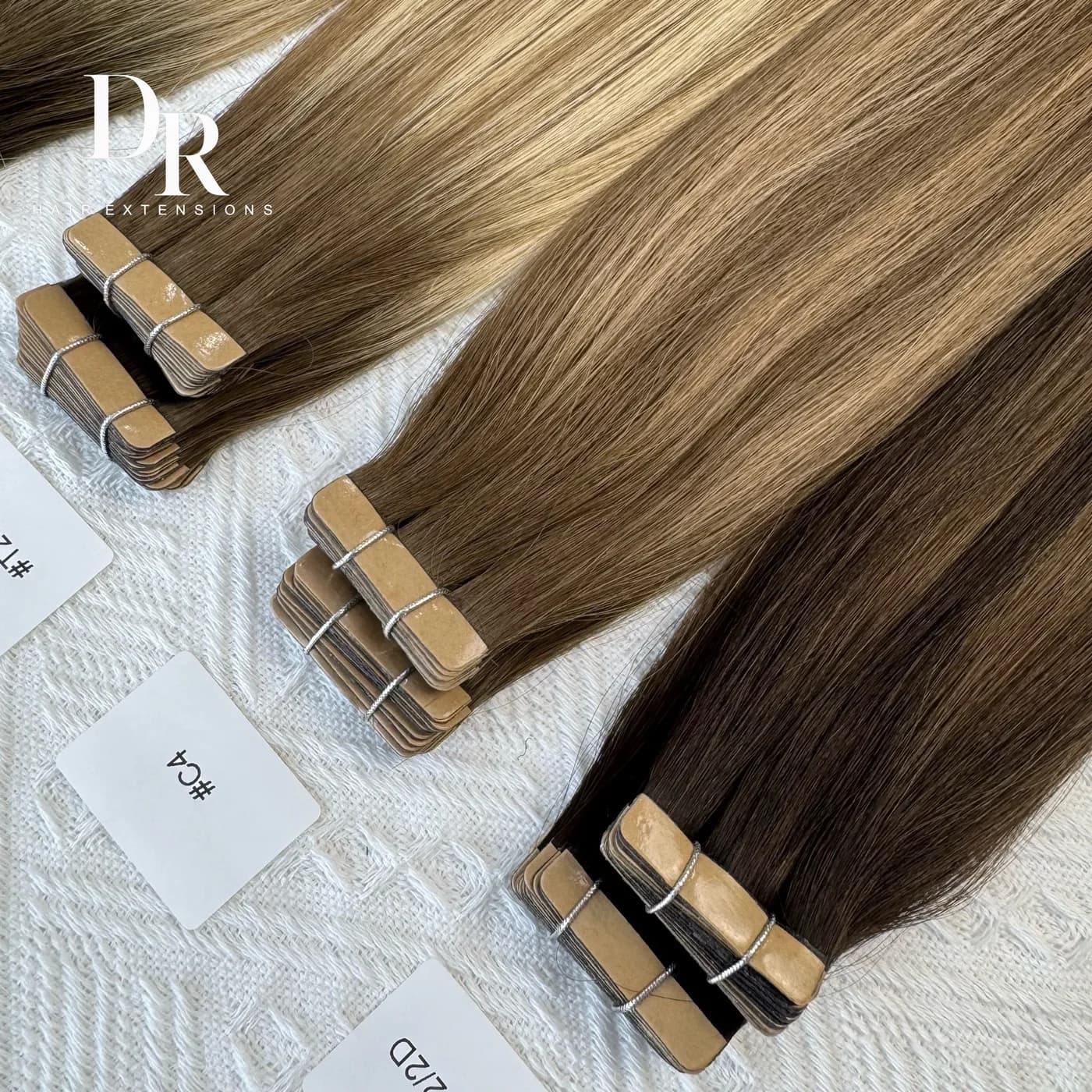
Compare the sample with roots, mid-lengths and ends under the same lighting. Use a physical DR color reference to shortlist shades, then confirm the supplied tape-in sample. Screens and photographs help communication but do not establish an exact match under every light.
For highlighted or balayage hair, compare how the light and darker strands are distributed. A flat blonde can look disconnected from dimensional natural hair even when one strand appears similar. Record the root transition and tonal direction needed rather than requesting an undefined “natural blonde.”
Review texture and end fullness as separate decisions. Very full ends may need a different blending plan on fine hair. Remy or Virgin Hair options do not, by themselves, specify strand diameter or the best end density for a client. Confirm processing and assess the selected sample with the stylist.
Use sample approval to separate product checks from fitting results
Before altering or installing a sample, record its product type, shade, length, hair option, tab dimensions, weight and count. Review the base and hair-to-tab transition, and compare the received product with the quotation. Resolve discrepancies before cutting, coloring or fitting it.
DR's documented US salon sampling experience describes a stylist starting with a physical color ring and 300g across Genius Weft, tape-in and flat-tip formats. She evaluated construction, color and salon use before repeat orders. It supports a sample-led buying process, not a controlled comparison proving tape-ins suitable for every fine-haired wearer.
Where a professional application assessment is appropriate, keep the preparation, supplied adhesive, placement record, care instructions and observations identifiable. Suggested checks are not the same as a completed factory wear test. Ask what evidence actually supports any hold-time, hypoallergenic or damage-free claim.
What factory testing and shipment inspection cover
DR's confirmed quality-control process includes production-stage checks and weighing each pack. Final shipment inspection uses sampling for weight, ruler-measured length, color under dedicated lighting, shedding and smoothness. A sampled nonconformity triggers full reinspection of the affected shipment.
The published process does not specify a universal adhesive peel-strength threshold or a safe weight for an individual scalp. If customer requirements include additional attachment checks, agree on the method and acceptance criteria before production. Keep manufacturing approval and the stylist's wearer assessment distinct.
Buy the right specification and plan the ongoing cost
Regular DR Tape-in Hair has 40+ stock colors at 22 inches, with availability confirmed by selection. Stock and custom hair orders start at 100g per color and length. Confirmed in-stock orders can dispatch the same day when arrangements are agreed; custom orders normally dispatch in 5–10 working days.
Invisible Tape Hair is made to order, with no ready stock. Listed lengths are 14–30 inches; starting quantities are 200g for solid or piano colors and 300g for rooted or balayage colors. Custom production normally takes 7–10 working days, with shipping separate. A standard 100g pack is not the same as its order minimum.
Ask for the sample cost, dispatch plan and delivery quote applying to your destination. For salon service pricing, include installation, blending, reviews, professional removal, replacement tape and any refitting. Comparing hair prices alone does not compare the full service.
Agree on maintenance before committing
The stylist should set review and refitting arrangements according to growth, placement, condition and care. Hair reuse depends on professional assessment and replacement tape, not a guaranteed number of cycles. Ask for the approved home-care routine and what to do between appointments if something changes.
Avoid treating a published calendar estimate as permission to leave discomfort or slipping unreviewed. For a larger inventory decision, the wholesale tape-in buying guide explains specification and order planning beyond this fine-hair assessment.
Frequently asked questions
Are tape-in extensions good for thin hair?
They may be appropriate when a professional confirms adequate supporting hair and coverage for the selected attachments. Lower density, fragile areas and active hair-loss concerns need individual assessment. The flat format does not make every tape-in configuration suitable.
How many tape-ins do I need for fine hair?
Obtain a fitting plan before deciding the quantity. The goal, density, condition and placement all matter. DR's standard 40-tab pack contains individual pieces, equivalent to 20 pairs only when every placement uses two hair-bearing tabs. It is not a recommendation to install the whole pack.
Are single-sided tape-ins safer than double-sided pairs?
A compatible backing can change the amount of hair at a placement, but it does not establish universal safety. Confirm the actual system, supporting hair, coverage and professional instructions. Do not assume another manufacturer's single-sided accessory works with DR products.
Does Invisible Tape weigh less than regular Tape-in?
Not automatically. Both standard DR formats contain 100g across 40 individual tabs, averaging approximately 2.5g of hair per tab. Invisible Tape changes the root presentation; compare the selected construction and any custom weight separately.
Can tape-in extensions damage fine hair?
They can cause problems if the attachment, tension, care or removal is unsuitable. Professional assessment and prompt attention to discomfort matter. Do not interpret an invisible root, a small tab or a product label as a damage-free guarantee.
Can I cut a standard tab into smaller pieces?
Do not assume cutting is permitted. Ask the supplier to confirm the construction and any resizing instructions, and have the stylist review the proposed format. A custom tab quoted before production is different from an improvised alteration.
Conclusion
Choose tape-ins for fine or thin hair through a professional assessment of support, coverage and the intended result. Specify individual tab count, weight, dimensions and root finish, then approve the sample and maintenance arrangements. A clear fitting plan and a repeatable product specification are more useful than an invisible label or a one-size-fits-all gram recommendation.
TAPE-IN HAIR SOURCING
Request a Tape-in Hair specification or quote.
Share your shade references, lengths, texture, quantities and preferred pack format. Fields marked with * are required.