
BUYING GUIDE
Invisible Tape-In Hair Extensions vs Regular Tape-Ins: A Salon Buying Guide
Compare invisible tape-in hair extensions with regular tape-ins by root finish, pack size, samples, MOQ and salon maintenance.
Introduction
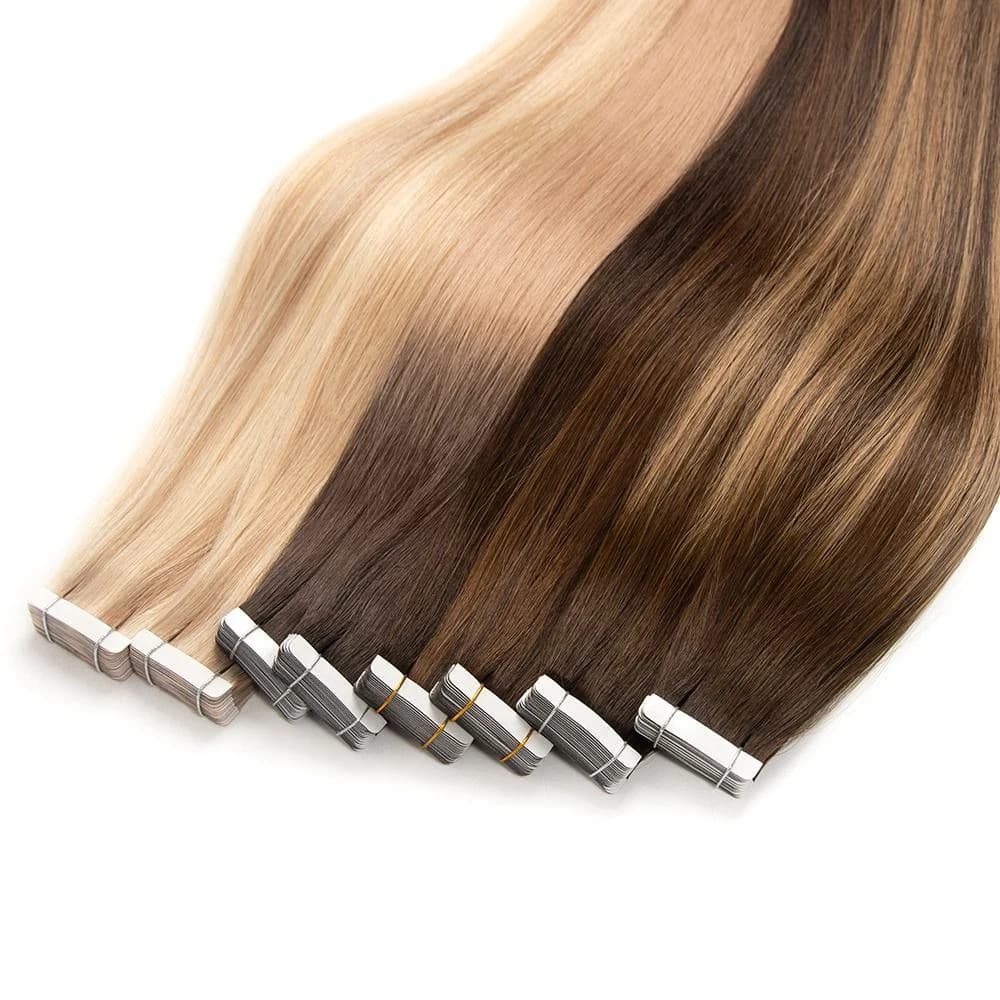
Invisible tape-in hair extensions differ from regular tape-ins mainly in the visible root construction. DR's Invisible Tape Hair uses specialized equipment to create a scalp-like root appearance. Both products use professional adhesive tape-in attachment, and both have a standard 100g pack containing 40 individual tabs with 4 × 0.8cm attachments.
The buying decision involves more than appearance. Regular Tape-in Hair has 22-inch stock options, while Invisible Tape Hair is made to order. Their minimum quantities, sample arrangements and production schedules differ. A salon choosing a new service or a brand planning inventory should compare those details alongside the root finish.
This guide explains how to compare the two DR ranges, approve representative samples and prepare for professional application. We publish it as the manufacturer and wholesale supplier of the featured products. The comparison uses our current catalog; your quotation should confirm the exact configuration and order terms.
Invisible tape vs regular tape: the practical differences
| Selection point | Regular DR Tape-in Hair | DR Invisible Tape Hair |
|---|---|---|
| Root area | Regular tape-in construction; assess the supplied sample | Root area made using specialized equipment for a scalp-like appearance |
| Attachment method | Professional adhesive tape-in | Professional adhesive tape-in |
| Standard pack | 100g / 40 individual tabs | 100g / 40 individual tabs |
| Standard tape dimensions | 4 × 0.8cm | 4 × 0.8cm |
| Availability | 40+ stock colors at 22 inches; confirm each selection | Made to order; no ready stock |
| Hair order minimum | 100g per color and length | 200g for solid / piano colors; 300g for rooted / balayage colors |
| Custom schedule | Custom orders normally dispatch in 5–10 working days | Custom production normally takes 7–10 working days; confirm dispatch separately |
| Reapplication | Replacement tape and professional assessment | Replacement tape and professional assessment |
Choose Invisible Tape Hair when its root finish is an important requirement and the order can accommodate made-to-order production. Consider regular Tape-in Hair when an approved regular construction meets the application needs and confirmed stock supports replenishment. Neither name determines the best choice for every client.
What does “invisible” change at the root?
DR's Invisible Tape Hair is designed to give the impression of hair growing from the scalp at the root area. The distinction concerns how that area looks, rather than a different attachment category. The product still uses adhesive tape and still needs appropriate coverage, positioning and maintenance.
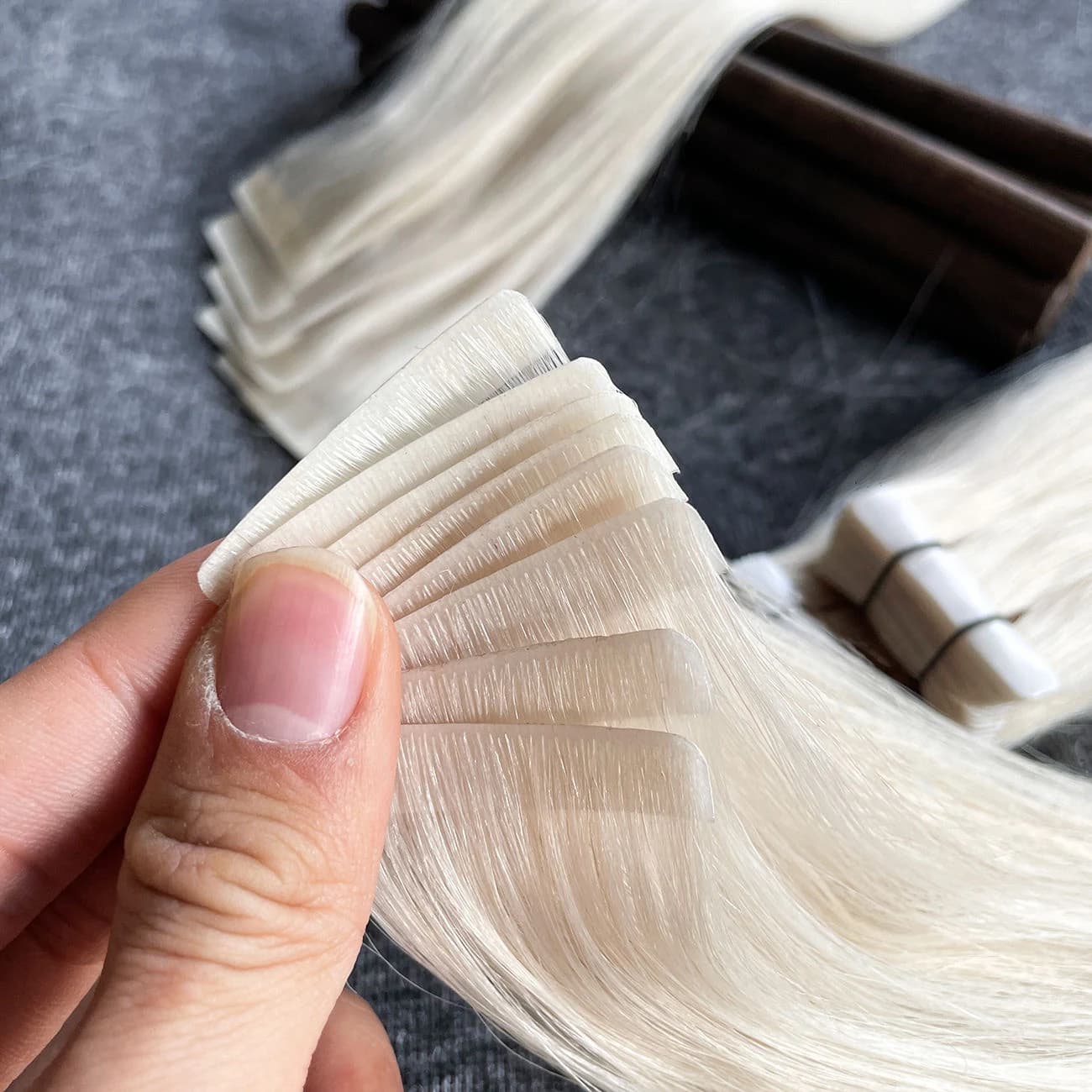
Inspect the root from the front and back, then compare it with regular tape under the same lighting. Look at the transition between hair and base, the edge profile, flexibility and the shade at the attachment area. A close-up reveals construction more clearly than a styled photograph of the lengths.
Ask for the actual construction, not just a label
Terms such as invisible, seamless and injected appear in product searches, but a name alone does not specify a manufacturing process. For DR, the confirmed description is a root area made using specialized equipment for a scalp-like appearance. Request the selected sample and construction details before treating another supplier's terminology as equivalent.
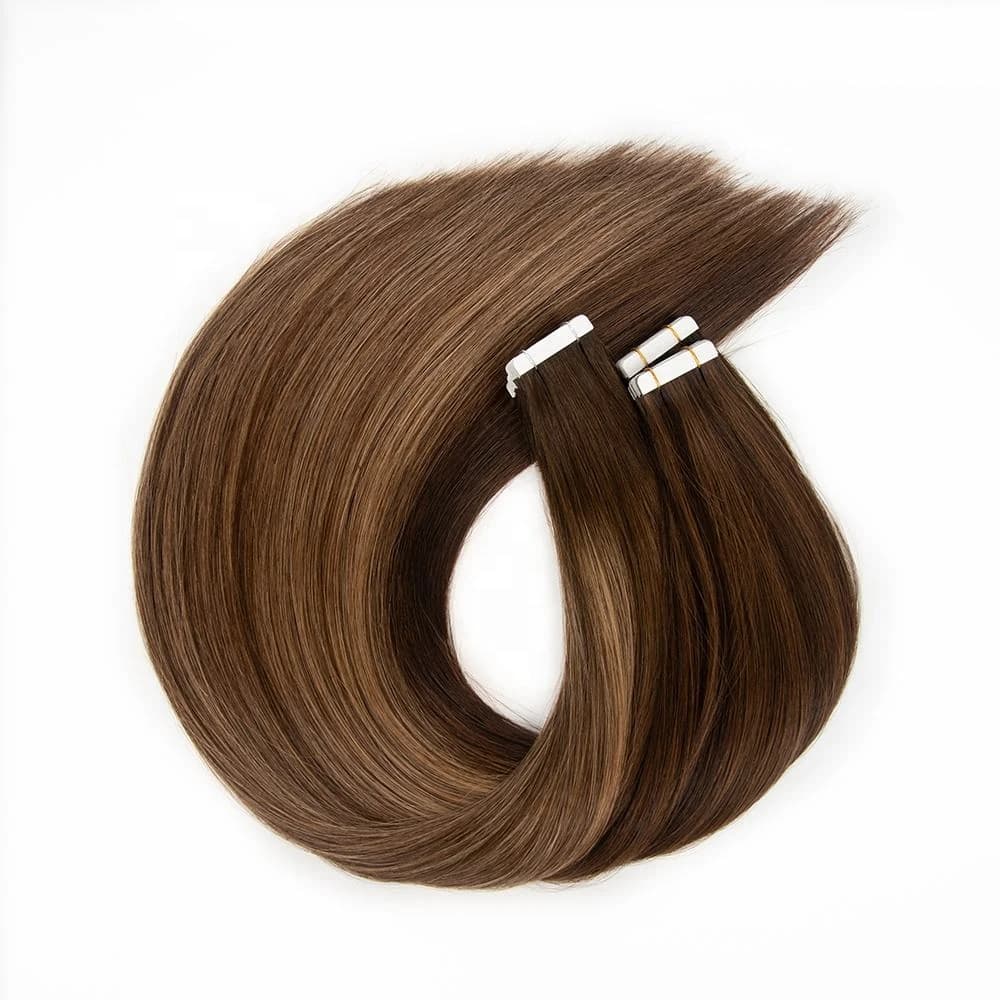
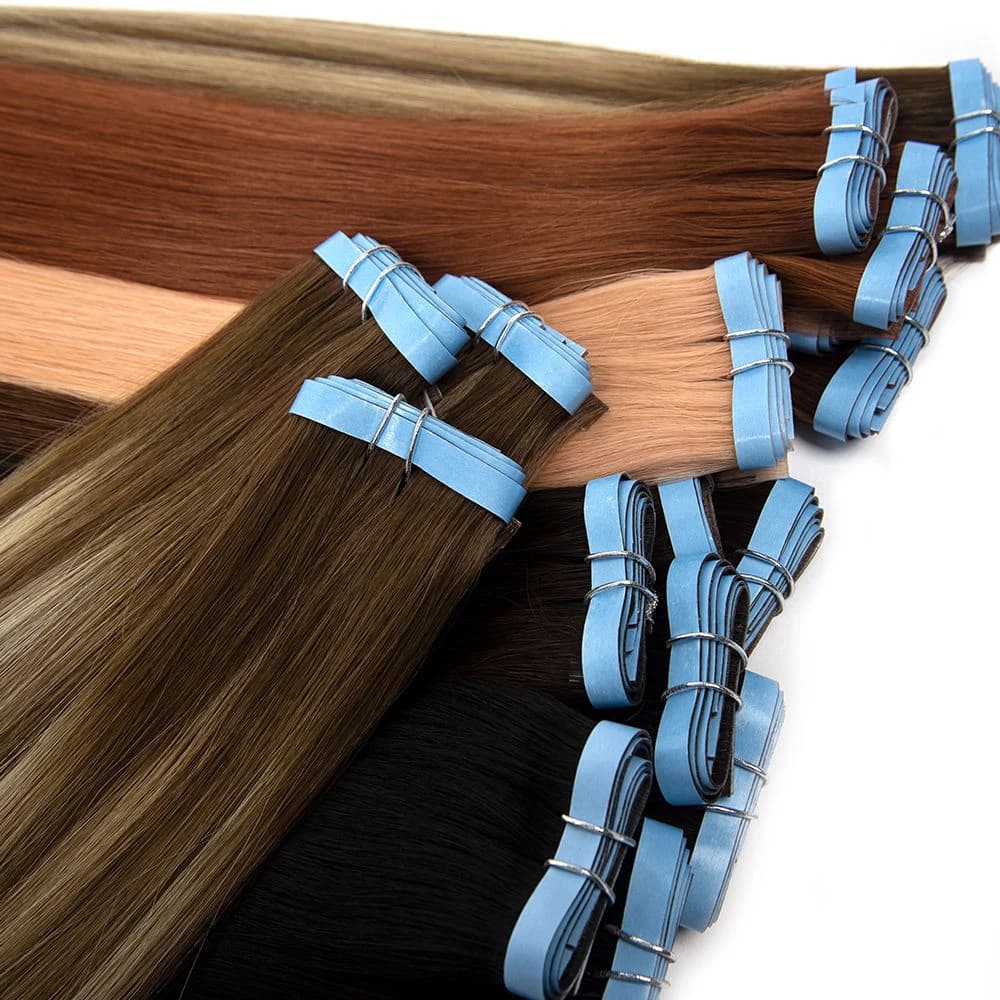
Backing paper also does not identify the finished root effect. White or blue protective backing in a product photograph is part of the presentation before fitting. Compare the actual attachment construction on the sample; do not use backing color as a quality grade or shade-matching reference.
Compare concealment in the intended hairstyle
Concealment depends on the root finish, natural coverage, root shade, placement and how the hair moves. A discreet-looking tab on a white background may look different beneath a client's hair. Assess the intended parting and everyday styling habits during consultation rather than promising that an attachment will never show.
For clients wearing their hair down, consider how the surrounding hair covers the attachment during normal movement. For clients who frequently tie their hair up, discuss the proposed positioning and the styles the professional considers workable. A product name does not guarantee coverage at every angle.
Fine hair and low density need separate assessment
Fine describes the diameter of individual hairs; low density describes how much hair covers an area. A scalp-like root appearance can be a relevant selection feature, but it does not establish how much weight a client's hair can support. Consult a trained extension professional about condition, coverage, placement and total added weight.
The American Academy of Dermatology recommends professional installation and says pain or a headache during fitting can indicate an overly tight style. Address discomfort with the stylist, and seek a dermatologist's assessment for concerns about hair loss. Its extension-care guidance supports careful application rather than a damage-free product promise.
Keep pack weight, tab count and application quantity separate
Both DR ranges use a standard 100g / 40-tab pack. Dividing those figures gives approximately 2.5g of hair per individual tab. In a two-tab sandwich configuration, 40 individual tabs form 20 pairs, with approximately 5g of extension hair per pair. These are pack calculations, not a prescription for a client's installation.
The standard attachment measures 4 × 0.8cm. Hair length, tab width and tab height describe different dimensions. Include all of them on a purchasing sheet, especially when requesting a custom pack or comparing suppliers with different piece counts.
| Quantity | Meaning in the standard format | Purchasing implication |
|---|---|---|
| 100g | Total hair weight per pack | Does not automatically meet every product's order minimum |
| 40 tabs | Individual pieces in that pack | Does not mean 40 sandwich pairs |
| Approx. 2.5g | Calculated average hair weight per tab | Confirm custom piece weights with the revised pack format |
| 4 × 0.8cm | Standard attachment dimensions | Different dimensions require separate confirmation |
For example, 200g supplied in the standard format would contain two 100g packs and 80 individual tabs. A 300g order would contain three packs and 120 tabs. Confirm the pack breakdown on the quotation; customization can change those counts.
Match the root shade as well as the lengths
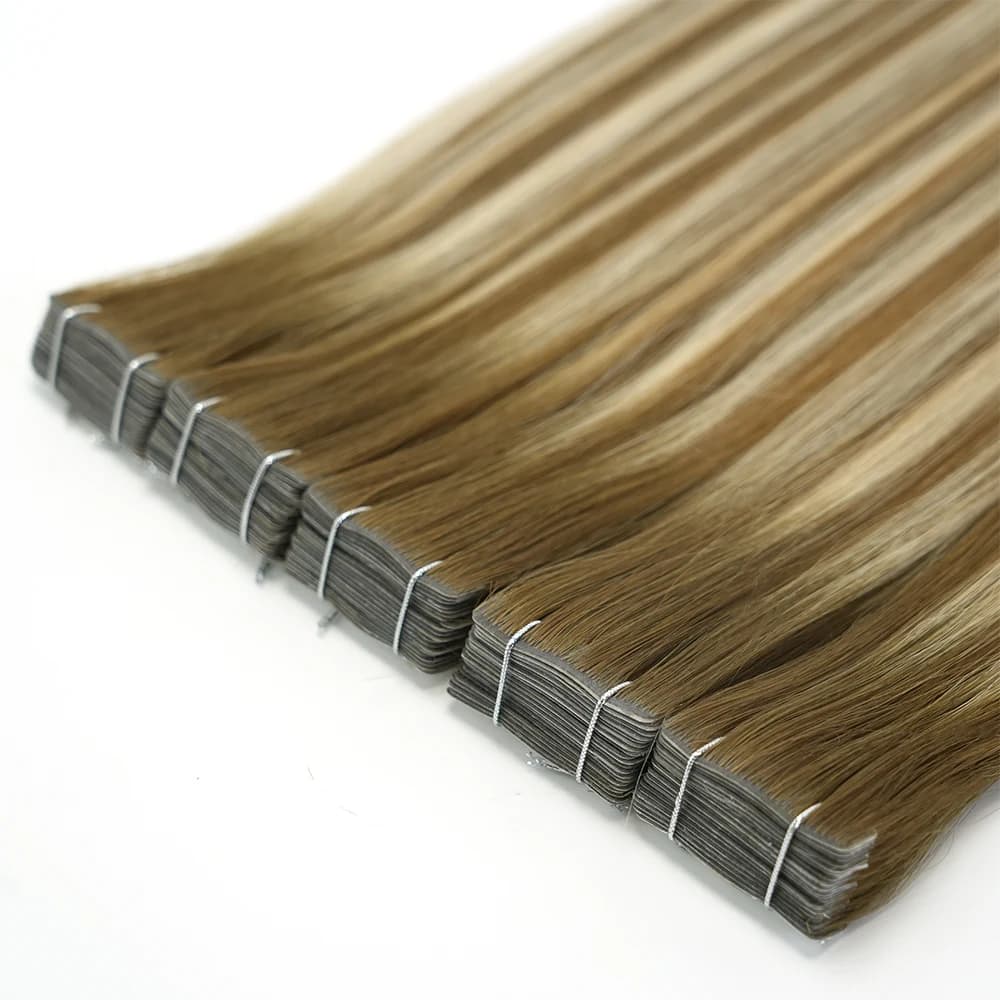
Review root depth, mid-length tone, highlights and ends. For a rooted blonde or balayage blend, the most appealing length color may not provide the right transition near the attachment. Assess the root finish and color together on a physical sample.
Use our hair extension color chart to shortlist references, then confirm important selections with a physical color ring or approved sample. Photograph comparisons under consistent lighting and retain the chosen reference. Screen images are useful for starting a discussion, while the physical reference gives both parties a clearer approval target.
Both ranges offer Virgin Hair and Remy Hair options. Specify the selected option and discuss processing for the requested shade. Lightened and blended colors should be described according to the actual supplied specification, without assuming an unprocessed status from a collection name.
Use a repeatable sample comparison
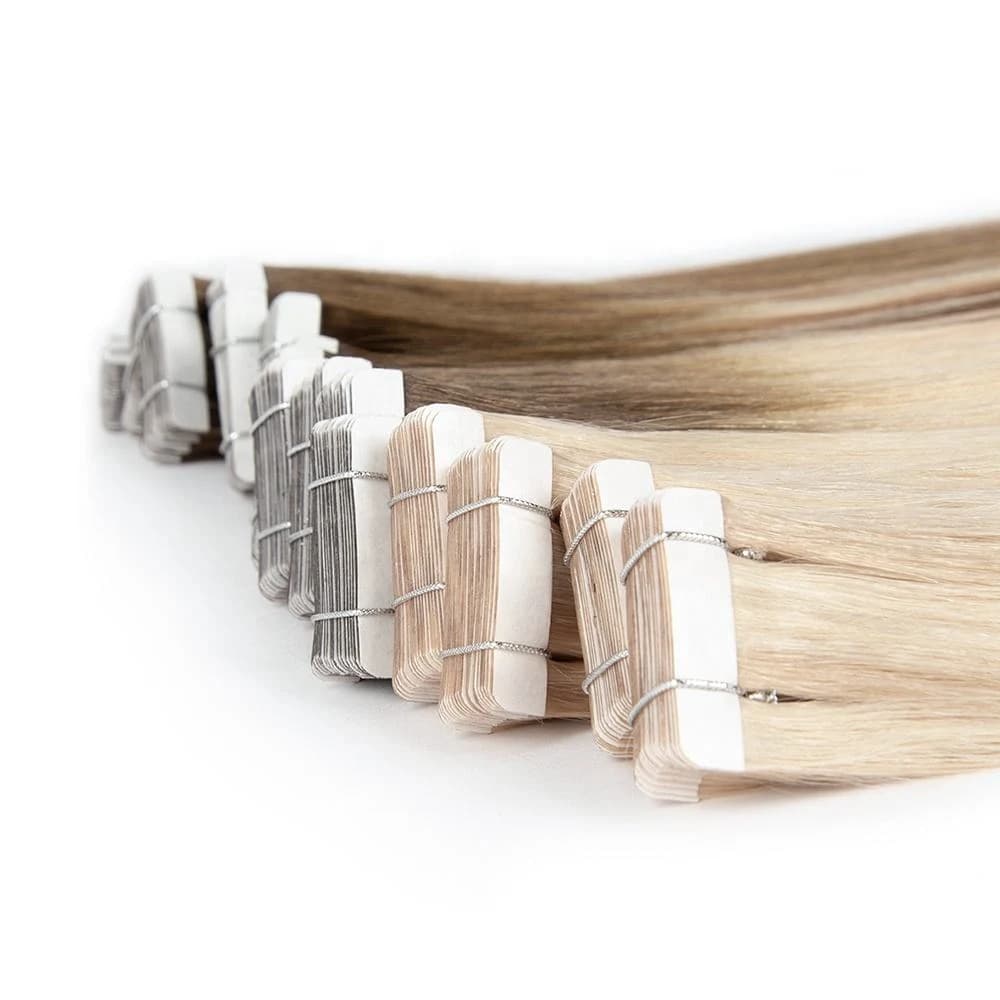
Request representative paid samples of the constructions you are considering. Keep length, shade, hair option and pack format as similar as practical so a difference in color or weight does not distract from the root comparison. Record any differences that cannot be matched.
Review the sample before professional application
Check the labels, total weight, individual tab count, attachment dimensions and agreed shade. Examine the root transition, visible edges, flexibility, length distribution and end fullness. Keep photographs and an approval record before cutting, coloring or fitting the hair.
Ask the supplier for preparation, removal and replacement-tape guidance for the selected construction. A familiar adhesive or remover should not be assumed compatible with every base. Resolve specification questions before using the sample in an appointment.
Record handling and salon observations
For an agreed professional trial, document installation preparation and the washing, drying and styling routine. Note attachment visibility in the intended style, handling, tangling, shedding and the condition of the hair and base at removal. Evaluate the product under realistic customer requirements, rather than relying on softness straight from the pack.
Our US salon customer story describes a stylist beginning with a color ring and 300g across Genius Weft, tape-in and flat-tip formats. She assessed the products through salon use before repeat orders and branded packaging. That experience supports sampling before expansion; it is not a controlled Invisible Tape versus regular Tape-in trial.
Finish the comparison with a written decision: approved, adjustment needed, or unsuitable for the intended service. Identify the exact change requested and retain an approved reference for reorders. If a revised root finish or tape dimension is proposed, review that revision before production.
What factory testing and shipment inspection establish
Ask which checks are included in the supplier's process and which require a separate agreement. DR's confirmed quality-control process includes checks at production stages and weighing each pack. Final shipment inspection uses sampling for weight, ruler-measured length, color under dedicated inspection lighting, shedding and smoothness. A sampled nonconformity triggers full reinspection of the affected shipment.
Those checks support conformity with the agreed order. They do not, by themselves, establish a standardized adhesive-strength result, a guaranteed wear period or universal suitability. If your brand needs additional acceptance criteria for root appearance, attachment dimensions or adhesive handling, agree on the criteria and available evidence before production.
At receipt, compare labels, pack quantities and visible condition with the approved order and sample reference. Retain packaging and photograph discrepancies before altering or installing the affected hair. A clear order reference makes the issue easier to investigate than a general report that the product looks different.
Compare stock, minimum orders and total cost
Regular Tape-in Hair has more than 40 stock colors at 22 inches, subject to confirmation for each selection. Confirmed in-stock orders can dispatch the same day when the arrangements are agreed. Custom regular Tape-in orders normally dispatch in 5–10 working days. Its hair order minimum is 100g per color and length.
Invisible Tape Hair has no ready stock. Its listed lengths are 14–30 inches, and custom production normally takes 7–10 working days. Minimum quantities start at 200g for solid or piano colors and 300g for rooted or balayage colors. Confirm how the chosen shades and lengths are allocated under those terms.
A 100g standard pack is therefore a packaging specification, not the Invisible Tape minimum order. Ask separately about a paid sample's specification, charge and timing. Regular Tape-in sample hair uses wholesale hair pricing, with delivery quoted separately; Invisible Tape sample terms are confirmed with its quotation.
Request a comparison based on equivalent hair option, length, shade, total weight and tab format. Separate hair price, packaging, freight and any destination charges. DR does not publish one price difference that applies to every combination. Include installation and maintenance labor in your salon costing, using your own service records.
For regular Tape-in, the catalog estimates around 2–4 working days for delivery after dispatch, depending on destination, courier and customs. Invisible Tape shipping is quoted separately. Confirm the actual service and transit estimate for either order before scheduling a launch or client appointments.
Plan maintenance and repeat orders together
Both products can be considered for reapplication with replacement tape and professional assessment of hair condition. Check the base as well as the lengths. A discreet root appearance at purchase does not remove the need for careful removal, attachment preparation or suitable replacement tape.
The fitting professional should set maintenance timing according to hair growth, placement and care. Discuss detangling, washing, drying, styling and sleep preparation using the selected product's instructions. Distinguish an installation's review date from the total useful life of the hair; there is no universal duration for every client and configuration.
For inventory, keep the product construction visible in your records. Similar-looking shades in regular and Invisible Tape should have distinct identifiers. Record the approved root finish, shade, length, hair option and pack format so a reorder does not silently substitute one construction for the other. See the wholesale Tape-in buying guide for broader assortment and quotation planning.
Frequently asked questions
Are invisible tape-in extensions better than regular tape-ins?
They offer a different root appearance, which may matter for the intended placement and coverage. Compare physical samples, professional suitability and supply requirements. Regular Tape-in may meet the service needs with confirmed stock; Invisible Tape requires made-to-order planning. Neither is the best choice for every client.
Do both DR products use the same standard pack size?
Yes. Both have a standard 100g pack with 40 individual tabs and 4 × 0.8cm attachments. That gives approximately 2.5g of hair per tab. Custom formats require confirmation. Pack weight and individual tab count are separate from the minimum quantity required for an order.
Is Invisible Tape Hair available from stock?
No. DR Invisible Tape Hair is made to order, with custom production normally taking 7–10 working days. Shipping is separate. Regular Tape-in has stock options at 22 inches in more than 40 colors; confirm availability and dispatch arrangements for the exact selection.
Can invisible tape-ins be used on fine hair?
The root finish may be a relevant concealment feature, but suitability depends on a professional assessment of hair condition, density, coverage, placement and weight. A scalp-like appearance does not establish safe support for a particular client. Discuss the complete application plan with a trained extension specialist.
Can regular and invisible tabs be combined?
Do not assume compatibility from the shared dimensions. Ask for confirmation of the selected bases, adhesive, replacement tape and professional method before planning a mixed application. The fitting professional should assess placement and coverage. Each construction should remain identifiable in the salon's product record.
Can both products be reused?
Reapplication requires replacement tape and professional assessment of the hair and attachment condition. Follow the selected product's removal and preparation guidance. Do not assign a fixed number of reuses from the product name alone; care, handling and the condition at removal affect the decision.
Conclusion
Compare Invisible Tape and regular Tape-in as complete product and supply choices. Start with the root appearance your service needs, then confirm the hair, tab specification, sample approval and maintenance plan. Match that decision to stock availability, minimum quantities and lead times so the chosen construction can be supplied consistently.
INVISIBLE TAPE HAIR SOURCING
Request an Invisible Tape Hair specification or quote.
Share your shade references, lengths, texture, quantities and preferred pack format. Fields marked with * are required.