
BUYING GUIDE
Single Drawn vs Double Drawn Hair: What Salon Buyers Should Compare
Compare single drawn vs double drawn hair by end fullness, length distribution, sample checks and cost before ordering for your salon.
Introduction
The main difference between single drawn and double drawn hair is the distribution of strand lengths. Single drawn hair generally contains a broader mixture of lengths and tapers toward the ends. Double drawn hair undergoes additional selection of shorter strands to produce a fuller, more uniform appearance through the lengths and ends.
That distinction helps describe an intended look, but it is not a complete quality specification. Neither term alone establishes cuticle alignment, processing history, attachment construction, pack weight or a guaranteed lifespan. For salon buyers, the useful question is whether the actual sample delivers the end profile required by the planned service.
This guide explains how to compare the two descriptions, assess value and put an approval target on the purchase order. DR Hair Extension publishes it as a manufacturer and wholesale supplier. Our product examples refer to the current catalog; ask us to confirm the length distribution and end-fullness requirement for your selected order.
What do single drawn and double drawn mean?
Single drawn hair usually has a tapered profile
In common supplier usage, single drawn hair retains a mixture of longer and shorter strands. More of the hair ends before the longest advertised length, so the bundle becomes less full toward its tips. That can suit a softer, tapered finish when it matches the hairstyle being planned.
For example, Luxy Hair's explanation of single drawn hair describes varied lengths within the hair and a taper toward the bottom. This is a manufacturer's description of its own products, rather than a numeric grading rule for every supplier.
Double drawn hair emphasizes fuller lengths and ends
Double drawn hair is generally selected to reduce the proportion of shorter strands. The result aims for a more consistent distribution of hair toward the intended length. Great Lengths describes its double drawn hair in terms of consistent fullness through the lengths and ends.
Do not interpret that description as proof that every strand in any product bearing the label is exactly identical. Ask how the supplier defines its selection, which reference the sample should match and what variation is accepted. The finished sample matters more than a term printed without supporting details.
| Comparison point | Single drawn: common description | Double drawn: common description |
|---|---|---|
| Strand lengths | A broader mixture of lengths | Additional selection to reduce shorter strands |
| End appearance | More taper toward the tips | Fuller, more uniform-looking ends |
| Styling consideration | Assess a softer or layered silhouette | Assess a stronger outline or fuller finish |
| Purchasing priority | Confirm the degree of taper | Confirm the actual end-fullness target |
| What remains unproven | Processing, cuticle condition and wear performance | Processing, cuticle condition and wear performance |
Keep drawn type separate from other hair specifications
Drawn type concerns length distribution. Remy describes cuticle alignment; a virgin-hair description requires clarification of processing history. Attachment terms such as Genius Weft, tape-in or clip-in describe another part of the product. These questions belong on separate lines of a specification.
DR lists Virgin Hair and Remy Hair options across its collection. Confirm the selected option and processing description for the requested shade. A lightened blonde, rooted color or highlighted blend should be described according to the supplied product, rather than assuming an unprocessed history from a broad collection label.
Likewise, double drawn does not mean double weft. The first describes strand-length selection; the second may describe how hair is arranged in an attachment. A thicker seam does not prove fuller ends, and fuller ends do not establish whether a seam is suitable for the planned placement.
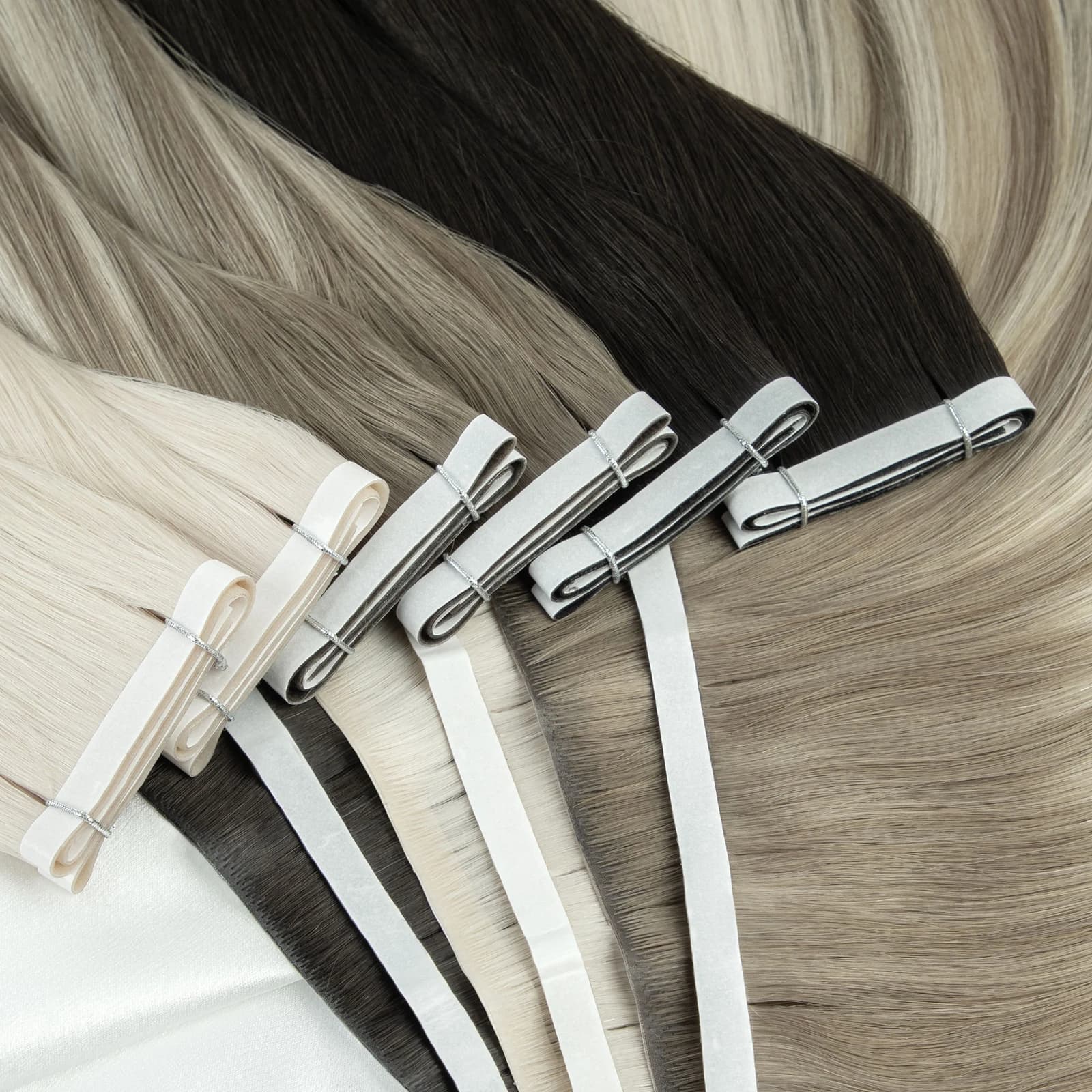
Our Genius Weft and Tape-in Hair pages provide construction and pack information. Use those details alongside a separate discussion of the desired end profile. The product name alone does not establish a drawn grade for every configuration.
Choose the end profile for the finished hairstyle
A softly layered result and a full, blunt-looking outline create different purchasing requirements. Before asking for the fullest available hair, discuss the intended cut, natural hair, attachment method and final length with the stylist. The right sample is the one that supports that design.
For a tapered or layered style, compare a sample with the actual amount of taper wanted. Some shorter strands can be consistent with the design; an unexpectedly sparse bottom section may not be. Write down the distinction instead of accepting or rejecting every tapered sample by its name.
For a fuller outline, assess how much hair continues toward the intended finish length. A double drawn description can be a useful starting point. Confirm the sample visually and discuss any final shaping, rather than assuming the style needs no blending or trimming.
Fine hair does not automatically call for one drawn type
End fullness and installation load are separate questions. Two packs with different length distributions can have the same total weight. A fuller-looking end profile does not tell you how much hair should be attached to a client or where it should be placed.
A trained extension professional should assess natural hair condition, coverage, attachment support and the intended style. For removable sets, our clip-in selection guide for fine hair explains why total set weight, piece widths and the actual wearing arrangement should be considered together.
Compare equivalent lengths, weights and formats
Hold the basic specification constant before judging end fullness. Compare the same construction, stated length, shade, texture and total hair weight. A longer or heavier sample may look more substantial for reasons unrelated to its drawn description.
DR's regular Tape-in standard pack contains 100g and 40 individual tabs, approximately 2.5g per tab. A standard 100g Genius Weft pack can be configured as two, four or five wefts. Those layouts divide the hair differently; they are not measurements of the proportion reaching a particular length.
For wefts, record the unfolded width and hair weight allocated to each piece. A sample spread across a wider area can appear less dense than the same hair gathered into a narrow bundle. Keep the presentation consistent when comparing, rather than judging one folded bundle against another fully opened weft.
Texture also changes presentation. Agree whether a length is assessed in its natural texture or gently extended state, and follow the same method for both samples. Do not stretch one sample firmly while leaving the other relaxed, then call the difference a manufacturing result.
Separate advertised length from finished service length
Discuss the length the client wants after blending and shaping. If trimming is expected, include that allowance in the sample discussion. There is no fixed rule that every single drawn product needs a particular number of extra inches; the usable finish depends on the actual hair and intended cut.
Evaluate a sample with a repeatable visual method
Request representative paid samples in the specifications you intend to reorder. Label each one and retain the quotation. The following is a recommended buyer review process, rather than a claim that DR has completed a controlled single-versus-double-drawn trial for every product.
Prepare the samples consistently
Before washing, cutting or fitting, check the stated length, total weight, piece count, shade and attachment format. Resolve discrepancies while the original labels and packaging are available. Ask how length and weight are measured if the supplier's result differs from yours.
Arrange the hair on the same contrasting background, align the attachment ends and spread each sample across a comparable width. Use consistent lighting and camera distance. Avoid overlapping several pieces in one photograph while showing a single piece in the other.
Review the lengths and ends together
Look at the change in visible fullness from the upper section through the middle and toward the tips. Note where the profile begins to taper and how it compares with the approved styling reference. Inspect the entire lower section, not just the very longest strands.
Record end condition separately from length distribution. Uneven strand lengths do not, by themselves, prove breakage, while a visually full sample does not prove healthy cuticles or good handling. Examine color, smoothness, tangling and construction as additional sample questions.
Keep a clear approval record
If washing or professional application is part of the evaluation, agree on the care and handling routine first. Photograph the sample under comparable conditions afterward and document observations. Finish with a decision: approved, adjustment required, or unsuitable for the intended use.
Our published US salon customer story describes a stylist reviewing softness, color, end fullness and construction across 300g of samples before repeat orders. It illustrates a real sampling workflow; it does not establish a drawn-grade comparison or guarantee the outcome of another order.
Ask what a percentage or premium grade actually measures
Treat claims such as super double drawn, a letter grade or a long-hair percentage as requests for clarification. Do not assign them a fixed meaning across suppliers. Ask which length threshold is used, how the sample is selected and whether the result is based on strand count, hair weight or another method.
Those methods are not interchangeable. A percentage based on the number of strands is a different measure from the share of weight above a specified length. A photograph of a bundle's silhouette is not either measurement. Ask for the definition before comparing a number with another quotation.
If a supplier quotes a tolerance, confirm how it is checked and which order it covers. Keep the agreed acceptance reference with the purchase order. A descriptive photograph can support that agreement, but it should not be presented as a laboratory measurement or a certification.
DR's public catalog does not give one universal drawn percentage covering every product. Discuss the required fullness and available evidence for your selected format. Do not add an unconfirmed percentage to retail packaging simply because similar wording appears in another seller's listing.
Compare the cost of the usable result
Double drawn hair often carries a higher price than an otherwise comparable single drawn option; Cliphair's comparison also describes this general price difference. It is not a fixed premium. Hair specification, length, color processing, construction, quantity and the supplier's selection all affect the offer.
Request equivalent written quotations and separate hair charges, packaging and shipping. A cheaper pack may still meet the intended taper and be the appropriate purchase. A more expensive pack may be justified when its approved end profile better supports the finished style. Price alone cannot settle either case.
For internal comparison, calculate hair cost per 100g by dividing the hair-only quotation by its quoted grams and multiplying by 100. Keep a separate note of professional shaping, expected trimming and the resulting finish. Cutting hair shorter changes the service result, so do not compare it with an untrimmed sample as though they represent the same final length.
Never turn a fuller silhouette into a guaranteed reduction in installation quantity. The stylist determines appropriate weight and placement for the client. Sample approval should connect the product specification to the intended service without substituting a marketing label for that assessment.
Connect factory checks with the approved order
Ask what a supplier means by factory testing. DR's confirmed pre-shipment quality process includes checks at production stages and weighing each pack. Final shipment inspection uses sampling for weight, ruler-measured length, color under dedicated inspection lighting, shedding and smoothness. A sampled nonconformity triggers full reinspection of the affected shipment.
Those checks are distinct from a drawn-percentage assay or a controlled lifespan test. If your customer requirements include a particular end profile or additional acceptance record, agree on it before production and confirm what evidence can be supplied.
On receipt, compare product labels, quantities, construction and visible end profile with the approved reference. Keep shipments identifiable until the check is complete. Retain packaging and photograph a discrepancy before altering or installing the affected hair, then contact the supplier with the order reference and specific concern.
For replenishment, retain the specification and approval version. Changing length, texture, shade or piece layout can change how the hair appears. Our wholesale weft buying guide provides a broader checklist for construction, sample orders and repeat purchasing.
Frequently asked questions
Is double drawn hair always better than single drawn?
No. It generally aims for fuller, more uniform-looking ends, while single drawn hair commonly has more taper. Choose the profile that suits the intended style, then assess the sample's condition, construction and handling. A drawn label alone does not establish overall quality or suitability.
Does double drawn mean every strand is exactly the same length?
Do not assume exact equality from the label. Ask the supplier how its length selection is defined, which measurement method is used and what variation is accepted. Approve a representative sample and reference before treating the description as an order requirement.
Is double drawn the same as Remy or virgin hair?
No. Drawn type concerns the distribution of strand lengths. Remy concerns cuticle alignment, while a virgin-hair claim requires clarification of processing history. Specify those attributes separately and confirm the description applicable to the chosen shade and product.
Does double drawn hair last longer?
The label alone does not establish lifespan. Hair condition, processing, attachment, application, removal and care affect the outcome. A fuller end profile is a visual specification, not a wear guarantee. Compare handling on an agreed sample routine rather than transferring another brand's lifespan claim.
Can product photographs prove the drawn grade?
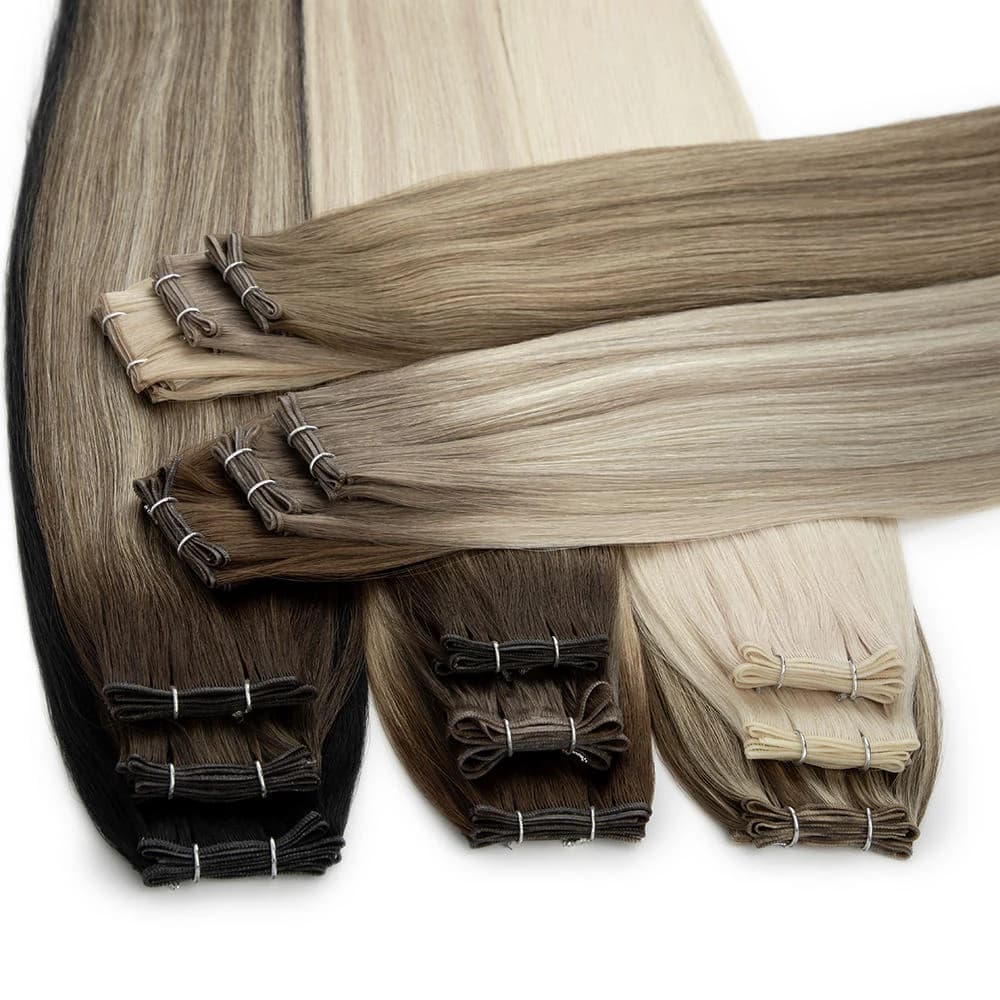
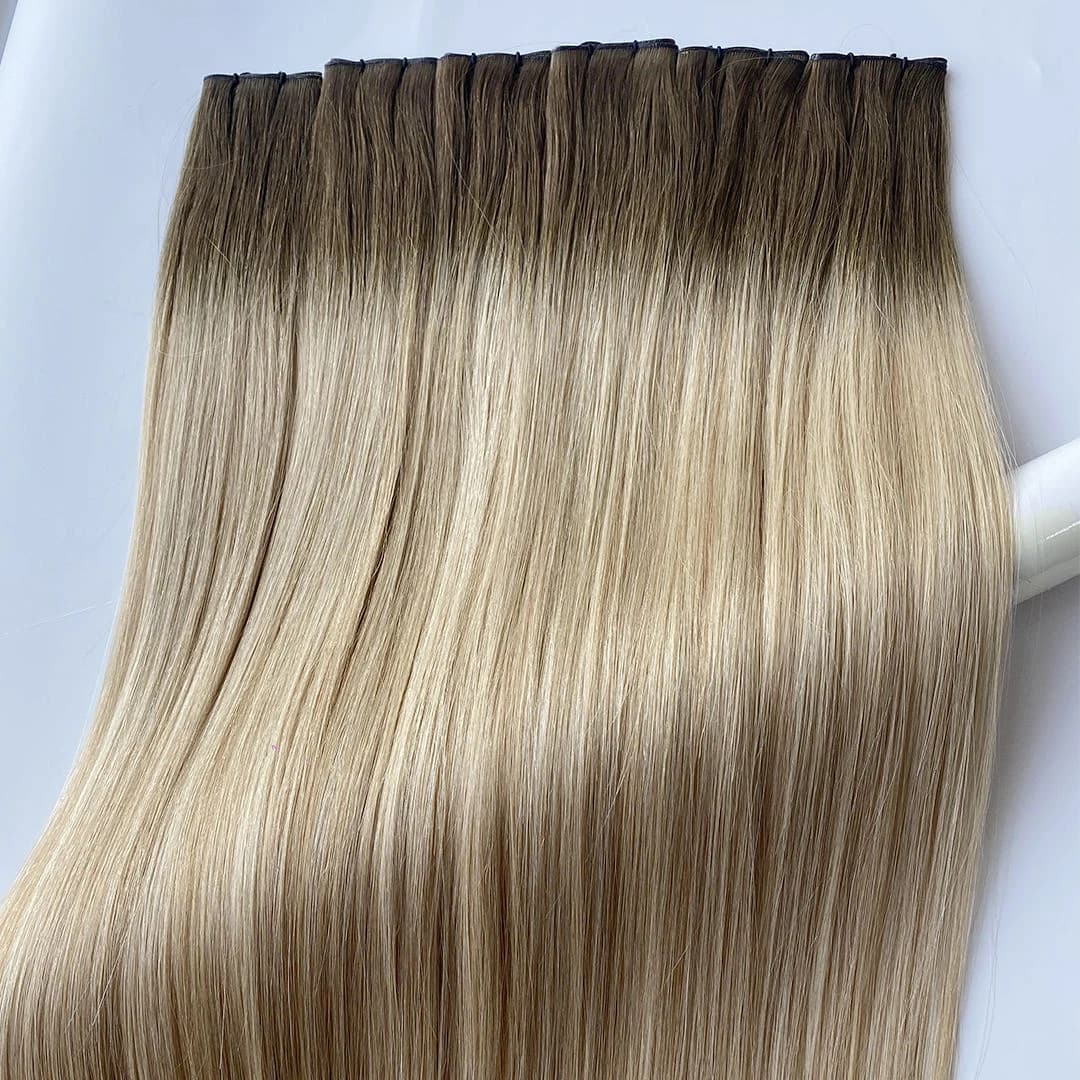
They can show visible presentation but cannot establish a defined strand-length percentage. Folding, overlapping, spread width, texture, lighting and cropping can change apparent fullness. The photos in this guide are product references, not a matched single-versus-double-drawn test. Confirm the selected sample and specification with the supplier.
What should I send when asking for double drawn hair extensions?
Specify the product construction, hair option, length, texture, shade, total weight, piece layout and quantity. Add a reference for the desired end profile and ask how the supplier defines its drawn description. Include the destination so sample, order and shipping arrangements can be quoted together.
Conclusion
Use single drawn and double drawn as descriptions of the length distribution you want to investigate. Compare equivalent samples, approve the end profile for the finished style and record the rest of the specification separately. Clear references and consistent checks give salon buyers a firmer purchasing basis than a premium label or an unsupported percentage.
HAIR EXTENSION SOURCING
Request a hair extension specification or quote.
Share your shade references, lengths, texture, quantities and preferred pack format. Fields marked with * are required.