
BUYING GUIDE
Clip-In Hair Extensions for Fine Hair: Choosing Weight, Base and Coverage
Choose clip-in hair extensions for fine hair by comparing weight, PU and weft bases, clip layout, coverage, samples and care.
Introduction
Choosing clip-in hair extensions for fine hair starts with three questions: can the natural hair support the selected pieces, can it cover the bases and clips, and does the added hair blend with the intended style? A low-profile base can help presentation, but set weight, piece widths, clip positions and natural coverage all affect the result.
Temporary clip-ins offer flexibility because the pieces can be fitted for a particular occasion and removed afterward. They still need a suitable fit. The lightest advertised set is not automatically the right choice, and a label such as seamless does not establish suitability for every wearer.
This guide explains how to compare regular and PU clip-ins, define a useful sample and discuss fine-hair requirements with a stylist or supplier. DR Hair Extension supplies both constructions. Our catalog figures below describe available purchasing options; the appropriate wearing plan depends on an individual assessment.
Fine hair and thin hair need different questions
Fine hair describes the diameter of individual hairs. Thin hair commonly describes lower density, meaning less hair covering an area. Someone can have fine strands with substantial density, or fine strands with limited coverage. The same extension layout may behave differently in those situations.
Discuss natural hair condition, density around the intended attachment areas, current cut, desired length and everyday styling. Hair that looks full at the ends may still provide limited coverage near a parting. A useful consultation considers both the hair available to hold the clips and the hair available to conceal them.
For fragile hair, unexplained shedding or visible scalp concerns, obtain professional advice before choosing attachments. Avoid treating a removable product as a guarantee against damage. The American Academy of Dermatology recommends professional help with extensions and identifies pain or a headache during fitting as a warning that a style is too tight. See its extension-care guidance.
Compare PU and machine-weft clip-in bases
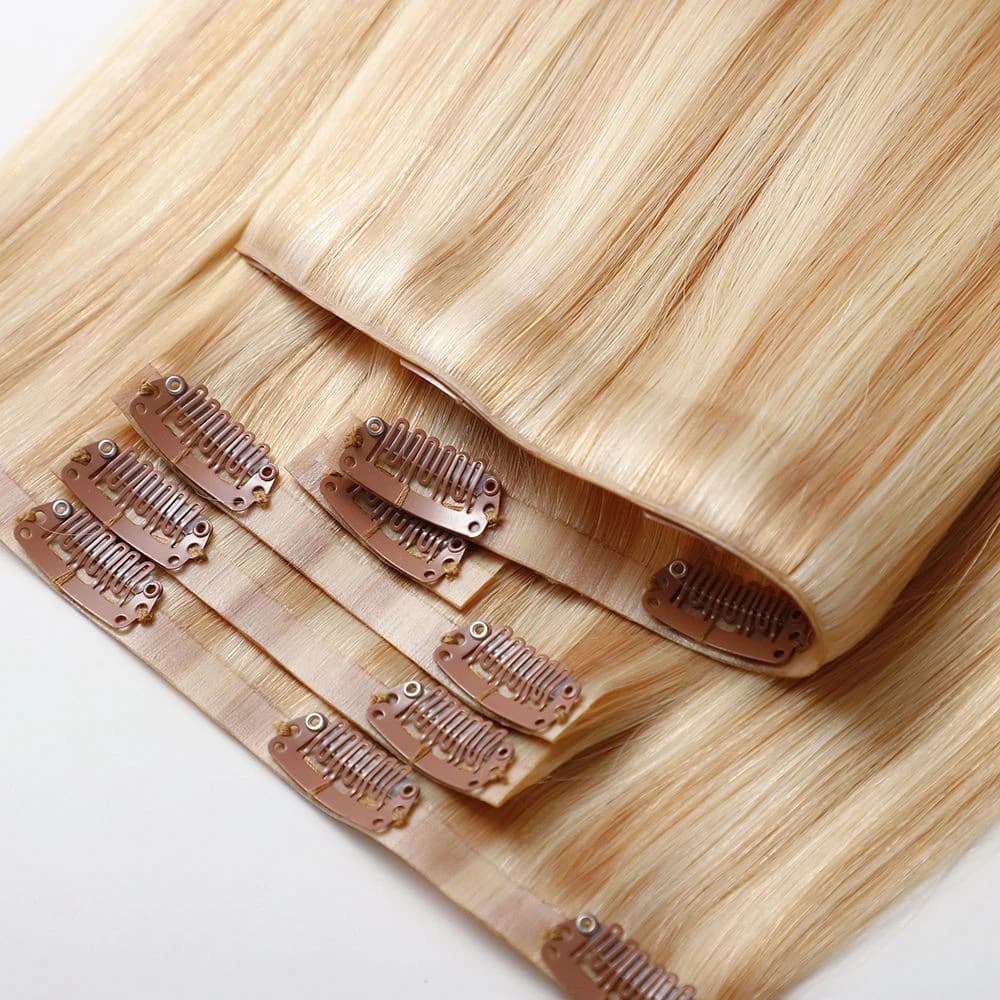
DR's regular Clip-in Hair uses a machine-weft base with metal clips. PU Clip-in Hair uses a PU, or skin, base with metal clips. The base construction is the main product distinction; neither name specifies the complete piece layout or the weight used in a hairstyle.
| Selection detail | Regular Clip-in Hair | PU Clip-in Hair |
|---|---|---|
| Base | Machine-weft construction | PU / skin construction |
| Attachment | Metal clips | Metal clips |
| Listed lengths | 14–26 inches | 14–26 inches |
| Set-weight options | 100g / 120g / 160g / 180g | 100–180g |
| Piece count | Customized | Customized |
| Fine-hair review | Check seam profile, clip positions and coverage | Check base profile, clip positions and coverage |
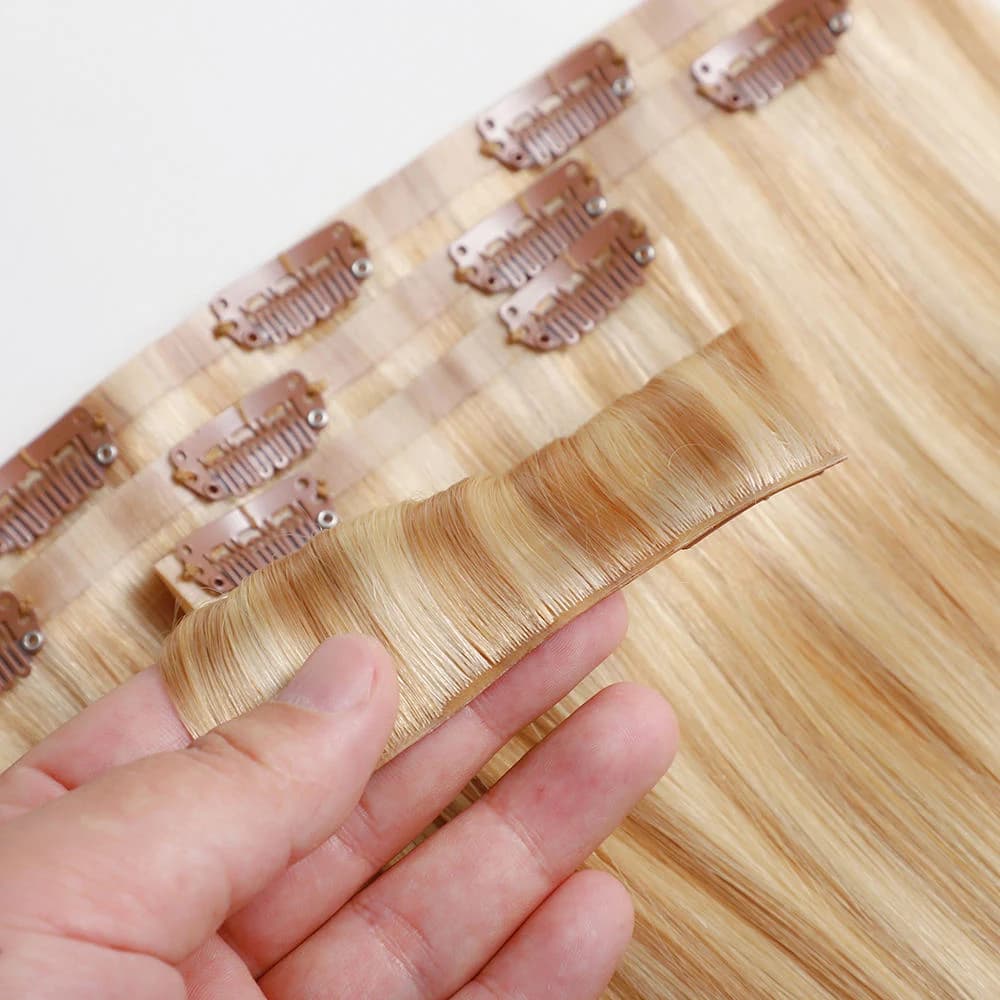
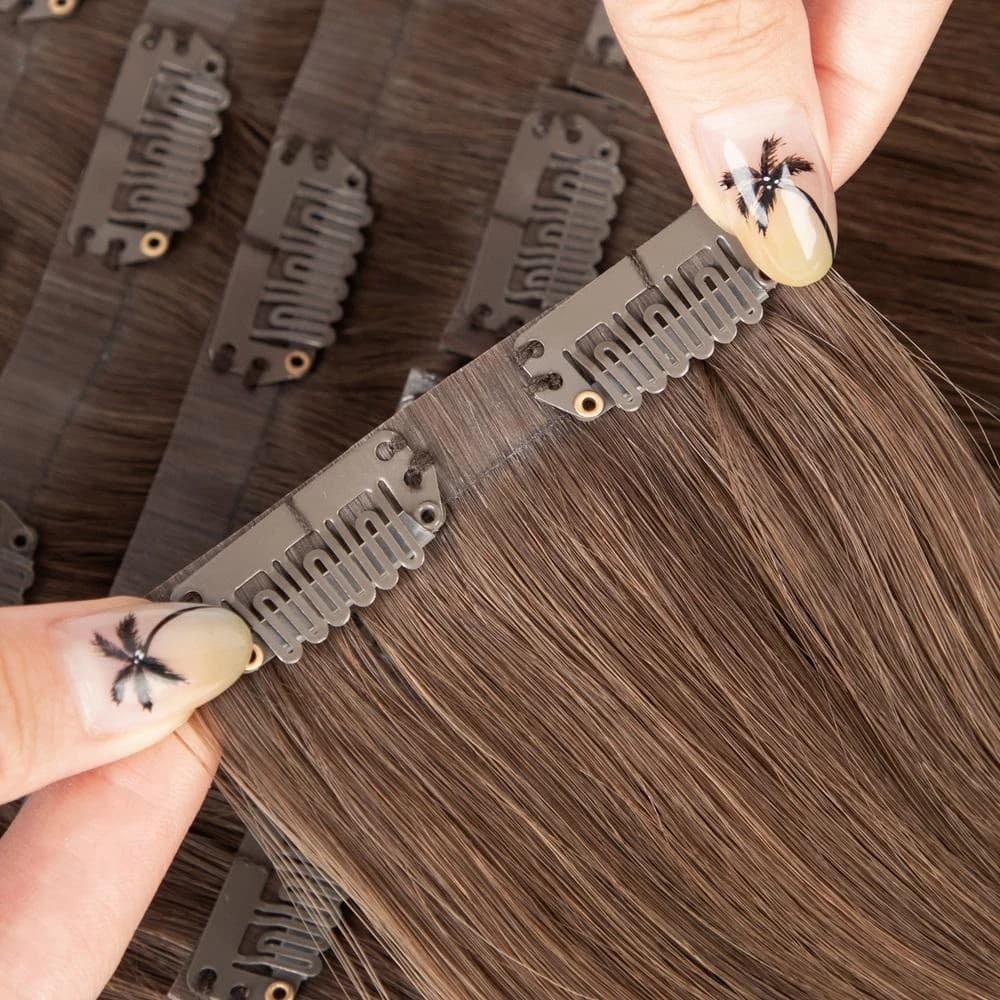
Ask for close-ups from both sides and a sample in the proposed layout. Compare the edge, flexibility, clip attachment and how the base sits beneath the covering hair. A broad product image cannot establish thickness in millimeters, comfort or grip.
Treat “seamless” as a starting point for inspection
Searches for seamless clip-in hair extensions often reflect a wish for less visible bulk. Confirm what the supplier means by the term: actual base construction, piece dimensions and clip layout. DR identifies its PU base explicitly, rather than using a search label as a measured concealment claim.
A smooth-looking base still needs somewhere appropriate to sit. Ask the stylist to assess it in the intended hairstyle and movement, with enough natural coverage. Do not assume that either construction can be placed anywhere simply because the base appears discreet.
Choose weight together with the wearing plan
There is no single gram figure that makes a clip-in set suitable for all fine hair. Total set weight describes the purchased hair, while the weight of the pieces actually used describes the wearing configuration. The distribution across those pieces also matters.
DR's regular sets list 100g, 120g, 160g and 180g options; PU sets cover 100–180g. These are catalog choices, not recommended loads for an individual. A 100g set is not automatically suitable just because it is the lowest listed weight. Have the proposed pieces assessed for support, concealment and the intended result.
| Specification | What it tells you | What it cannot establish alone |
|---|---|---|
| Total set weight | Hair quantity purchased | Weight appropriate for one wearer |
| Individual piece weight | Hair allocated to that section | Whether the natural hair can support its clips |
| Piece width | Area occupied by the base | Whether it fits the available placement area |
| Clip positions | Attachment layout | Grip or comfort on every hair type |
For a modest volume goal, discuss whether a selected subset of the agreed pieces achieves the look. Adding every piece simply because it is supplied can create unnecessary bulk. If substantially more length is wanted, review blending and natural coverage before increasing the quantity of hair.
Plan piece widths and clips around available coverage
Piece count is customized for both DR constructions. It is not fixed automatically by choosing a set weight. Ask for a layout showing each piece's width, its allocated hair weight and clip positions. A photograph of one set should not become an assumed layout for every order.
Wider pieces need a suitable uninterrupted placement area; narrower pieces give different layout options. Neither is universally better. Have the stylist assess how each section fits the head shape, natural parting and covering hair, especially where coverage becomes limited toward the sides.
Avoid solving a visibility problem by stacking pieces in the same small area. First examine whether the width, base profile, position or quantity is wrong for that location. A revised piece layout may be more useful than buying a heavier set with the same arrangement.
Ask for a trial in the style you will actually wear
Review the front, sides and back while the hair moves normally. If an updo is the goal, test that updo during the consultation rather than evaluating only hair worn down. Check whether the clips and base edges remain covered without pulling the style tight.
Ask for help if a clip slides or a piece feels unstable. Repeatedly tightening the style or relying on aggressive backcombing should not replace an assessment of the fit. A different piece or a different approach may be needed for that area.
Match color, length and texture for a believable blend
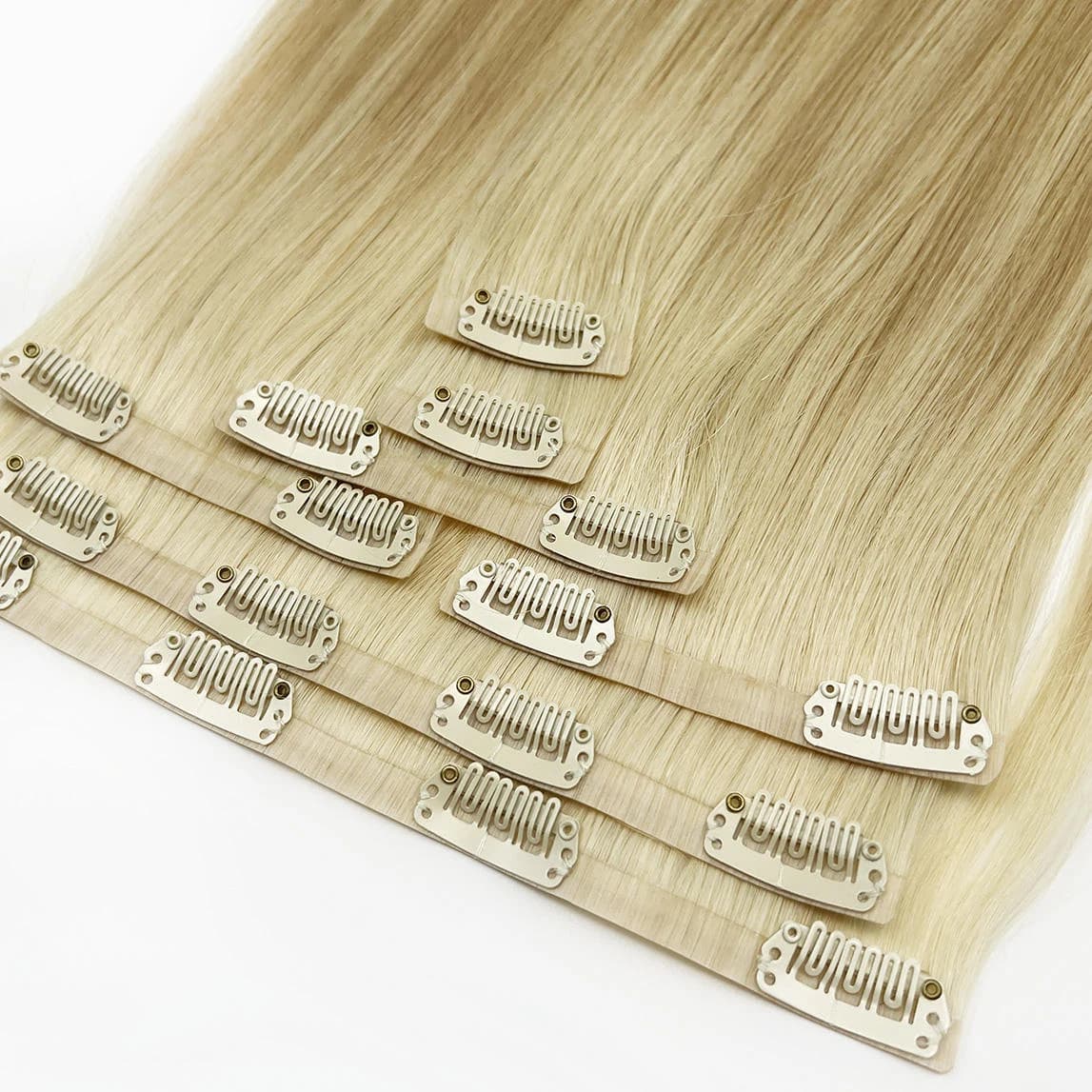
Match the root area as well as the mid-lengths and ends. A light base or clip may appear conspicuous beneath darker roots even when the blonde lengths look similar. Ask to review the actual attachment color, not just a swatch cut from the ends.
Use the DR color chart and matching guide to shortlist references, then compare a physical color ring or sample under consistent lighting. For highlighted hair, note root depth, the balance of light and dark strands and the transition through the lengths. Keep the approved reference identifiable for reorders.
The listed lengths are 14–26 inches for both constructions. A longer set does not necessarily blend with a short or blunt cut without professional shaping. Discuss the desired silhouette and texture before selecting length. Compare the texture under the care routine the supplier recommends, rather than assuming every wave pattern behaves identically.
Virgin Hair and Remy Hair options are available. Confirm the chosen hair option and processing description for the selected shade. A quality label does not replace inspection of color, end fullness, handling and the base you intend to use.
Compare options for the intended occasion
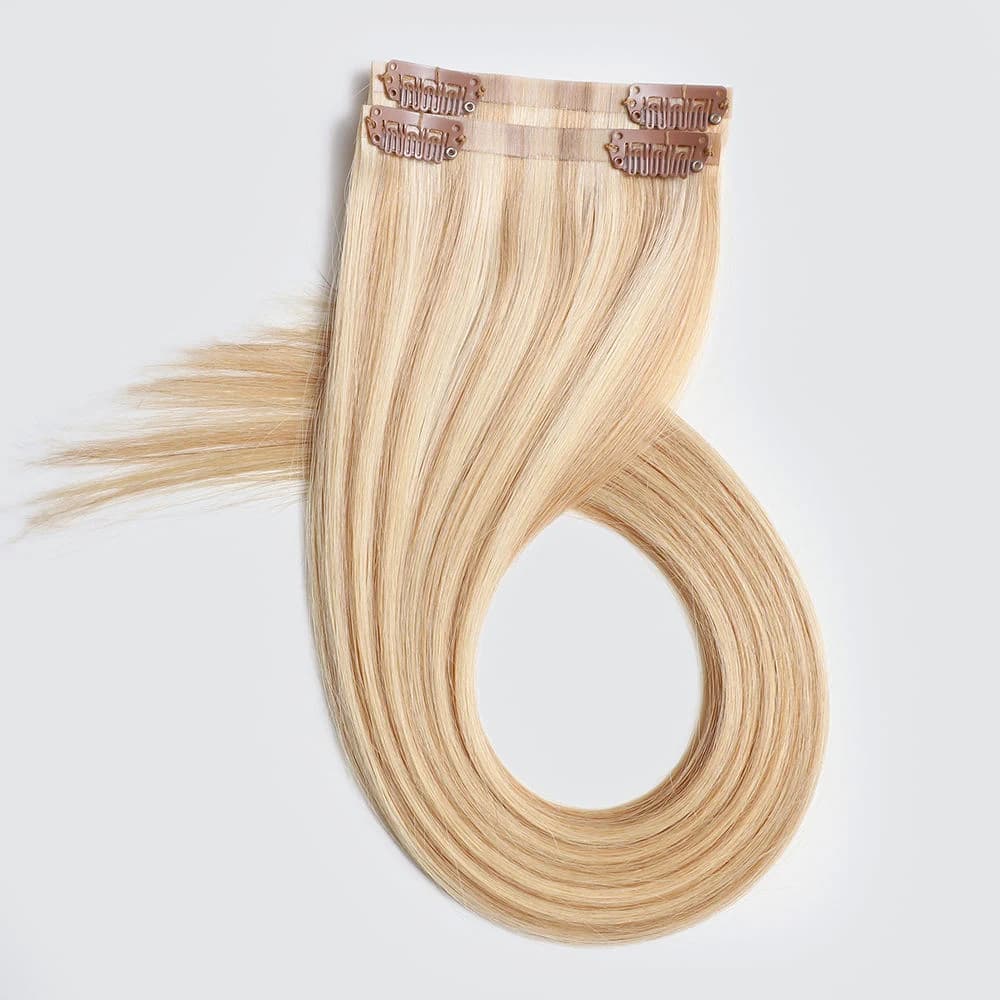
For occasional volume with hair worn down, start the conversation around the areas needing fullness and the natural hair available to cover them. Ask the stylist to review a limited arrangement before considering a fuller layout. The goal is a balanced blend, rather than the maximum amount of hair.
For a wedding or another event, arrange a hairstyle trial before the day. Bring the proposed clip-in pieces and discuss the finished style, accessories and planned removal. A trial gives time to adjust the layout or shade and review whether the intended style is practical.
For frequent temporary wear, consider the effort involved in fitting, removing, detangling and storing the pieces. Keep the hair and attachments under review. If the same areas repeatedly feel uncomfortable, pause use and seek advice instead of treating discomfort as a normal cost of added volume.
These are consultation scenarios, not reports of completed DR wearer trials. The appropriate decision can include changing the layout or choosing not to use clip-ins for a particular client.
Evaluate the sample before approving a collection
Record the base, shade, length, hair option, texture, quoted set weight, piece count, widths and clip positions. Compare the supplied pieces with that record before altering or wearing them. Keep the packaging, reference photographs and quotation together.
Inspect construction and handling separately
Examine base edges, clip attachment, visible hair distribution and the opening and closing of each clip. Ask the supplier about any loose attachment or unexpected edge before use. Reviewing the mechanism by hand is useful, but it does not prove grip or comfort on a wearer.
For an agreed fitting assessment, obtain the product's application, removal and care guidance. Have the proposed layout reviewed for the intended wearer. Record visibility, stability and comfort without turning one person's experience into a universal claim.
If washing or styling is part of sample approval, agree on the routine first. Note detangling, handling, shedding and the condition of the base and clips afterward. Photograph the same pieces under comparable lighting so observations can be connected to the actual sample.
Understand what factory testing covers
DR's confirmed quality-control process includes checks during production and weighing each pack against the agreed specification. Final shipment inspection uses sampling for weight, ruler-measured length, color under dedicated inspection lighting, shedding and smoothness. A sampled nonconformity triggers full reinspection of the affected shipment.
Agree separately on any required piece-width, clip-layout or other acceptance checks. The published inspection process does not establish a clinical fine-hair suitability test or a measured clip-grip rating. Write down the criteria relevant to your collection before production.
Prepare for temporary wear, removal and storage
Installation preparation should follow the selected product's guidance and the fitting plan. Ask a stylist to demonstrate positioning and removal if you are unfamiliar with clip-ins. Open and release each clip carefully instead of pulling the piece away while attached.
Remove temporary clip-ins before sleeping. For example, Luxy Hair's clip-in care guidance advises against sleeping in its extensions because of discomfort and tangling. Follow the applicable product instructions; do not borrow wear-time or styling-temperature claims from another collection.
The AAD also advises removing clip-ins before washing natural hair. Care for the detached pieces according to the supplier's instructions, detangle gently and let them dry appropriately before storage. Keep clips and bases from catching on other pieces. Inspect their condition before reuse and ask about a damaged attachment rather than continuing to wear it.
Confirm a complete set specification before buying
Both DR clip-in ranges are made to order, with no ready stock. The stated minimum order is 100g. Confirm the selected shade, length, base, set weight and layout with the quotation; the order minimum does not establish the amount a person should wear.
Custom production normally takes 7–10 working days. Shipping is separate, so request the service, transit estimate and cost for the destination. For an event or retail launch, confirm sample approval and dispatch arrangements before committing to a date.
Paid sample specifications, cost and timing are quoted for the selection. Compare equivalent sets rather than price alone: hair option, shade, length, texture, base, weight, widths, clip layout and packaging. Salon or brand buyers can use the wholesale Clip-in buying guide for a fuller quotation and assortment checklist.
Frequently asked questions
Are clip-in hair extensions suitable for fine hair?
They may be an option for temporary volume or length when the natural hair can support and conceal the selected pieces. Assess condition, density, coverage and the intended hairstyle with a professional. Fine strands alone do not determine suitability, and removable attachments do not guarantee damage-free wear.
Are PU clip-ins better than classic clip-ins for fine hair?
PU and machine-weft bases have different constructions. Compare the actual edge profile, clip positions, piece layout and coverage on samples. A PU base can be relevant to someone seeking a smooth-looking attachment, but the construction name does not establish comfort, grip or concealment for every wearer.
How many grams of clip-ins should I buy?
There is no universal fine-hair weight. Review the total set weight, the pieces actually used and how their weight is distributed. DR's catalog weights are purchasing options, not individual fitting recommendations. Ask a stylist to assess the proposed layout before increasing weight or length.
Do I need to wear every piece in a set?
Not necessarily. Discuss the intended style and whether selected pieces provide the desired blend with suitable support and coverage. Extra pieces can add bulk in the wrong areas. Keep the approved layout identifiable so you know which pieces and positions were assessed.
What if the clips show or keep slipping?
Have the width, clip positions, shade, coverage and placement reassessed. Do not keep adding pieces or tightening the style to compensate. If there is pulling or discomfort, stop and address the fit. A particular attachment area may need a different approach.
Can I sleep or shower in clip-in extensions?
Remove temporary clip-ins before sleeping and before washing natural hair. Follow the supplied care instructions for cleaning the detached hair, drying and storage. Clip-ins are designed for removable wear; they should not be treated as a continuously installed extension method.
Conclusion
Choose clip-ins for fine hair by reviewing support, concealment and blending together. Define the base, actual piece layout and intended wearing configuration, then assess a representative sample. A clear specification and a practical fitting plan give wearers, salons and brands a more useful basis for selection than a weight or marketing label alone.
CLIP-IN HAIR SOURCING
Request a Clip-in Hair specification or quote.
Share your shade references, lengths, texture, quantities and preferred pack format. Fields marked with * are required.