
BUYING GUIDE
Wholesale Clip-in Hair Extensions: A Salon and Brand Buying Guide
Source wholesale clip-in hair extensions: compare bases, set weights, piece layouts, paid samples and private-label ordering.
Introduction
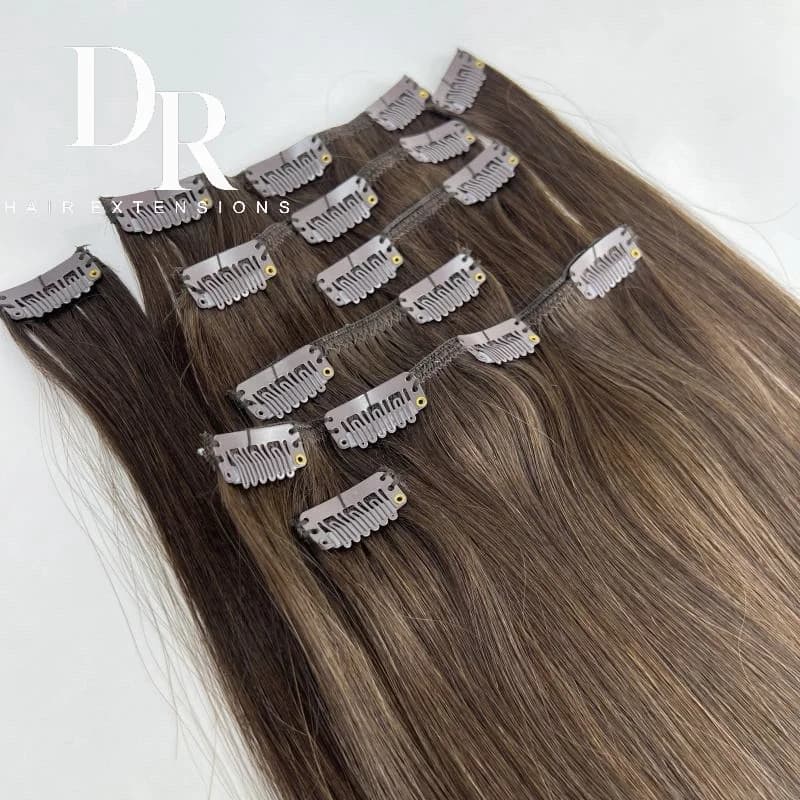
When sourcing clip in hair extensions wholesale, define the complete set before comparing prices. The base construction, total hair weight, piece count, piece widths, clip positions, length and shade all describe what your customer will receive. A quotation for a certain weight alone does not establish an equivalent product across suppliers.
DR offers regular Clip-in Hair with a machine-weft base and metal clips, and PU Clip-in Hair with a PU or skin base. Both ranges are made to order, with no ready stock, and have a 100g minimum order. Regular set weights are 100g, 120g, 160g and 180g; PU sets cover 100–180g. Piece counts are customized rather than universally fixed to each weight.
This guide explains how to turn those choices into an identifiable sample, a written order and a repeatable private-label specification. The figures below describe DR's collection. Confirm the selected configuration, hair option, quantity, sample charge and dispatch arrangement in your quotation before ordering.
Choose the base before choosing a set weight
Regular and PU clip-in sets share a temporary clip-based application, but their bases are different purchasing specifications. Start with the construction your range is intended to offer. Ask for the actual product name, a close-up of its base and a sample in the layout you are considering.
The regular Clip-in Hair collection has a machine-weft base fitted with metal clips. The PU Clip-in Hair collection has a PU or skin base, also with metal clips. Compare their edges, flexibility, clip positions and presentation on physical samples, rather than treating a name such as “seamless” as a complete specification.
| Purchasing detail | DR regular Clip-in Hair | DR PU Clip-in Hair |
|---|---|---|
| Base | Machine-weft base | PU / skin base |
| Clips | Metal clips | Metal clips |
| Listed lengths | 14–26 inches | 14–26 inches |
| Set weight | 100g / 120g / 160g / 180g | 100–180g |
| Pieces per set | Customized | Customized |
| Minimum order | 100g | 100g |
| Supply | Made to order; no ready stock | Made to order; no ready stock |
| Custom production | Normally 7–10 working days | Normally 7–10 working days |
Neither base name establishes comfort, concealment or suitability for every wearer. Those outcomes depend on the chosen product, natural hair, placement and handling. A professional assessment can help your team decide which construction to sample and how to describe it responsibly to your customers.
Keep weight, piece count and piece widths separate
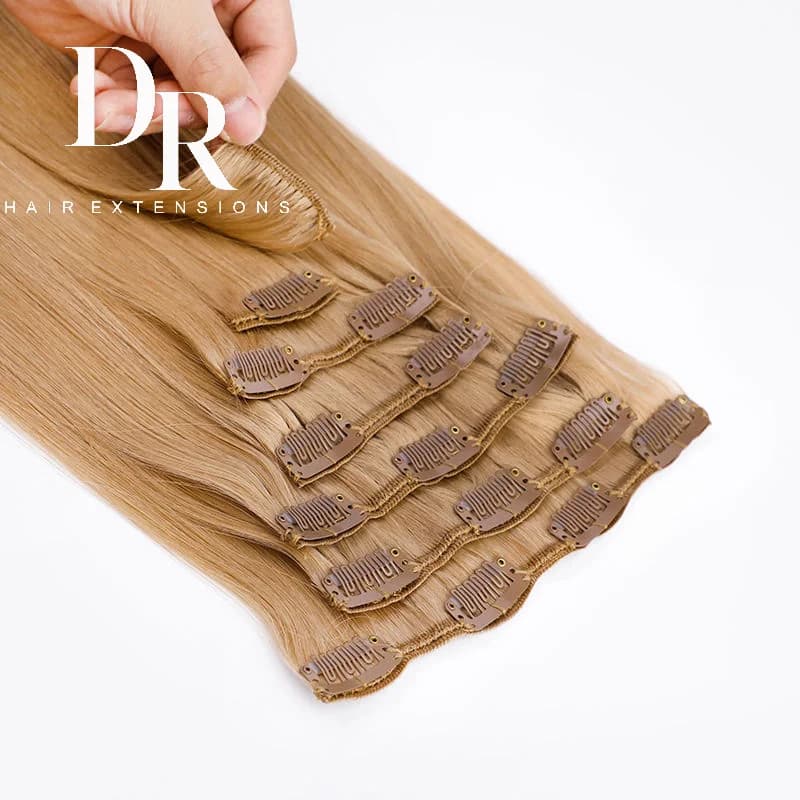
Set weight describes the total hair quantity. Piece count describes how that quantity is divided. Piece widths describe the individual sections in the layout. A 160g set may be organized differently from another 160g set, so weight alone cannot tell you whether two offers will function or photograph in the same way.
DR's regular range lists 100g, 120g, 160g and 180g set weights. The number of pieces is agreed to the customer's requirements. Do not assume that choosing 120g automatically means a particular seven-piece or nine-piece layout. Request the piece count, width of each piece and clip arrangement together with the total set weight.
A useful specification identifies each section separately. Label the pieces in a layout sketch or reference photograph, note their widths and record the intended clip positions. Ask the supplier to confirm how the selected hair weight is distributed. Retain that layout with the approved sample so a reorder can refer to something more precise than “the same full set.”
If you change one part of the specification, review the others. Increasing total weight while keeping the same layout changes how much hair is allocated across those pieces. Increasing piece count at the same weight changes the division of hair. Neither change should silently alter a pack's printed quantity or its approved product photographs.
Plan lengths, shades and hair options around your range
The listed length range for both DR clip-in constructions is 14–26 inches. Choose the lengths your salon or brand has a clear reason to offer, then confirm the selected weight and layout for each. A length selection should not be treated as a promise that every shade or configuration is available immediately.
Virgin Hair and Remy Hair options are available. Ask for the option and processing description that apply to the chosen sample. Keep the approved description on the quotation and packaging record. A general hair-quality label does not replace an assessment of color, ends, handling or the construction you actually plan to sell.
DR's texture options include straight, body wave, natural wave, curly and deep wave, with custom curl patterns discussed from reference photographs. For a textured order, agree how the selected length is measured and how the texture should appear after the recommended care routine. Record the agreed reference rather than relying only on a broad texture name.
Use the hair extension color chart and physical matching guide to shortlist shade references. Where color is important to the range, compare a physical color ring or sample under consistent lighting. Screen settings and photography can change the appearance of the same shade, especially through roots, highlights and blended ends.
Turn a product idea into a quoteable assortment
List every proposed item as a separate line: base, hair option, length, shade, texture, weight, piece layout and quantity. If you want two lengths in two shades, show the four combinations clearly. The supplier can then confirm feasibility and quantities without guessing which parts of the request belong together.
DR's stated minimum order is 100g for Clip-in Hair. Confirm how your proposed sets, colors and lengths meet the actual order requirements. This minimum does not establish a universal custom-box quantity, a free sample allowance or a fixed price for a complete branded launch. Packaging and other custom work need their own confirmation.
Begin with an assortment you can describe and support. For example, a brand can compare one regular-base specification with one PU-base specification before choosing which to develop. A salon retailer can select a narrower set of shades around known client requests. These are planning examples, not reports of completed DR customer trials.
Keep requested quantities separate from tentative ideas. If a color or layout is only being explored, mark it as a sample option rather than including it as a confirmed bulk item. A clear brief makes it easier to identify unavailable selections, alternatives and changes that require another approval.
Review a paid sample before expanding the order
Request a sample that represents the specification you intend to reorder. If you are comparing bases, label each sample clearly and keep it connected to its quotation. Confirm the sample charge and shipping separately. Hair samples are generally priced at regular wholesale hair rates; the actual arrangement is confirmed for the selection.
Before using or altering a sample, record its shade, length, hair option, texture, quoted weight, piece count and layout. Compare the contents with the written specification. Ask how the supplier measures length and weight if your checks appear different, and resolve the question while the original packaging and reference information are still available.
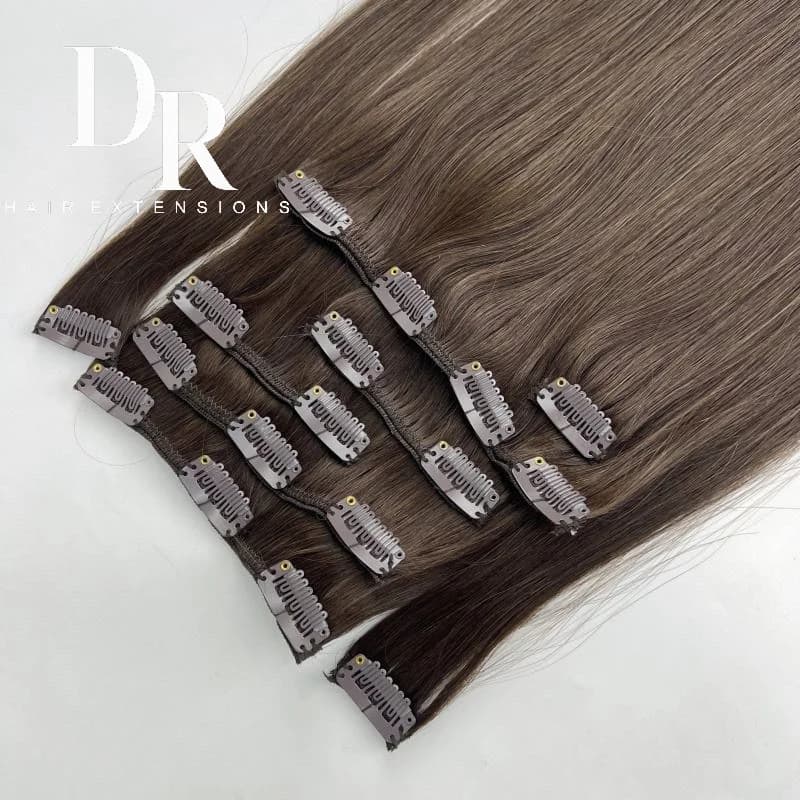
Inspect the base edges, attachment of the clips, piece widths, visible color consistency and hair distribution. Compare the way the pieces are organized with your proposed layout. Product photographs are useful for discussing appearance, while a physical sample lets your team assess the actual construction and handling.
For a professional assessment, obtain the selected product's fitting, removal and care guidance. Agree which handling or washing steps are appropriate before starting. Keep notes on brushing, washing, drying and storage so the supplier can understand the conditions used. These are suggested assessment steps, not a claim that every configuration has passed a controlled wear trial.
Finish with a clear decision: approved, approved subject to a defined change, or unsuitable for the intended collection. If the base, layout, shade or hair option changes substantially, discuss whether another sample is needed. Keep the approved reference identifiable for production and later replenishment.
Compare quotations using equivalent sets
Ask every supplier to quote the same construction, hair option, shade, length, texture, set weight and piece layout. Check which clips and packaging are included. A low price per set can be difficult to compare if another offer contains a different amount of hair or an unspecified base.
For an internal buying sheet, divide the hair-only quoted amount by the quoted hair weight, then multiply by 100 to calculate the hair cost per 100g. This can help compare quantities, but it does not make different constructions or hair specifications equivalent. Keep a second column for cost per complete approved set.
Record packaging samples, printing, accessories and shipping separately unless the quotation explicitly includes them. Confirm what the proposed delivery service covers and which destination charges remain for the buyer to check. Use the final written quotation for purchasing decisions rather than an old screenshot or an estimate for another specification.
A practical request can read: “Please quote regular machine-weft Clip-in Hair at 20 inches in our selected shade reference, straight texture, 120g per set. Please confirm the proposed piece widths and clip layout, the Virgin Hair or Remy Hair option, sample cost, quantity terms, production schedule and shipping to our country.”
Build private-label packaging around the approved set
Choose the hair specification first, then develop the presentation through DR's private-label hair extension service. Options include logo boxes, bags, labels, instruction cards, hang tags, hangers and accessories. Packaging should identify the selected product and help your customer understand the contents of the particular set.
DR can work with completed designs or help with logo placement and packaging layout. Share your available design files, chosen format and quantity. Review the digital artwork before printing, including the base description, shade, length, total hair weight and piece information where used. Do not print a standard piece count before the actual layout is agreed.
Packaging quantities are confirmed independently of the hair order. Packaging sample charges and preparation time vary by plan. Packaging production usually takes no more than 20 calendar days after digital artwork approval, with the actual schedule confirmed for the selected project. Hair production and delivery run on separate schedules, so a hair dispatch estimate does not establish when the finished branded order will be ready.
Keep production, inspection and transit visible
Clip-in Hair and PU Clip-in Hair are made to order and have no ready stock. Custom production normally takes 7–10 working days. Confirm when the schedule begins and which specification and quantity it covers. A changed shade, layout or packaging plan may need a revised confirmation before the order proceeds.
DR's published pre-shipment inspection process includes checks during production and individual pack weighing. Final inspection uses sampling to review weight, measured length, color, shedding and smoothness; a sampled nonconformity triggers full re-inspection of the affected shipment. Agree additional acceptance criteria or requested records before production.
Shipping time is separate from production. Request the available courier service, transit estimate and cost for the destination. Confirm the hair and packaging readiness dates before booking your own launch activity. A production estimate is not a guaranteed arrival date, and a product photograph is not a live inventory feed.
At receipt, compare the shipment with the packing list, approved specification and packaging artwork. Retain the identifying information while checking quantities and visible condition. If you notice a problem, document the affected items and contact the supplier before altering the hair, under the order's agreed after-sales arrangements.
Make replenishment refer to the approved set
Create an internal product reference for each approved combination. Keep the base, hair option, shade, length, texture, set weight, piece layout and packaging version together. A name such as "20-inch clip-ins" is too broad if your collection contains different bases or weights at that length.
When requesting a repeat order, identify the approved reference and the quantity needed for each item. List requested changes separately, including new packaging wording or a revised piece width. Ask the supplier to confirm any effect on production or sampling before treating the reorder as identical to the earlier shipment.
Keep a retained sample or clear reference record where practical. At receipt, compare the new packs with the agreed specification and current order confirmation. This supports a precise discussion if something differs; it does not replace checking the actual shipment or guarantee that photographs will reproduce color perfectly.
Frequently asked questions
What is the minimum wholesale order for DR Clip-in Hair?
The minimum order is 100g. Confirm your chosen colors, lengths, set weights and piece layouts with the quotation. Printed packaging and other branding work have separate quantity requirements, so the hair minimum should not be treated as the total terms for a private-label project.
How many pieces are in a 100g or 160g clip-in set?
DR customizes piece counts to the customer's requirements. The set weight does not establish one universal piece count. Agree the number of pieces, individual widths and clip layout together with the total hair weight, and retain the approved sample as the production reference.
What is the difference between regular and PU Clip-in Hair?
DR's regular Clip-in Hair has a machine-weft base; PU Clip-in Hair has a PU or skin base. Both use metal clips. Compare the actual bases and finished set layouts on samples. Neither name alone determines comfort, concealment or suitability for every wearer.
Are DR clip-in sets ready to ship?
No ready stock is held for these two collections. They are made to order, with custom production normally taking 7–10 working days. Confirm the schedule for your chosen specification and quantity, then allow separately for packaging work and shipping.
Can I order Virgin Hair clip-ins with my own packaging?
Virgin Hair and Remy Hair options are available, and private-label packaging can be discussed for your chosen set. Confirm the hair option, processing description, base and layout through the quotation and sample, then approve the digital packaging artwork before printing.
Can I review a sample before buying larger quantities?
Yes. Request a paid sample in the construction and layout you want to assess. Confirm the sample specification, charge, preparation time and shipping before proceeding. The approved sample and written set details should remain connected to any later bulk order.
Conclusion
A useful wholesale clip-in order connects the base construction with a complete set specification. Define hair weight, piece count, widths, clip arrangement, shade and length together; assess a representative paid sample; then align packaging and the production schedule with the approved product. Clear references make the opening order easier to evaluate and a future reorder easier to describe.
CLIP-IN HAIR SOURCING
Request a Clip-in Hair specification or quote.
Share your shade references, lengths, texture, quantities and preferred pack format. Fields marked with * are required.