
BUYING GUIDE
Butterfly Weft vs Genius Weft: A Salon Buying Comparison
Compare DR Butterfly and Genius Weft: attachment, 100g pack formats, stock shades, paid samples and private-label ordering.
Introduction
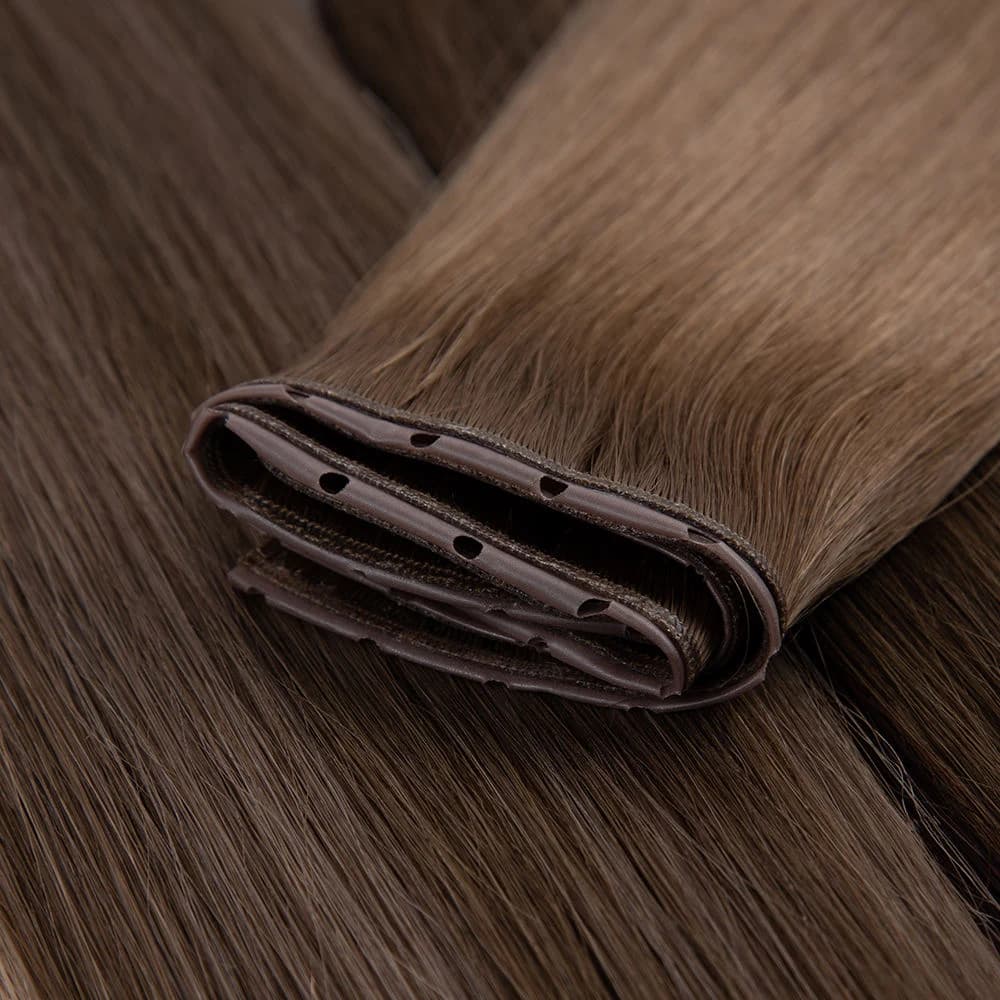
The useful starting point in a Butterfly Weft vs Genius Weft comparison is the attachment construction and the supplied pack format. In DR's collection, Butterfly Weft has attachment holes for professional micro-ring or bead fastening. Genius Weft is a thin, flexible weft for professional beaded or sew-in installation. Choose around the actual product and your salon's method, then compare shades, widths and order quantities.
Both collections use a standard 100g pack, but that weight is divided differently. DR Butterfly Weft contains two pieces, each 40cm wide. DR Genius Weft offers two, four or five wefts per 100g; the approximately 80cm width applies to each weft in the two-piece configuration. Confirm widths separately for the other layouts.
This guide compares those DR specifications for purchasing and sampling. Product names and constructions can differ between suppliers, so do not transfer another brand's measurements or application claims to these products. A trained stylist should assess the selected sample, natural hair and intended service before the salon commits to a fitting plan.
Butterfly Weft and Genius Weft at a glance
Use the table as a specification reference for DR's current collections. It separates total hair weight, number of supplied pieces and width per piece. Those quantities help identify the offer, but none of them alone determines the right amount or placement of hair for an individual client.
| Buying question | DR Butterfly Weft | DR Genius Weft |
|---|---|---|
| Attachment direction | Professional micro-ring / bead fastening through the attachment holes | Professional beaded / sew-in application |
| Construction reference | Band with visible attachment holes | Thin, flexible weft |
| Standard total pack weight | 100g | 100g |
| Pieces per standard pack | 2 | 2, 4 or 5 |
| Average weight per piece | Approximately 50g | 50g / 25g / 20g for the respective formats |
| Width per piece | 40cm as standard | Approximately 80cm in the 2-piece 100g format; confirm other layouts |
| Stock hair lengths | 22 inches | 18, 20 and 22 inches |
| Stock colors | Approximately 40 | Approximately 40 |
| Minimum hair order | 100g per color and length | 100g per color and length |
| Hair options | Virgin Hair / Remy Hair | Virgin Hair / Remy Hair |
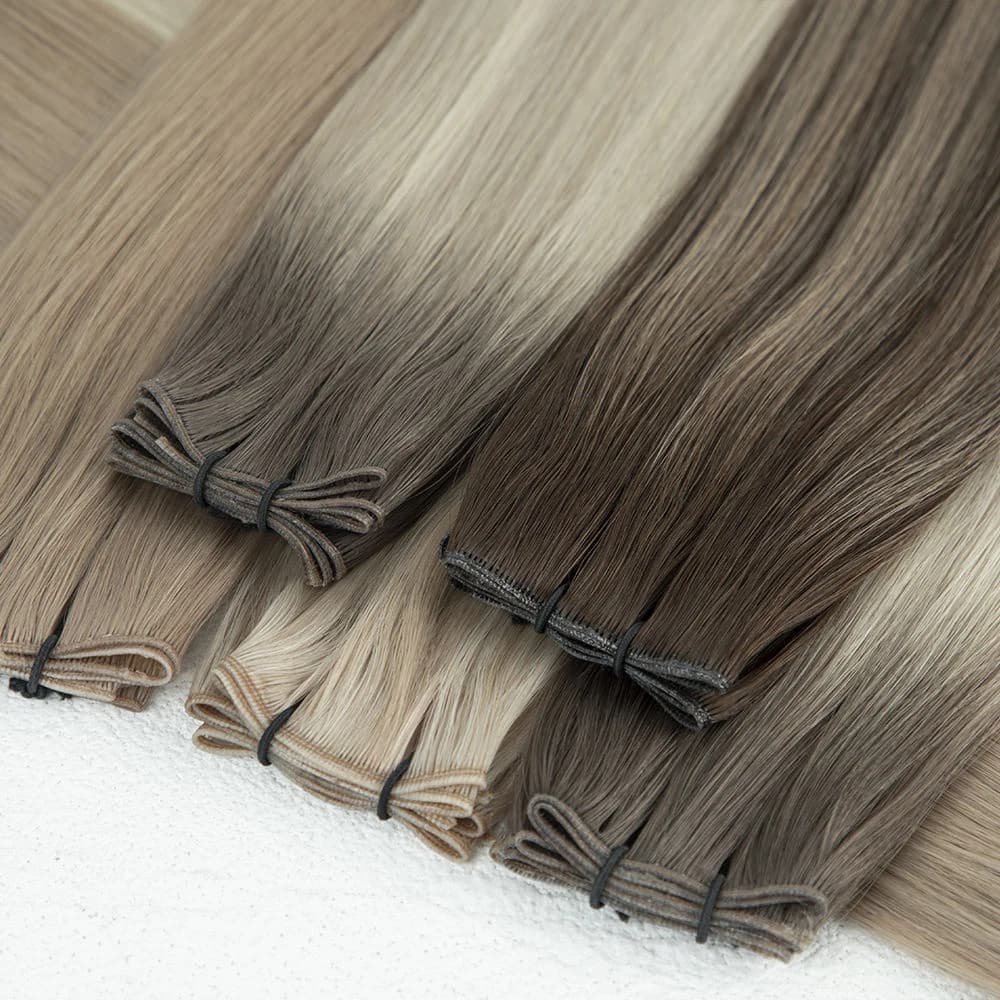
For the complete product references, open Butterfly Weft and Genius Weft. Confirm the selected color, length and quantity before relying on stock availability. A photograph of a shade assortment is a reference for discussion, not a live promise that every combination is ready to dispatch.
Compare attachment construction before comparing names
The holes in DR Butterfly Weft's band identify the intended fastening area for its professional micro-ring or bead application. Ask your stylist to review the actual band and attachment guidance on the chosen sample. The existing product URL contains an older naming reference; the current DR collection is specified as a micro-ring or bead system.
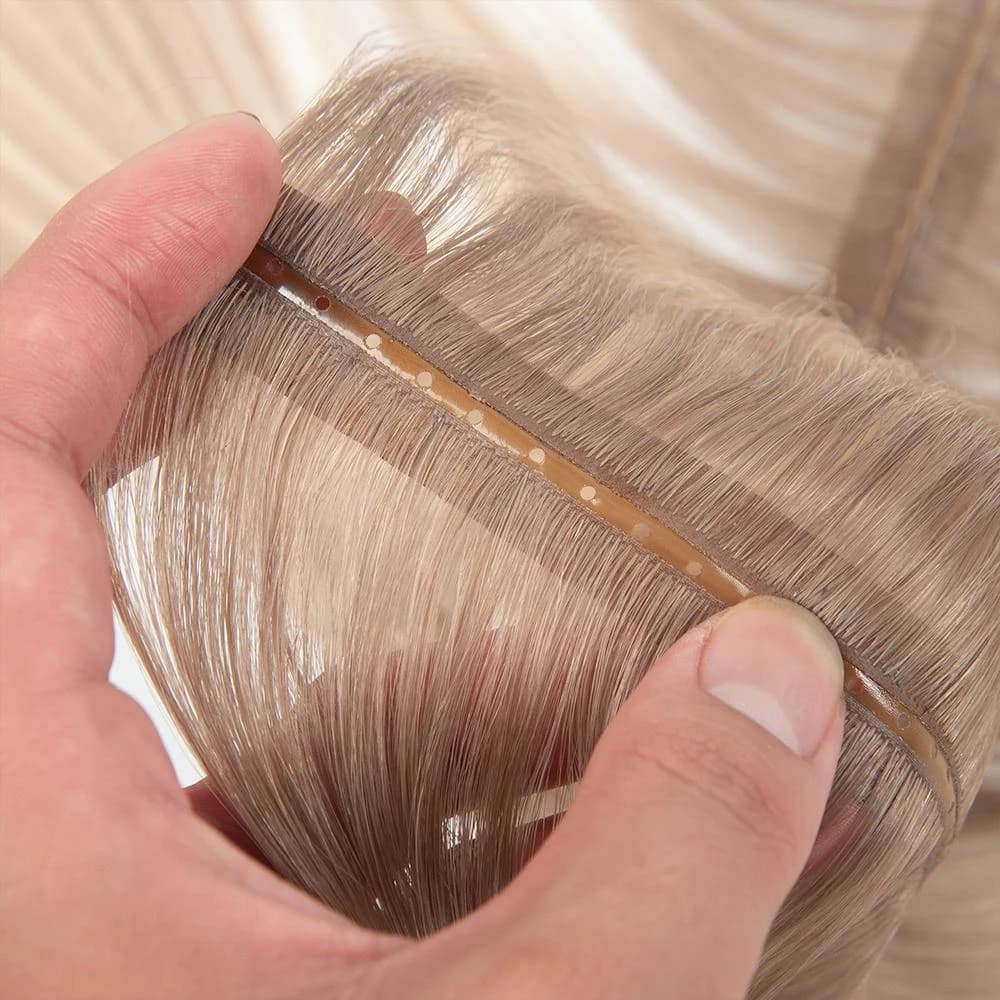
DR Genius Weft is specified as a thin, flexible weft for beaded or sew-in installation. The product does not prescribe one universal bead pattern, stitch method or placement plan. Request the selected product's handling and installation guidance so the stylist can assess it within the service they are qualified to provide.
Separate the weft's construction from the installation method. A product's name does not establish whether another supplier uses the same base, hole pattern, width or permitted handling. Keep a sample reference and a written specification with the order, particularly when replacing a system your salon already uses.
Avoid choosing purely from a promise such as “invisible” or “damage-free.” Natural-hair coverage, placement, weight distribution, care and professional judgment all affect the finished service. A clear sample assessment gives the buyer a more useful basis for a decision than assuming that a familiar product name guarantees the same result.
Understand what the same 100g means in each range
At the standard Butterfly configuration, 100g is divided across two pieces, averaging approximately 50g each. Each piece is 40cm wide. Record the total weight, piece count and individual width together rather than quoting only “two wefts.” A custom Butterfly configuration needs its own agreed quantities.
Genius Weft offers three standard ways of dividing 100g: two pieces averaging 50g, four averaging 25g or five averaging 20g. Those figures describe the same total hair weight. Choosing five pieces does not mean ordering more hair than the two-piece format, and it does not change the minimum order by itself.
The approximately 80cm Genius width belongs to each weft in the two-piece 100g format. It should not be assigned automatically to the four- or five-piece format. If your salon wants another width or layout, ask for the dimensions and total pack configuration together. Do not calculate an unconfirmed width by dividing the two-piece measurement.
Supplied width also differs from installed coverage. Pieces may be arranged differently under a professional plan, and the usable layout depends on the actual construction and instructions. Keep purchase quantities separate from the stylist's decision about rows, placement and the total amount suitable for a client.
Choose stock lengths and shades around your appointments
Butterfly Weft stock is offered at 22 inches in approximately 40 colors. Genius Weft stock covers approximately 40 colors in 18, 20 and 22 inches. These ranges can help a buyer shortlist a starting assortment, while the available quantity for each selected combination still requires confirmation.
If a salon needs an 18-inch or 20-inch stock option, the listed Genius range gives it a relevant starting point. An alternative Butterfly length should be discussed as a custom request rather than assumed to be ready stock. The eventual choice still depends on the intended application and the approved sample.
Use the DR color chart and matching guide to identify reference codes. For key shades, check physical hair or a color ring before expanding the assortment. Consider the root, transition and ends of a blended shade separately, and retain the approved reference for later orders.
Both collections offer Virgin Hair and Remy Hair options and custom textures. Discuss the selected hair option and processing description with the quotation. A shared shade code or general texture name is not enough to establish that two different products represent the same approved color and finish.
Match a purchasing scenario to an identifiable sample
For a salon reviewing a micro-ring or bead system with a perforated band, start with the Butterfly sample and its attachment guidance. Confirm that the band, holes, shade and dimensions match the product your stylist expects to evaluate. Avoid assuming that every product marketed as Butterfly has an interchangeable construction.
For a salon comparing different piece allocations within a 100g pack, use the Genius two-, four- and five-piece options as a purchasing discussion. Ask for the widths of the selected layout, then let the stylist decide how it relates to their professional method. More pieces are an inventory format, not a universal recommendation for more rows.
For a brand launching a small weft range, choose a main construction that its team can explain clearly. Record which specifications will be standard and which require custom confirmation. If you plan to sell both products, distinguish their attachment systems and quantities on labels, product photographs and order records.
A broader comparison can also involve hand-tied and machine-weft constructions. Keep those product identities separate. The appropriate comparison is the actual supplied construction and the proposed professional service, rather than a ranking that declares one name best for every buyer.
Evaluate hair and construction under a consistent routine
An initial sample assessment should represent what you intend to reorder. Label each sample by product, hair option, shade, length, pack weight, piece count and width. Compare the unopened contents with the quotation. If a quantity or measurement appears different, ask how it was established before using or altering the hair.
For Butterfly, examine the band and attachment holes along with the hair. For Genius, examine the seam and the supplied piece layout. Photograph both under consistent conditions so the starting appearance is documented. The images can support communication but should not be treated as laboratory evidence or proof of a particular wear period.
Have a trained stylist obtain the relevant preparation, fitting, removal and care guidance. Agree which evaluation steps are suitable for the chosen sample and applicable after-sales arrangements. Record the routine used for washing, drying, brushing and styling, then describe any observed handling or attachment concerns in that context.
Give each sample an identifiable decision: approved for the intended range, requiring a specific adjustment, or unsuitable for the planned service. If the shade, texture, width or construction changes, discuss whether another sample is appropriate. A favorable assessment of one sample does not establish an identical outcome for every installation.
Compare quotations and minimum orders on the same basis
DR's hair order minimum for both ranges is 100g per color and length, applying to stock and custom hair orders. Treat each combination as a purchasing line. Two shades in two lengths produce four combinations; at 100g per combination, that illustrative assortment contains 400g in total. It is an inventory calculation, not a recommended client fitting quantity.
Compare hair prices only after matching the product, hair option, shade, length, texture and pack configuration. A per-piece quotation can be misleading if one offer uses 50g pieces and another uses 20g pieces. Request both the total pack weight and the count, then calculate a comparable hair-only amount per 100g.
Small paid sample orders are available, with sample hair using wholesale hair pricing and shipping quoted separately. Confirm the exact sample selection and quantity arrangement before ordering. Custom widths, colors or pack formats need written confirmation rather than being assumed to follow the standard configuration automatically.
Keep packaging, printing, delivery and any destination charges visible as separate entries unless the quotation explicitly combines them. Retain the final quotation with the approved sample reference. This lets a future reorder refer to a defined product instead of relying on an old price for a different assortment.
Coordinate custom hair and private-label packaging
Both collections can be discussed through DR's private-label hair extension service. Agree the product and its specification before approving boxes, bags, labels or cards. The printed piece count, hair weight, shade and length should identify the contents of the particular pack being ordered.
Packaging quantities are confirmed separately from the hair minimum. DR can work with completed designs or help with logo placement and packaging layout. Customers approve digital artwork before printing. Packaging sample costs and preparation time vary by plan and should be confirmed alongside the hair sample arrangement.
The published salon-to-brand sampling story describes one US stylist starting with a color ring and 300g across Genius, tape-in and flat-tip products. It illustrates a sampling and brand-development process. It is not a Butterfly wear trial, a comparative test between these two wefts or a promise of commercial results.
Keep separate production records for the two systems even if the outer packaging shares a brand design. A change in weft count, width or hair length should trigger a review of the product record and its printed details. Clear identities make packing, selling and replenishment discussions more precise.
Separate dispatch, inspection and delivery commitments
Confirmed in-stock orders can dispatch the same day, subject to the stock and dispatch arrangements agreed for the selection. Custom hair orders normally dispatch in 5–10 working days. Confirm the schedule for the actual specification and quantity; a different color or width can require a separate production arrangement.
Delivery is estimated at around 2–4 working days after dispatch, depending on destination, courier and customs clearance. Packaging has a separate schedule, usually no more than 20 calendar days after digital artwork approval, with the project-specific timing confirmed by quotation. Keep hair readiness, packaging readiness and transit separate when planning a branded launch.
DR's pre-shipment inspection process includes production-stage checks and individual pack weighing. Final sampling reviews weight, measured length, color, shedding and smoothness. A sampled nonconformity triggers full re-inspection of the affected shipment. Agree any additional criteria or requested records before production.
At receipt, retain labels and packaging while checking the shipment against the order. Document affected items if something appears different and contact the supplier under the agreed reporting arrangements before altering the hair. The purchase record should identify whether the issue concerns the hair, the construction, the packing or the delivered quantity.
Frequently asked questions
What is the main difference between DR Butterfly and Genius Weft?
DR Butterfly Weft has attachment holes for professional micro-ring or bead fastening. DR Genius Weft is a thin, flexible weft for professional beaded or sew-in installation. Their standard piece layouts and widths also differ. Confirm the actual sample and application guidance rather than choosing from the name alone.
Do both products come in 100g packs?
Yes. The standard Butterfly pack has two pieces, each 40cm wide, totaling 100g. Genius has two, four or five wefts per 100g. Approximately 80cm per Genius weft applies to the two-piece format; confirm widths separately for other layouts.
Is Butterfly Weft an adhesive tape product in DR's collection?
DR specifies the current Butterfly Weft collection for professional micro-ring or bead installation through its attachment holes. It should not be ordered as regular adhesive Tape-in Hair. If your salon needs tape extensions, review the separate Tape-in product specification and sample.
Can either weft be cut anywhere?
Obtain the instructions for the selected construction before cutting. This guide does not establish universal cutting permission or an edge-finishing method. Ask the supplier and a trained stylist to confirm the appropriate handling of the actual sample before making irreversible alterations.
Which weft is better for fine hair?
A stylist should assess natural-hair condition, coverage, intended placement and total extension weight. Neither product name makes it suitable for every fine-haired client. Review a physical sample and the professional application guidance; the pack weight is a purchasing quantity, not an individual fitting recommendation.
Can I sample both products before choosing a private-label range?
Yes. Share the two product names, hair options, shades, lengths and pack formats you want to compare. DR can confirm paid sample arrangements and shipping. Keep the approved sample and written specification for each system as separate references before expanding the order.
Conclusion
Choose between Butterfly and Genius Weft by comparing the actual attachment construction, pack layout, width and stock selection with your professional method and buying plan. DR's two products share a 100g purchasing reference, while their pieces and fastening directions remain distinct. A defined sample, clear quotation and accurate packaging record give the opening order and later replenishment a consistent basis.
HAIR EXTENSION SOURCING
Request a hair extension specification or quote.
Share your shade references, lengths, texture, quantities and preferred pack format. Fields marked with * are required.