
BUYING GUIDE
What Are the Key Features of Genius Weft Hair Extensions?
Discover Genius Weft features, pack formats, installation considerations and quality checks to help salons and wholesale buyers choose suitable hair extensions.
Introduction
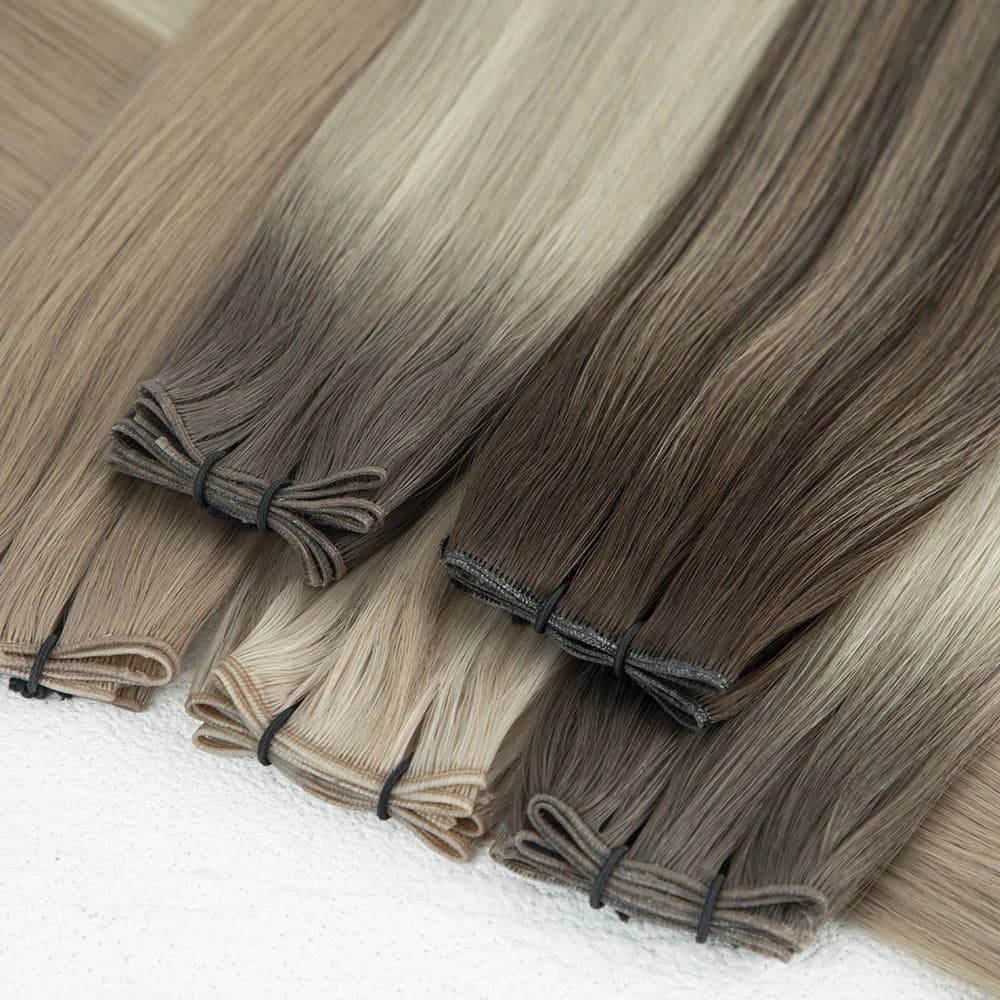
Genius Weft hair extensions are generally chosen for a thin, flexible top seam, customizable row sizing and a discreet finish in professional weft installations. Many Genius-style constructions also eliminate the short folded-over “return hair” found on traditional hand-tied wefts. These features can make row planning more adaptable, but the product name alone does not establish hair quality, cutting rules or suitability for an individual client.
For a salon or wholesale buyer, the useful question is what those features change in practice. Will the seam lie neatly under the available natural hair? Does the pack contain the right weight and number of pieces? Can the supplied construction be trimmed safely? Will the shade and texture remain acceptable after washing?
This guide connects product features with purchasing decisions, installation preparation and sample evaluation. DR-specific figures refer to our Genius Weft collection; confirm your selected specification and current availability before ordering.
Quick answer: The key Genius Weft features are a low-profile flexible seam, often cuttable construction, little or no folded return hair, adaptable pack formats and options for color and texture. Buyers should verify each feature on the actual sample, then assess hair condition, end fullness and compatibility with their professional installation method.
What is a Genius Weft?
A weft is a continuous band of hair secured along its top edge. “Genius Weft” describes a commercial construction category rather than a universal specification. The intended result is a compact seam that combines flexible placement with manageable coverage.
Published Bohyme construction guidance describes its Genius products as cuttable, thin and free of folded return hair. That is a useful category reference, but its dimensions and handling instructions apply to its own products. DR buyers should request the corresponding details for their selected sample.
The construction and the attachment method are separate decisions. A Genius Weft may be used within a professional beaded or sew-in service, but it does not prescribe one bead pattern, stitching technique or row position.
Five key features and why they matter
1. A thin, flexible seam
A compact top edge can help the weft sit close to the planned row and reduce the bulk that a thicker band may create. Flexibility matters when the seam follows the curve of the head or several pieces are arranged together.
Evaluate the seam flat, gently curved and layered in the intended configuration. Check whether the edges lift or feel noticeably rigid. A single-piece photograph cannot show how a finished stack will behave.
Ask for seam thickness and height as separate measurements, with tolerances and a measurement method. DR describes its current Genius construction as thin and flexible; this guide does not assign it an unverified millimeter value. Concealment still depends on natural-hair coverage, placement and total extension weight.
2. Cut-to-width potential
Cuttable construction allows a stylist to size a track to the planned section instead of folding a longer piece. This can simplify stock use across different row widths and help avoid bulky folded ends.
However, “Genius” should not be treated as permission to cut every supplier’s product anywhere. Confirm where cutting is allowed, whether the edge needs finishing and whether trimming affects the product’s handling requirements.
During sample approval, have a trained evaluator make one permitted cut and inspect the edge after gentle handling and an agreed wash trial. Look for progressive opening of the seam or concentrated shedding at the new end. Obtain DR’s instructions for your selected construction before trimming it.
3. Reduced or absent folded return hair
Return hair refers to short lengths folded back near the top of certain weft constructions. A return-free design removes those folded ends from that area, potentially reducing one source of roughness near the row.
It does not guarantee an irritation-free installation. Beads, stitch placement, product buildup, tension and the client’s individual response also matter. Short loose strands are not automatically folded return hair, so inspect the underside of the seam rather than judging the hair from a distance.
Ask whether the supplier’s claim applies to every length and texture you intend to buy. For DR orders, confirm return-hair construction on the approved sample instead of transferring another brand’s description to the whole collection.
4. Flexible piece counts and weight distribution
Pack format affects how a stylist allocates hair across rows. More pieces can offer convenient handling or shade mixing, while fewer heavier pieces may suit another service plan. Neither format is inherently better.
DR’s standard reference is a 100g pack, configurable as two, four or five wefts, or a separately agreed custom format. Average piece weights are therefore 50g, 25g and 20g respectively. These figures describe packaging, not a recommended amount for every client.
For the two-piece 100g format, the catalog lists approximately 80cm per weft. Do not assume the other piece counts have that same width. Confirm width, piece count and net weight together when requesting samples or comparing quotations.
5. Color, length and texture choices
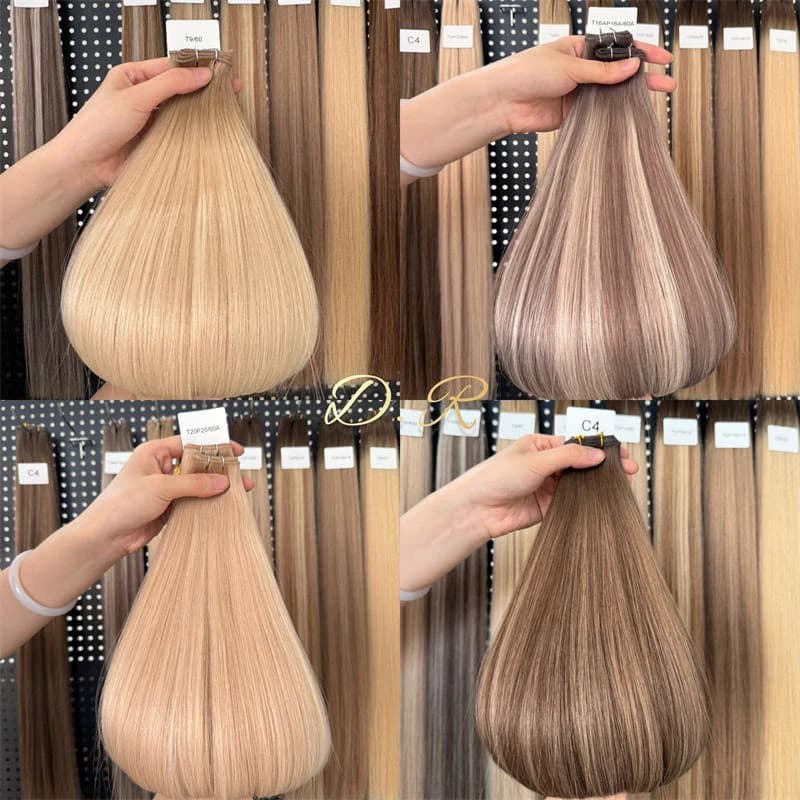
Shade selection determines whether a technically good weft creates a believable blend. Assess root depth, mid-length tone and end color separately, especially for highlighted or rooted products.
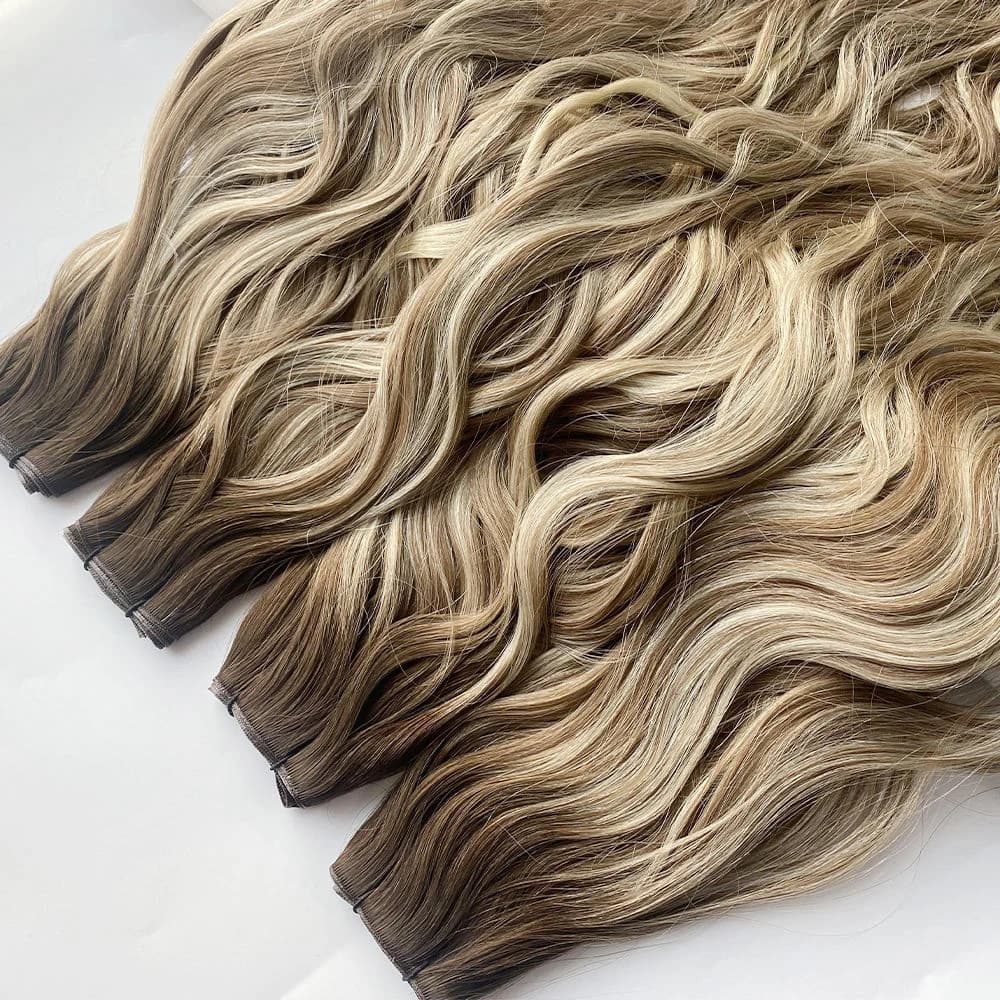
DR currently lists approximately 40 stock colors in 18-, 20- and 22-inch lengths, with 100+ custom color options and custom textures including curly patterns. These are assortment references, not a guarantee that every combination is immediately available.
A screen image is a starting point for discussion. Use physical references and the hair extension color chart to narrow the selection, then approve samples under consistent lighting. For wavy or curly orders, specify whether length is measured stretched or in its natural pattern.
Which specifications should a buyer request?
A useful quotation describes the product you will receive, not only the construction name. Record the following fields in a sample approval sheet and purchase order.
| Specification | DR catalog reference or buyer action |
|---|---|
| Pack weight | 100g, or an agreed custom format; confirm net product weight |
| Piece count | Two, four or five wefts per 100g; custom formats by agreement |
| Individual weight | Average 50g, 25g or 20g for those formats |
| Weft width | Approximately 80cm per weft for the two-piece 100g format; confirm other configurations |
| Stock lengths | 18, 20 and 22 inches; confirm shade-by-length availability |
| Colors and textures | Stock and custom options; approve a physical reference |
| Seam details | Request thickness, height, cutting rules and return-hair confirmation |
| Application | Professional beaded or sew-in; installer to confirm compatibility |
Separate hair grade from construction. Human hair, Remy hair and virgin hair do not mean the same thing: Remy generally describes cuticle orientation, while virgin usually refers to processing history. A lightened or colored shade should not be described as chemically unprocessed without evidence. Ask which material description applies to the exact SKU and what processing has been used.
How does Genius Weft compare with other wefts?
Choose the construction that supports your service and inventory model. A narrow seam is useful when bulk is a concern, but fullness, handling and price still need evaluation.
| Option | Main purchasing consideration | Sample check |
|---|---|---|
| Genius Weft | Compact profile and flexible row sizing | Layered seam behavior, permitted cuts and piece format |
| Traditional hand-tied weft | Thread-based construction for a compatible salon method | Cutting restrictions, return hair and edge handling |
| Machine Weft | Familiar sewn construction and a broad assortment | Seam bulk, hair distribution and end finishing |
| Volume Weft | Greater fullness as a collection priority | Weight allocation and natural-hair support |
Our Machine Weft range offers a machine-sewn option, while Volume Weft is oriented toward higher-density coverage. Flat Weft is another construction to evaluate on its own specifications; similar naming does not make it identical to Genius Weft.
For a fuller comparison of sourcing trade-offs, read Genius Weft vs Hand-Tied vs Machine Weft. Use equivalent lengths, shades and pack weights when comparing samples or price quotations.
How to evaluate a sample before a wholesale order
The following is a proposed buyer evaluation workflow, not a report of laboratory results. Agree on the care procedure and acceptance criteria with your supplier before using it for factory testing or shipment inspection.
Check the sample as received
Photograph the label, unpacked wefts and seam against the same background. Record the shade code, nominal length, net weight, piece count and measured widths. Keep packaging separate when weighing the product.
Inspect both sides of the edge and compare fullness at the mid-lengths and ends. Gently comb from the ends upward while supporting the seam. Record any loose hair consistently; an informal comb check cannot substantiate a “zero shedding” guarantee.
Run an agreed wash-and-dry trial
Use the supplier’s care instructions and record the products, water conditions, drying method and number of cycles. Compare comb-through, tone, softness, texture recovery and seam condition before and after washing.
For a curly sample, check the pattern after washing as well as after delivery styling. For a blonde sample, assess tone under the same light rather than comparing different camera exposures. A small trial can reveal concerns, but it cannot predict a universal wear life or prove the condition of every future batch.
Link approval to shipment inspection
Retain an identified reference sample and a written specification. Before dispatch, request inspection records for the agreed checks: shade and length labels, pack counts, net weight, seam condition and packaging accuracy.
Agree how samples will be selected from each batch. A photograph of one attractive bundle does not establish that an entire shipment matches the order. Define how differences will be reported and handled before placing a larger purchase.
For repeat orders, identify the approved shade reference and pack configuration in the order confirmation. If a material, seam process or color recipe changes, request a fresh approval rather than assuming the old sample remains representative. This simple revision record gives the purchasing team and salon staff a shared point of comparison when stock arrives, especially when several lengths or rooted shades look similar in sealed packaging.
Application scenarios and installation preparation
Salon services where seam bulk matters
For a client with limited coverage over the planned row, a flexible low-profile seam may help the stylist create a more discreet result. This is a consultation scenario, not a claim that Genius Weft suits every fine-haired client. The professional must assess coverage, hair condition and the load the natural hair can support.
Before installation, map the rows, plan the weight distribution and check the blend with the client’s usual parting and styling habits. A thin seam with too much attached weight can still be an unsuitable choice.
Color blending and collection development
A salon may need several complementary tones rather than one exact color match. A distributor may need a repeatable assortment with clear shade codes and consistent packaging. In both cases, customer requirements should determine the sample selection.
For a private-label collection, approve the hair, pack format, labels and presentation together. Keep one controlled specification per SKU so the customer receives the same configuration when reordering. Test packaging fit with the actual weft rather than relying only on a digital mockup.
Maintenance, reuse and the real purchase cost
Genius Weft hair may be reused when the hair and seam remain in suitable condition and a professional confirms that reinstallation is appropriate. Reuse is not unlimited, and maintenance timing is separate from the lifespan of the extension hair.
Follow the supplier’s product-specific care directions. Support the row during brushing, work gently from the ends upward and keep concentrated heat away from the seam. Have the installing professional set the maintenance schedule according to the client’s growth, row condition and service protocol.
Compare costs per equivalent net weight and approved specification. Include freight, packaging, handling, sample evaluation and expected service requirements. A lower initial price may offer little value if the shade or format creates extra preparation work.
DR currently lists a starting order of 100g per color and length for stock and custom hair. Small sample orders use the same hair pricing as wholesale orders; request the complete quote including delivery. Confirm dispatch and transit separately rather than treating either estimate as a guaranteed arrival date.
Frequently asked questions
Can Genius Weft hair extensions be cut anywhere?
Many Genius-style wefts are designed for trimming, but cutting permission is product-specific. Ask whether the selected seam can be cut at any point and whether cut ends need finishing. For DR orders, obtain the instructions for your approved construction before a professional trims it.
Does Genius Weft have return hair?
Return-free construction is a common Genius Weft feature. Nevertheless, confirm the underside of the actual sample and the supplier’s specification. Absence of folded return hair does not establish zero shedding or guarantee comfort; installation quality and the condition of the attachment row still matter.
Is Genius Weft suitable for fine hair?
It may be an option when a professional wants a compact seam and the client has adequate coverage and support for the proposed weight. Fine hair alone is not a suitability assessment. The installer should evaluate the natural hair, placement plan and maintenance commitment before recommending a format.
How many grams are needed for a full installation?
There is no universal amount. Starting density, desired length and fullness, row layout and the client’s natural-hair support all affect the plan. A 100g pack is a purchasing unit, not a guaranteed full-head service. Ask the installing professional to specify the amount for the individual client.
Can Genius Weft be curled, colored or washed?
Follow the instructions for the exact hair and construction. Ask for permitted heat settings and color-processing guidance before altering a sample. Chemically processing an already lightened shade can change its condition and color. Washing and texture recovery should be evaluated using the supplier-approved care routine.
What should I send when requesting a wholesale quote?
Provide your delivery country, lengths, shade references, texture, quantity per color and length, net pack weight and preferred piece count. Add your intended installation method and any branding needs. Ask the supplier to confirm seam details, sample availability, dispatch timing and the handling of specification differences.
Conclusion
Genius Weft’s main appeal is the combination of a compact flexible seam and adaptable professional placement. Cutability, return-hair construction, weight distribution and shade selection turn those features into practical buying decisions.
The strongest sourcing decision starts with a clearly specified sample and a realistic application plan. Compare the actual seam and hair, record your wash evaluation and use the approved reference for subsequent orders. The product name can guide your shortlist; the agreed specification determines what you purchase.
GENIUS WEFT SOURCING
Request a Genius Weft specification or quote.
Share your shade references, lengths, texture, quantities and preferred pack format. Fields marked with * are required.