
BUYING GUIDE
What Are the Best Butterfly Weft Hair Extensions for Fine Hair?
Choosing butterfly weft extensions for fine hair? Compare weight, band profile, attachment methods and sample checks before buying for your salon.
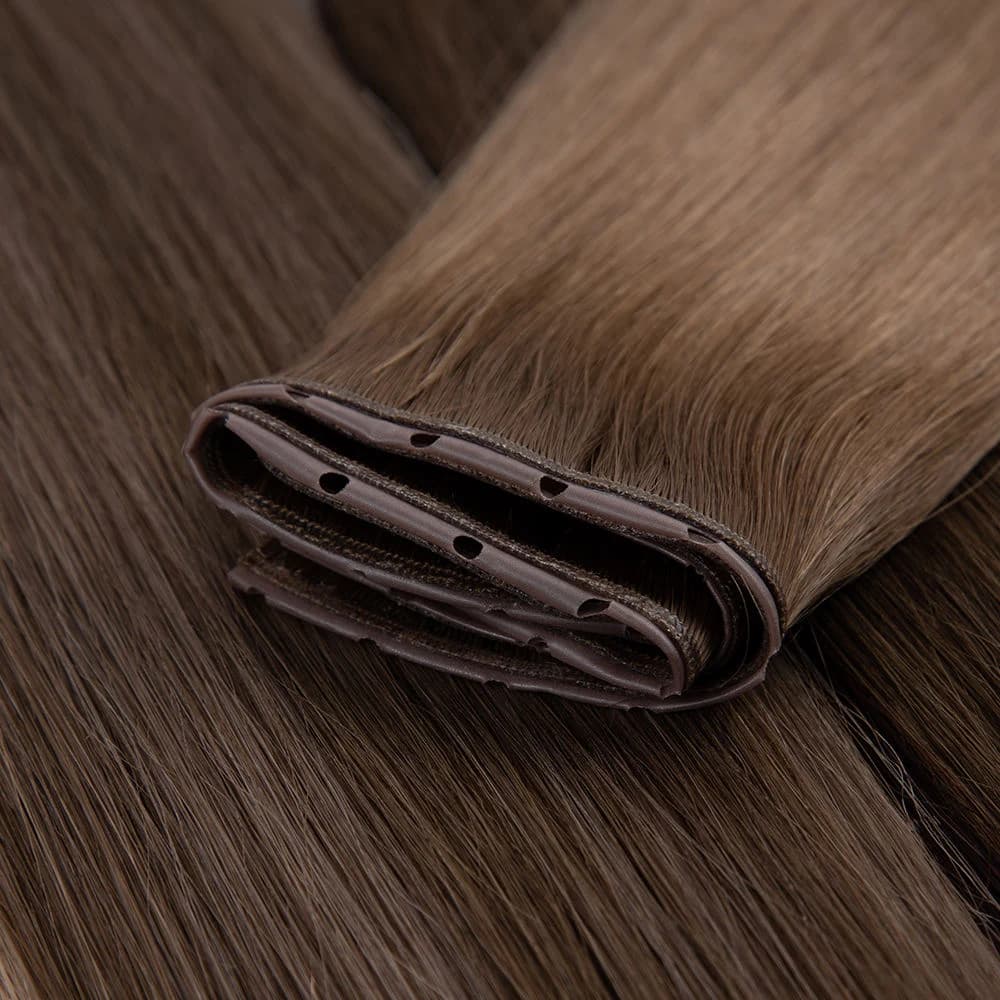
Introduction
The best butterfly weft hair extensions for fine hair combine a flexible, discreet band with an appropriate installed weight, compatible attachment points and a convincing color-and-texture match. A thin seam is useful, but the right choice also depends on how much healthy natural hair can support and conceal the extension.
For salons, that changes the buying decision. Rather than ordering the longest or fullest pack first, establish the client's density, desired result and maintenance routine. Then compare the actual construction and approve a sample.
This guide explains what to prioritize, how butterfly wefts compare with other options and where DR Hair Extension's product fits. It is a purchasing guide, not a clinical safety assessment or a ranking based on a comparative wear trial.
Quick answer: Choose a low-profile butterfly weft with documented piece weight, width and installation instructions. Prioritize modest volume, shade accuracy and professional fitting. Fine hair with adequate density may suit a weft; sparse, fragile or actively shedding hair needs a different assessment. No pack weight is suitable for everyone.
Which butterfly weft is best for your situation?
The strongest shortlist starts with the intended result. These scenarios illustrate selection decisions; they are not reports of completed customer installations.
| Customer requirement | Product characteristics to prioritize | Decision before ordering |
|---|---|---|
| Subtle fullness at the existing length | Flexible band, manageable piece weight, similar strand texture | Can the stylist achieve the result without a bulky stack? |
| Added length on healthy fine hair | Natural end density, sufficient coverage, compatible attachment | Is the desired length realistic for the available supporting hair? |
| Hair often worn loosely up | Close root shade and discreet band and bead colors | Will coverage remain adequate during normal movement? |
| Salon or private-label collection | Repeatable specifications, sample approval and reorder consistency | Can the supplier document the exact approved configuration? |
For a client with fine hair and reasonable density, a carefully planned butterfly system can be worth evaluating. For visibly sparse sides or a widening part, adding a continuous weft may make concealment harder. A trained stylist should decide whether another method, a removable option or no extension service is appropriate.
Understand fine hair, density and butterfly construction
Fine hair does not always mean thin coverage
Fine describes individual strand thickness; density describes how much hair occupies an area. Someone can have many fine strands, while another person has fewer strands and more visible scalp. Those clients need different placement and weight decisions.
Assess density where the weft would attach, not only in a ponytail. Inspect the temples, sides, crown and proposed row. Color processing, breakage and current shedding also affect the consultation. Extensions add cosmetic fullness; they do not treat the cause of hair loss.
The name does not specify every construction detail
Butterfly wefts commonly have a narrow band with attachment holes for a professional bead or micro-ring system. Materials, hole arrangements, cutting permissions and fitting sequences vary. For example, Superior Hair's construction guide describes its own perforated-band attachment system. Its dimensions and instructions should not be transferred to another supplier's product.
DR's Butterfly Weft collection is designed for micro-ring or bead fastening. Request the installation, removal and reapplication guidance for the selected sample before committing to a service or a wholesale order.
Five features to evaluate before buying
1. Band flexibility and the complete attachment profile
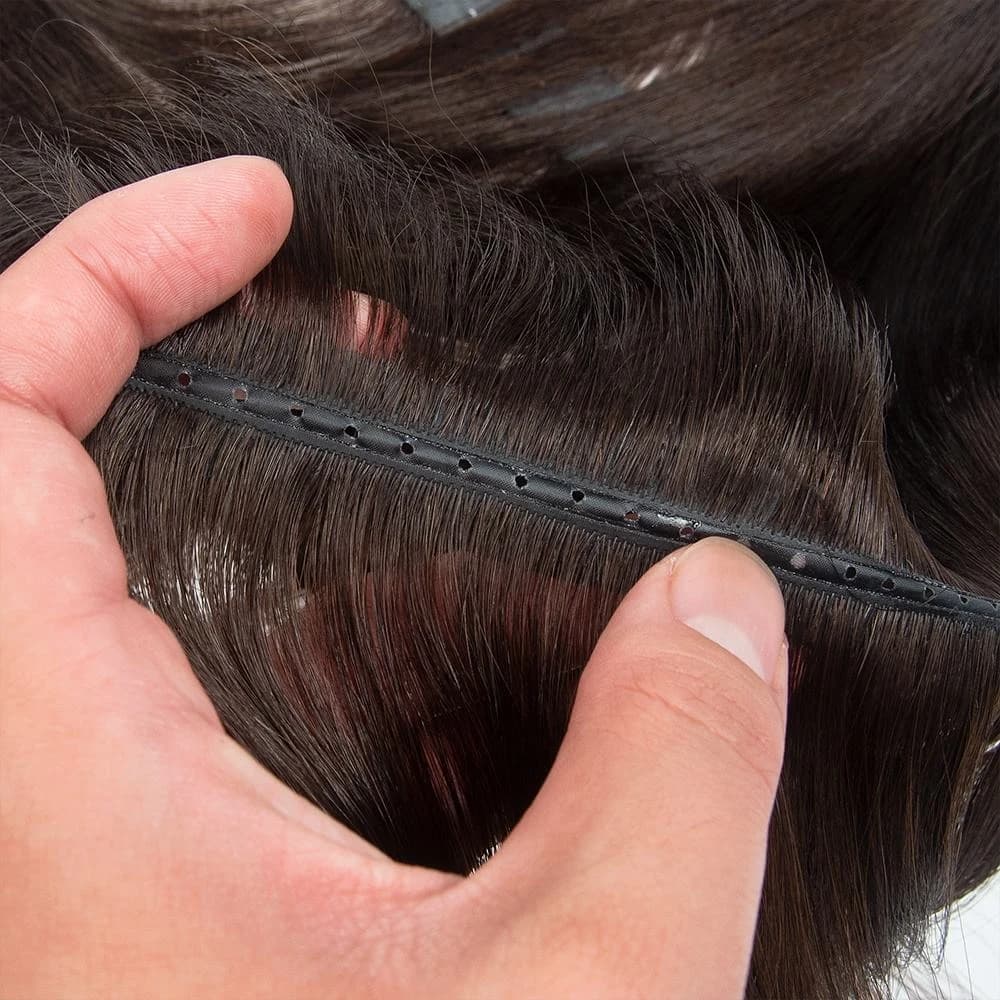
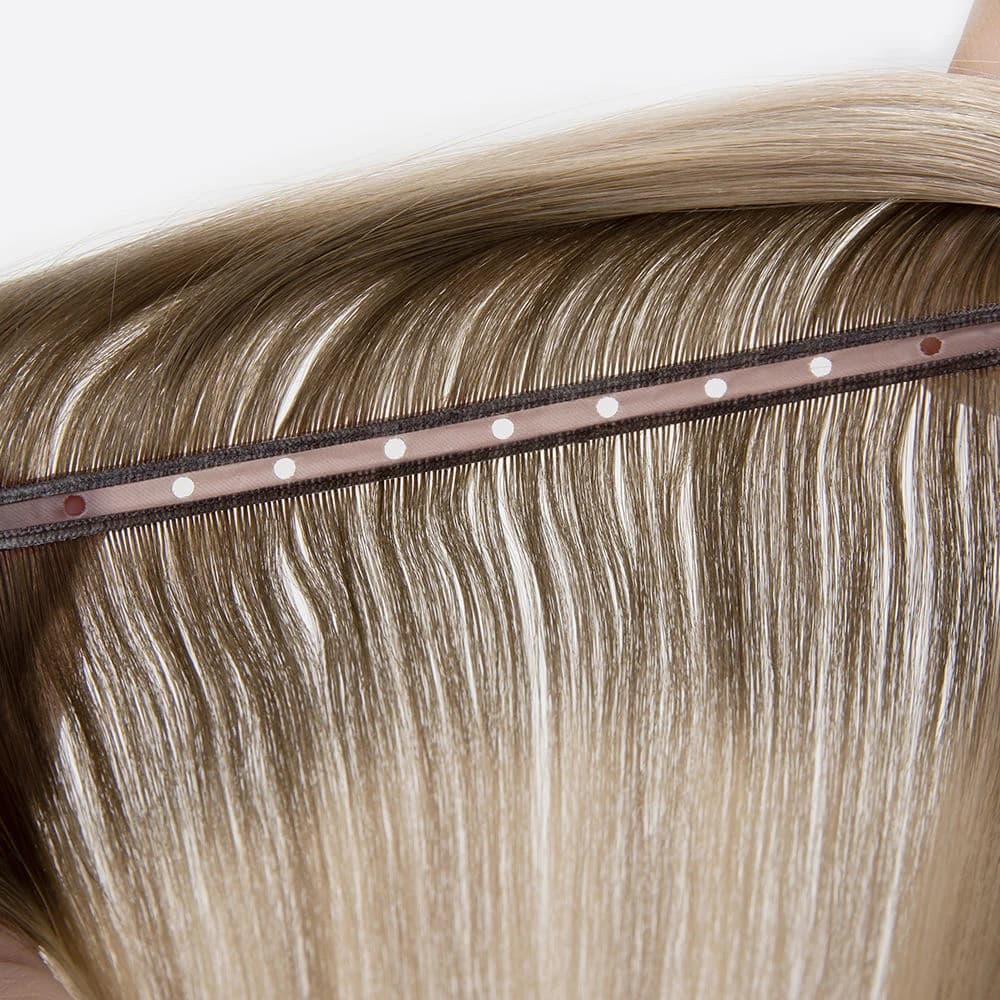
Evaluate the band gently curved as well as flat. Look for rigid edges, uneven areas or a ridge that could become visible beneath fine hair. Examine the intended finished attachment, because beads and stacked pieces contribute to its profile.
If a supplier quotes millimeter measurements, ask whether they refer to band height, thickness or the finished attachment. DR does not publish a verified seam-thickness figure for this selection. A macro photograph helps show construction but cannot establish comfort or suitability on its own.
2. Weight per piece and weight per usable width
Pack weight is a purchasing unit, not an installation prescription. Request the total grams, number of pieces and width of each piece. Comparing grams alone can hide substantial differences in how densely hair is distributed along a band.
For example, a 50g piece measuring 40cm averages 1.25g per centimeter; a 50g piece measuring 80cm averages 0.625g per centimeter. This arithmetic helps compare products, but it does not measure the load on an individual attachment or determine a safe fitting plan. Band construction and actual weight distribution also matter.
3. Hair quality, processing and end density
Ask what the supplier means by terms such as Remy, virgin or double drawn, and request supporting information. Those labels should not replace sample evaluation. Check for tangling, uneven lengths, dry ends and a mismatch between the advertised and supplied texture.
Very full ends can create a heavy-looking transition on fine natural hair. The objective is a blend the client's own hair can visually support. Agree on an appropriate end profile and a professional blending cut rather than assuming maximum density is always better.
4. Shade, root and texture matching
Match the visible mid-lengths and ends, then assess the band and attachment area against the roots. Rooted or dimensional colors may help where natural hair has several tones, but the actual sample should determine the choice.
Use daylight and typical indoor lighting. Compare the sample after washing and drying, when temporary styling has been removed. DR's hair extension color chart is a useful starting reference; screens and lighting can change color appearance.
5. Written cutting and reuse instructions
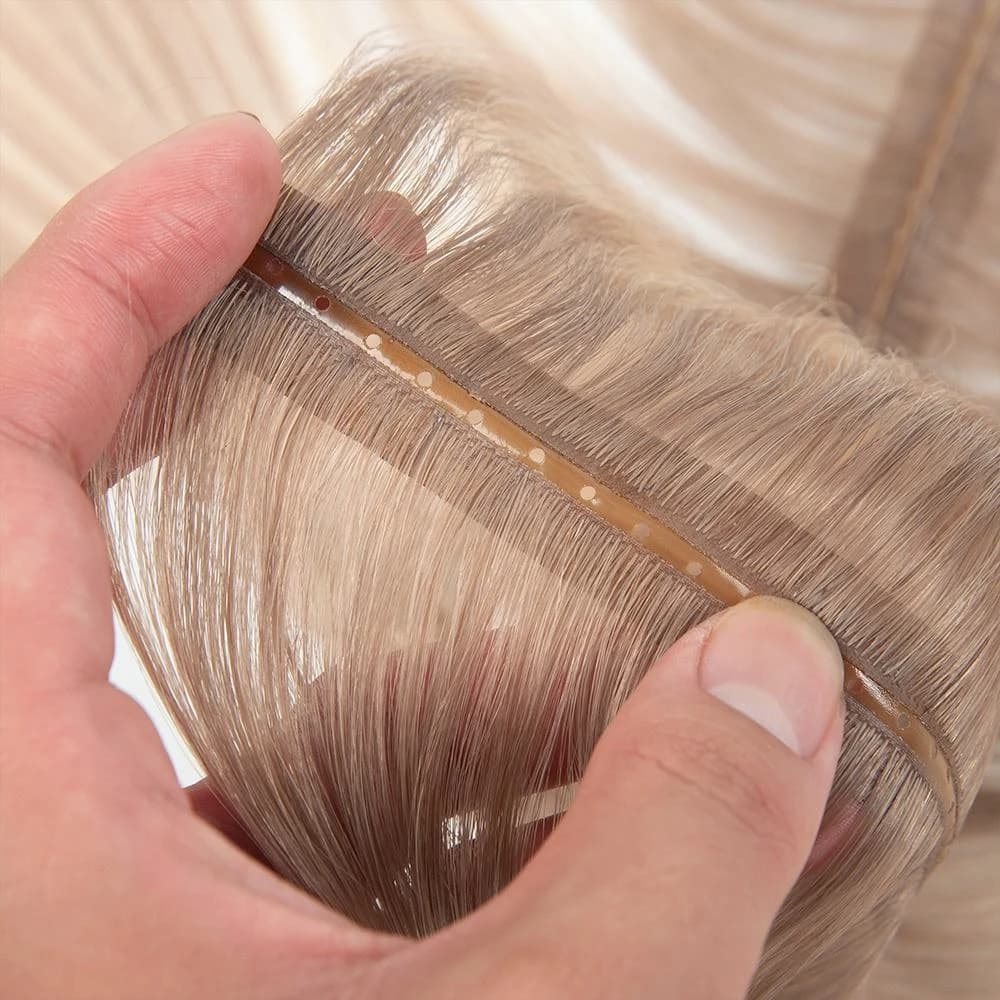
Do not assume every butterfly band can be cut anywhere. Hole placement, edge reinforcement and the supplier's construction affect whether resizing is permitted and how a cut end must be handled.
Confirm those rules before placing a custom-width order or asking a stylist to alter a sample. Reuse also requires inspection of both the hair and band. A smooth first installation does not establish how many reapplications a particular piece will tolerate.
Is DR Butterfly Weft a good option for fine hair?
DR Butterfly Weft is a candidate for professional sample evaluation when a salon wants a micro-ring or bead system and clearly defined purchasing specifications. Suitability for an individual fine-haired client remains a stylist's decision.
| Specification | Current DR offering | Purchasing implication |
|---|---|---|
| Material | 100% human hair | Evaluate the selected hair and processing information |
| Standard pack | 100g across 2 pieces | The full pack does not have to define one client's fitting |
| Width | 40cm per piece | Confirm the usable row plan and any resizing instructions |
| Average piece weight | Approximately 50g | Assess the actual piece and proposed attachment load |
| Ready-stock length | 22 inches | Other lengths can be discussed as custom requirements |
| Stock shades | Approximately 40 colors | Confirm the exact shade and current availability |
| Application | Professional micro-ring or bead fitting | Obtain guidance for the selected attachment |
Custom colors, lengths, textures, pack weights, piece counts and widths can be discussed. Stock and custom hair orders start at 100g per color and length; that minimum is separate from the amount a client should wear. Small sample orders use the same hair pricing as wholesale hair, with the selected order and delivery quoted separately.
Explore the Butterfly Weft product specifications before requesting a sample. If the standard 22-inch configuration does not match the intended fine-hair service, discuss another specification rather than forcing the service around available stock.
Butterfly weft vs Genius weft, tape-in and individual tips
There is no universally best attachment method for fine hair. The important comparison is what the client's hair can support, what the stylist can fit competently and what the wearer can maintain.
| Option | Why a salon might evaluate it | Fine-hair consideration |
|---|---|---|
| Butterfly Weft | Perforated band with a specified bead or micro-ring system | Assess band coverage, piece weight and attachment compatibility |
| Genius Weft | Flexible weft formats for a planned professional row | Compare the whole row, including foundation and any layering |
| Tape-in hair | Flat adhesive attachment in separate sections | Consider visibility, adhesive compatibility and careful removal |
| Keratin tips | Individual placements rather than a continuous band | Bond size, placement and professional removal still matter |
DR offers Genius Weft, Tape-in Hair and Keratin Tip Hair for comparison. Adhesive-free does not mean tension-free, and a smaller attachment is not automatically suitable for fragile hair. Evaluate the complete service rather than choosing by the smallest-looking component.
Installation preparation for realistic fine-hair results
Before ordering, document the client's current length, density, color history, normal parting and preferred hairstyles. Ask how often they swim, exercise and can attend maintenance appointments. These details determine whether the proposed service fits daily life.
Product application should begin with the manufacturer's preparation instructions and a trained stylist's row plan. Confirm adequate coverage at the sides and around the perimeter, compatible bead sizing and appropriate natural-hair sections. Avoid adding rows simply to use an entire purchased pack.
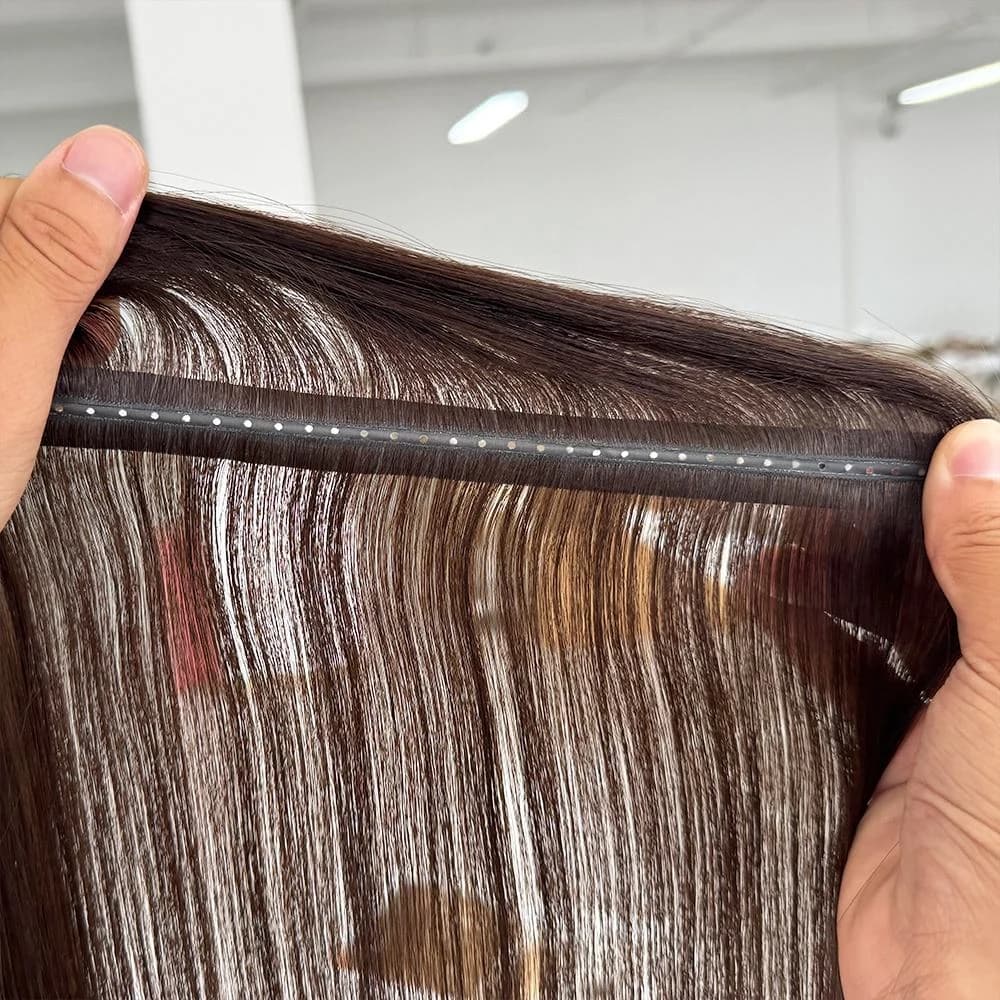
During the consultation, check how the planned placement behaves when the wearer turns their head or loosely lifts their hair. A full-length mirror and side views reveal more than a close crop. Agree on a result that remains believable in normal movement, not only in a styled photograph.
Sample testing, factory checks and shipment inspection
Approve a sample against a written specification
A useful factory testing request describes the checks, conditions and acceptance criteria. Record the sample's product code, color, length, piece count, width and weight. Photograph the band and ends under consistent light, and retain an approved reference for reorders.
DR's documented salon-to-brand sourcing example offers a practical lesson: an independent US stylist began with a physical color ring and 300g of samples across Genius Weft, tape-in and flat-tip formats. She evaluated installations, washing, styling and client comfort before expanding orders. That experience supports a sample-first purchasing process; it does not establish Butterfly Weft performance on fine hair.
Have a trained evaluator inspect flexibility, hole edges and attachment compatibility. Conduct an agreed wash-and-dry trial with suitable care products, then reassess detangling, texture, color appearance and the band. Record the procedure and observations. One trial can reveal issues; it cannot establish a guaranteed service life.
Separate confirmed factory practice from requested evidence
DR's confirmed quality-control process includes checks at each production stage and final pre-shipment sampling. If sampling identifies a nonconformity, the affected shipment is fully re-inspected. No numerical sampling plan, tolerance or test threshold is asserted here.
For your shipment inspection, agree which characteristics must match the approved sample: shade, texture, pack configuration, band condition and labeling. Ask how discrepancies will be documented and resolved. Request records for your selected order when available rather than treating a generic factory image as proof that a particular batch passed.
Turn the consultation into a clear purchasing brief
A practical first-order brief might read: subtle fullness for clients with fine strands and adequate density; straight texture; a confirmed brunette shade reference; a specified piece weight and width; and written fitting and care instructions. This is an illustrative brief, not a promise that one format will suit every client in that group.
Ask the supplier to identify which elements are standard stock and which require customization. If a different weight is proposed, confirm whether the change affects the width, number of pieces or hair density along the band. A smaller pack does not necessarily contain a lighter individual piece.
Compare quotes on that same specification. Include hair cost, packaging, sample charges where applicable and freight to the delivery destination. Confirm the production and dispatch arrangement before promising a salon appointment or collection launch date.
When the order arrives, check the labels and configuration against the purchase confirmation before opening pieces for a service. Isolate any visibly inconsistent sample, document the issue with clear photographs and contact the supplier before modifying it. Keeping a reference sample and written order details makes a reorder or discrepancy discussion more precise.
Maintenance and the cost of ownership
Ask the stylist to set an inspection and maintenance schedule for the exact system, density and growth pattern. Published schedules differ by product; a supplier's maximum interval should not override an earlier need for adjustment.
Follow the supplied brushing, washing and drying instructions. Support the attachment area while detangling, avoid pulling at knots and keep direct hot-tool contact away from the band. Ask which conditioners, oils and styling products are compatible with the selected attachment.
Pain or persistent pulling should not be treated as an expected adjustment period. The American Academy of Dermatology identifies tight extensions and weaves as possible traction risks and recommends prompt action when pain or irritation occurs. Arrange professional assessment; unexplained or progressive hair loss also warrants medical evaluation.
Compare total service cost: hair, installation, blending, maintenance, removal and possible replacement. Wholesale buyers should also compare freight, duties, sampling and unusable stock. A lower pack price offers limited value if the specification does not suit the service or reorder consistency is poor.
Frequently asked questions
Are butterfly wefts suitable for very fine hair?
They may suit fine hair with adequate healthy density and coverage, but the band alone does not establish suitability. A trained stylist must assess the proposed row, piece weight and attachment. Very sparse or fragile hair may require another approach.
Is 100g too much for fine hair?
There is no universal answer. In DR's catalog, 100g is the standard purchasing pack, containing two approximately 50g pieces. It is not a recommended installed weight for every client. Ask the stylist to determine the amount before purchase.
Are butterfly wefts better than Genius wefts?
Neither is always better. Compare band construction, piece weight, usable width, the complete attachment profile and the stylist's training. Butterfly names and Genius names do not guarantee identical specifications across suppliers.
Can butterfly wefts be cut to fit?
Only follow the selected supplier's cutting instructions. Confirm permitted cut locations and edge handling before resizing. DR buyers can discuss custom widths, but should request sample-specific guidance before modifying a standard piece.
How long can the same hair be reused?
Reuse depends on hair condition, processing, care, band integrity and removal technique. Have the stylist inspect each piece before reapplication. This guide does not promise a fixed lifespan or number of move-ups for DR Butterfly Weft.
What should salons request before a wholesale order?
Request the specification sheet, shade references, installation guidance, sample quote and agreed inspection criteria. Confirm current stock, custom requirements, dispatch arrangements and delivery estimates for the actual order. Preserve the approved sample for comparison.
Conclusion
The best butterfly weft for fine hair is the configuration that fits the client's density, coverage, desired result and maintenance commitment. Prioritize documented specifications and sample evaluation, then let a trained stylist decide the fitting plan. For salon purchasing, consistent product information is more useful than an unsupported claim to be the lightest or safest.
BUTTERFLY WEFT SOURCING
Request a Butterfly Weft specification or quote.
Share your shade references, lengths, texture, quantities and preferred pack format. Fields marked with * are required.